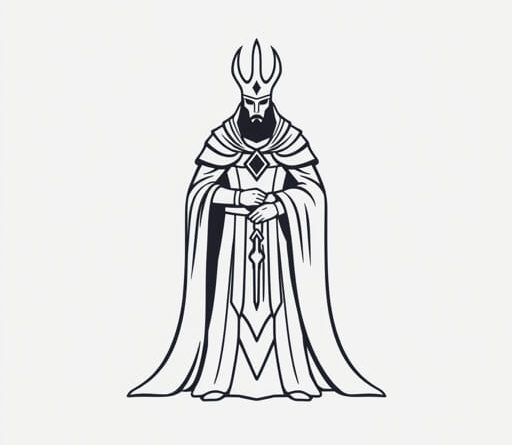
Is Pontiff Sulyvahn A Lord Of Cinder?
In the deep, shadowed world of Dark Souls III, players encounter many formidable foes, each cloaked in mystery and layered lore. One such figure is Pontiff Sulyvahn, an imposing, dual-sword-wielding tyrant whose role in the game’s intricate narrative continues to intrigue players. His power, presence, and influence within Irithyll of the Boreal Valley make him a central character in the game. But a question often arises for those exploring the rich mythology of Lothric: is Pontiff Sulyvahn a Lord of Cinder?
Understanding the Lords of Cinder
What is a Lord of Cinder?
To understand whether Pontiff Sulyvahn qualifies as a Lord of Cinder, we first need to define what a Lord of Cinder truly is. In the world of Dark Souls III, Lords of Cinder are powerful beings who have linked the First Flame sacrificing themselves to extend the Age of Fire. This act is both revered and tragic, marking them as champions and martyrs who keep the world from plunging into darkness.
Throughout the game, players are tasked with returning the Lords of Cinder to their thrones in Firelink Shrine. These lords include figures like Lothric, Yhorm the Giant, Aldrich, and the Abyss Watchers. Each has a backstory deeply tied to the fire, its rekindling, or its rejection.
The Role of Pontiff Sulyvahn
Who is Pontiff Sulyvahn?
Pontiff Sulyvahn is encountered in Irithyll of the Boreal Valley, one of the most visually striking and haunting areas in Dark Souls III. He is both ruler and high priest, feared and followed by legions of knights and fanatics. His dual blades one imbued with fire and the other with magic symbolize his mastery over destructive forces.
Sulyvahn originated from the Painted World of Ariandel but left it in search of power. Upon discovering the Profaned Flame beneath Irithyll Dungeon, he succumbed to its influence and began his rise to power. He is responsible for many atrocities across Lothric, including the imprisonment of giants and the distortion of divine worship.
Sulyvahn’s Ambitions
Rather than seeking to link the flame himself, Sulyvahn appears to manipulate others to serve his own ends. He supports Aldrich, one of the Lords of Cinder, in his grotesque transformation and eventual consumption of Gwyndolin. Sulyvahn even crowns himself as pontiff, ruling with near-divine authority and brutality.
Comparing Pontiff Sulyvahn to Lords of Cinder
Key Differences
- Sacrifice: Lords of Cinder are known for their ultimate sacrifice in linking the flame. Pontiff Sulyvahn, however, never sacrifices himself for this cause. His motivations lie in domination and control, not in the continuation of the Age of Fire.
- Throne at Firelink: Each Lord of Cinder has a throne at Firelink Shrine. Pontiff Sulyvahn does not. This key narrative detail strongly indicates that he is not recognized as a Lord by the powers that be in the game’s lore.
- Recognition by the Firekeeper: The Firekeeper never refers to Sulyvahn as a Lord. In fact, he remains a separate entity from the central mission of the Ashen One to return the Lords to their thrones.
Similarities That Cause Confusion
- Power and Influence: Like the Lords, Sulyvahn is immensely powerful. His control over Irithyll and manipulation of Aldrich’s fate suggest a level of political and magical strength rivaling that of a Lord of Cinder.
- Visual Presentation: His elaborate armor, cathedral setting, and boss entrance give him a grandeur similar to that of a Lord. This can easily lead players to assume he holds the same status.
Why Some Players Mistake Sulyvahn for a Lord
It’s understandable why many players might mistake Pontiff Sulyvahn for a Lord of Cinder. His arena, the dramatic musical score during his boss fight, and his deep ties to Aldrich all suggest an elevated status. However, from a lore and game progression perspective, he lacks the defining characteristics and narrative weight of a true Lord of Cinder.
Furthermore, his manipulation of Aldrich, who is a Lord of Cinder, places him in close proximity to the main questline. Since players must face Sulyvahn before reaching Aldrich, the order of events might confuse those unfamiliar with deeper lore details.
The Profaned Flame and Its Corruption
One of the most compelling aspects of Sulyvahn’s backstory is his relationship with the Profaned Flame. This corrupt, chaotic fire differs from the First Flame. It represents ambition, madness, and ruin rather than rebirth or sacrifice. Sulyvahn’s obsession with this flame is symbolic of his rejection of the traditional paths of power in Lothric.
By aligning himself with the Profaned Flame rather than the First Flame, Sulyvahn sets himself apart from the Lords. His path is one of domination, not salvation. He does not preserve the world but seeks to remake it in his twisted image.
The Verdict: Is Pontiff Sulyvahn a Lord of Cinder?
Based on available lore, dialogue, and in-game evidence, Pontiff Sulyvahn is not a Lord of Cinder. Despite his importance in Dark Souls III and his intimidating role in the game’s story, he never linked the flame, never occupied a throne at Firelink, and never aligned himself with the noble or tragic legacy of the Lords of Cinder.
He is better understood as a corrupt ruler who sought control over a decaying world. His actions shaped much of the player’s journey through Irithyll and Anor Londo, and his support of Aldrich had catastrophic consequences. Still, his motivations and actions remove him from the noble status that defines a Lord of Cinder.
In the sprawling mythos of Dark Souls III, distinctions between heroes and villains are often blurred. Pontiff Sulyvahn occupies a space of power and menace but lacks the sacrificial foundation that defines a Lord of Cinder. He is a tyrant, a corrupter, and a dark prophet of the Profaned Flame, but not one of the figures who gave themselves to the First Flame. Understanding this distinction is key to appreciating the depth and nuance of the game’s world, and to seeing Sulyvahn for what he truly is one of the most dangerous men to never sit upon a throne at Firelink Shrine.