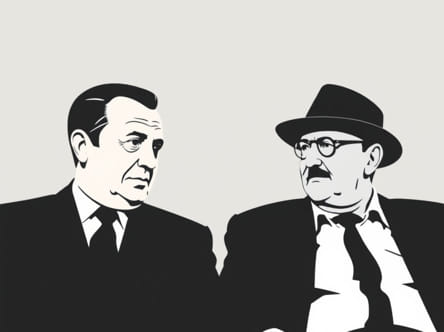
Peter Ustinov And Humphrey Bogart
Two of the most influential figures in the history of cinema, Peter Ustinov and Humphrey Bogart, each carved unique legacies that continue to inspire actors, filmmakers, and audiences today. Though they came from different backgrounds and approached acting in distinct ways, their impact on film and stage was equally profound. Exploring their careers side by side offers fascinating insights into Hollywood’s Golden Age and beyond, revealing how two iconic talents helped shape modern cinematic storytelling.
Early Life and Backgrounds
Peter Ustinov: A Multitalented Mind
Peter Ustinov was born in 1921 in London, England, into a multicultural family. His father was a Russian-born journalist, and his mother was a painter of French, Italian, and Ethiopian descent. This rich cultural heritage gave Ustinov a global perspective early in life, which influenced his ability to adapt into a variety of roles. He studied at the London Theatre Studio and quickly gained attention for his wit, intelligence, and linguistic skill.
Ustinov was more than just an actor. He was also an accomplished playwright, screenwriter, novelist, and director. His range allowed him to perform both comedic and dramatic roles, making him one of the most versatile performers of his time.
Humphrey Bogart: The American Icon
Humphrey Bogart was born in 1899 in New York City, into a wealthy family. Unlike Ustinov, whose career was marked by diversity and satire, Bogart became known for his tough, no-nonsense persona. After a brief stint in the U.S. Navy, Bogart turned to acting in the 1920s, working on stage before transitioning to film.
His early film roles were mostly typecast gangsters and villains. However, Bogart’s natural charisma and intensity soon elevated him to leading man status. Over time, he became the face of film noir and a symbol of rugged American masculinity.
Breakthrough Roles and Defining Performances
Ustinov’s Acclaimed Versatility
Peter Ustinov’s film career took off in the 1940s, and he continued to deliver memorable performances across genres. One of his most recognized roles was as Emperor Nero inQuo Vadis(1951), where he stole scenes with his satirical portrayal of a deranged Roman ruler. He later won two Academy Awards for Best Supporting Actor: for his role as Batiatus inSpartacus(1960), and for portraying Arthur Simpson inTopkapi(1964).
In addition to acting, Ustinov excelled as Hercule Poirot in several Agatha Christie adaptations, includingDeath on the Nile(1978). His interpretation of the famous Belgian detective became definitive for many fans, blending charm, humor, and intelligence.
Bogart’s Rise to Stardom
Bogart’s defining role came withThe Maltese Falcon(1941), directed by John Huston. Playing the hard-boiled private detective Sam Spade, Bogart redefined the noir anti-hero. This was followed by perhaps his most iconic performance: Rick Blaine inCasablanca(1942). In that film, his portrayal of the cynical yet ultimately noble nightclub owner became a lasting symbol of classic Hollywood romance and sacrifice.
Other major films includeTo Have and Have Not(1944),The Big Sleep(1946), andIn a Lonely Place(1950). Bogart’s performance inThe African Queen(1951) earned him an Academy Award for Best Actor, further cementing his legacy.
Contrasting Acting Styles
Peter Ustinov was known for his sharp intellect and ability to transform into widely different characters. He often played eccentric or flamboyant roles with a sense of underlying depth. His acting was theatrical, articulate, and often tinged with satire. Ustinov brought a European sophistication to the screen, which allowed him to convincingly play royalty, scholars, or comic relief.
In contrast, Humphrey Bogart’s style was minimalist, grounded, and authentic. He rarely raised his voice, often delivering lines in a subdued, almost casual tone that conveyed strength and control. Bogart’s characters were usually men of few words tough, cynical, but ultimately moral. His presence alone commanded attention.
Influence and Legacy
Peter Ustinov’s Cultural Contributions
Beyond the silver screen, Ustinov contributed to global culture. He was a goodwill ambassador for UNICEF, traveling the world and advocating for children’s rights. He was knighted in 1990 and received numerous honorary degrees and awards for his humanitarian work. His intellect and wit made him a popular guest on talk shows and at university lectures.
As an author, Ustinov published essays, novels, and an acclaimed autobiography. His versatility as a writer mirrored his broad range as an actor. Today, Ustinov is remembered not just for his performances, but for his humanitarian values and intellectual legacy.
Bogart’s Enduring Icon Status
Humphrey Bogart’s image remains one of the most recognizable in Hollywood history. The American Film Institute ranks him as the greatest male star of classic American cinema. His legacy is not only about memorable roles, but also about defining a certain kind of masculinity gritty, principled, and complex.
Bogart helped shape the noir genre, and many actors, including Clint Eastwood and Harrison Ford, have cited him as an influence. The term Bogart-esque has become shorthand for a certain tough yet vulnerable character type that continues to appear in film and television.
Did They Ever Work Together?
Despite being contemporaries, there is no widely known film collaboration between Peter Ustinov and Humphrey Bogart. Their careers followed different paths Bogart peaked in the 1940s and early 50s, passing away in 1957, while Ustinov’s international fame grew more in the 1960s and beyond. However, their mutual era and global recognition link them in cinematic history, and fans often imagine what such a collaboration might have looked like: a battle of wits between Ustinov’s eloquence and Bogart’s stoic charm.
Peter Ustinov and Humphrey Bogart stood as towering figures of 20th-century cinema. One, a multilingual intellectual with a flair for character roles and satire; the other, a symbol of American resolve with an unmatched presence in film noir and drama. Though their paths never formally crossed on-screen, their individual achievements offer timeless lessons in the art of acting, storytelling, and human expression.
Their contrasting styles Ustinov’s chameleon-like versatility and Bogart’s steely realism demonstrate the broad spectrum of talent that defined classic cinema. For students of film, actors in training, or anyone with a love of timeless storytelling, the legacies of these two remarkable men remain essential viewing and enduring sources of inspiration.