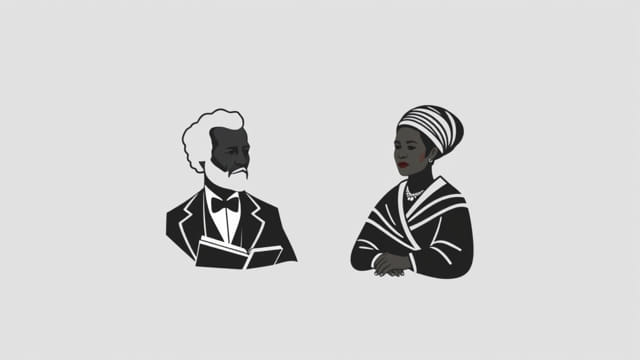
Frederick Douglass And Harriet Tubman
Frederick Douglass and Harriet Tubman are two of the most iconic figures in American history, known for their relentless fight against slavery and their contributions to the cause of freedom and justice. Born into bondage, they both escaped the brutal system of slavery and went on to become leaders of the abolitionist movement. Their lives offer powerful examples of courage, resistance, and resilience, and they continue to inspire generations in the struggle for civil rights and human dignity.
Early Life and Enslavement
Frederick Douglass: A Voice for Justice
Frederick Douglass was born around 1818 in Talbot County, Maryland. He never knew his exact birth date, and he was separated from his mother as an infant. As a child, Douglass experienced the full brutality of slavery. He was taught the alphabet by his enslaver’s wife, an act that awakened in him a thirst for knowledge. Despite the risk of severe punishment, Douglass secretly learned to read and write, skills that would later empower his fight against slavery.
Harriet Tubman: The Conductor of the Underground Railroad
Harriet Tubman, born Araminta Ross around 1822 in Dorchester County, Maryland, also endured the harsh realities of slavery. She suffered physical abuse and was permanently injured as a teenager when a heavy weight was thrown at her head. This injury caused lifelong health issues and led to spiritual visions that she believed guided her path. Tubman escaped slavery in 1849 and immediately began rescuing other enslaved people, becoming a leading figure in the Underground Railroad network.
Escape and Resistance
Douglass’s Journey to Freedom
Frederick Douglass escaped slavery in 1838 by disguising himself as a sailor and boarding a train to the North. His journey led him to New York and then to Massachusetts, where he became involved in the abolitionist movement. Douglass’s eloquent speeches and powerful writing made him a prominent voice against slavery. His autobiography,Narrative of the Life of Frederick Douglass, an American Slave, became a bestseller and exposed the cruelty of the institution to a global audience.
Tubman’s Daring Missions
After her own escape, Harriet Tubman returned to the South over a dozen times to help others escape. She guided an estimated 70 enslaved people to freedom and gave instructions to many more. Tubman used stealth, secrecy, and spiritual faith to navigate dangerous territory. Her bravery earned her the nickname Moses for leading her people to freedom. Her efforts made her one of the most successful and feared conductors of the Underground Railroad.
Contributions to the Abolitionist Movement
Douglass’s Role as an Orator and Writer
Frederick Douglass became a leading abolitionist, renowned for his speeches and publications. He worked closely with William Lloyd Garrison but eventually parted ways due to ideological differences. Douglass believed in political action and used his voice to influence policy. He founded and edited newspapers such asThe North Starand advocated for the recruitment of Black soldiers during the Civil War. His influence reached the White House, where he advised President Abraham Lincoln.
Tubman’s Military and Humanitarian Service
Harriet Tubman played an active role during the Civil War, serving as a scout, nurse, and spy for the Union Army. She was the first woman to lead an armed expedition in the war, guiding the Combahee River Raid that freed over 700 enslaved people. After the war, Tubman continued her humanitarian efforts, advocating for formerly enslaved people, women’s suffrage, and establishing a home for the elderly in Auburn, New York.
Shared Values and Legacy
Faith and Freedom
Both Frederick Douglass and Harriet Tubman were deeply religious, and their faith guided their mission. They saw freedom not only as a political issue but as a moral and spiritual imperative. Their actions were rooted in a belief in the dignity of all human beings and a conviction that justice would prevail through persistence and divine guidance.
Advocacy for Equality
Douglass and Tubman shared a commitment to equality beyond the abolition of slavery. Douglass was a passionate advocate for women’s rights and famously attended the Seneca Falls Convention in 1848. Tubman also supported women’s suffrage and worked alongside Susan B. Anthony and other leading figures in the movement. Their dedication to equal rights extended well beyond the abolitionist era.
- Frederick Douglass believed in the power of education, oration, and political engagement.
- Harriet Tubman relied on faith, courage, and direct action to liberate enslaved individuals.
- Both figures challenged the institution of slavery and changed public opinion.
- They left legacies that continue to influence movements for civil rights and justice today.
Relationship and Mutual Respect
Allies in the Struggle
Though they took different paths in the fight for freedom, Frederick Douglass and Harriet Tubman respected each other’s contributions. Douglass once wrote a letter praising Tubman’s bravery, noting that she had faced far greater danger than he had. While Douglass fought with pen and speech, Tubman fought with actions in hostile territory. Their different methods complemented the broader abolitionist movement and highlighted the many ways individuals could resist injustice.
Public Recognition
During their lifetimes, both figures gained recognition for their work, though Tubman was often less publicly visible. In recent decades, efforts to honor her have increased, including plans to feature her on U.S. currency. Douglass’s speeches and writings are still studied in schools, and his legacy is enshrined in statues, institutions, and civil rights curricula.
End of Life and Continued Influence
Douglass’s Final Years
Frederick Douglass continued to advocate for civil rights until his death in 1895. He served as U.S. Marshal for the District of Columbia and later as U.S. Minister to Haiti. His legacy as a statesman, reformer, and writer remains a foundation of African American history and the broader fight for justice.
Tubman’s Later Life
Harriet Tubman lived until 1913, spending her final years in Auburn, New York. She remained active in community work, particularly in support of poor and elderly African Americans. Despite chronic health problems and financial hardship, she continued to embody strength and humility until the end of her life.
Frederick Douglass and Harriet Tubman were among the most influential leaders in the abolitionist movement, each using their unique strengths to fight the evils of slavery and injustice. While Douglass used the written and spoken word to reach political leaders and the public, Tubman used direct action to rescue lives and challenge the slave system from within. Their shared commitment to freedom, equality, and human dignity makes them enduring symbols of resistance. Their stories serve as powerful reminders of the impact one individual can have in shaping history and advancing the cause of justice.