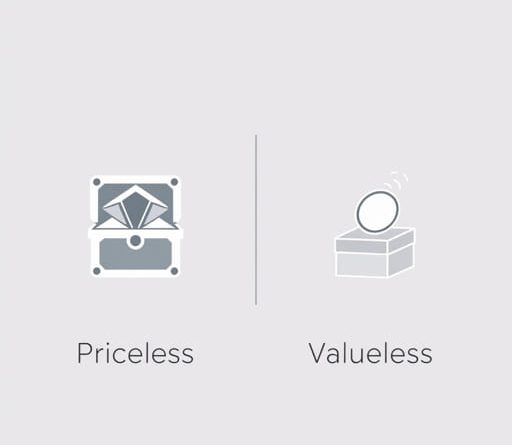
Difference Between Priceless And Valueless
The English language often contains words that appear similar in structure but carry opposite or distinct meanings. A great example of this contrast is seen in the adjectives priceless and valueless. While both words relate to the concept of value, they convey entirely different sentiments. Misusing these words can lead to miscommunication, especially in formal writing or conversation. Understanding the subtle yet crucial difference between priceless and valueless helps enhance language precision and clarity.
Understanding the Core Meaning
What Does Priceless Mean?
The word priceless refers to something so valuable that it cannot be given a price. In this sense, priceless carries an overwhelmingly positive connotation. It describes things of such great worth often emotional, historical, or sentimental that they transcend monetary value.
For example:
- The painting by Leonardo da Vinci is considered priceless.
- Her advice to me in a difficult time was priceless.
In both examples, the word emphasizes the immense, immeasurable worth of an object or gesture.
What Does Valueless Mean?
In contrast, valueless implies that something has no worth or importance. It often reflects a negative judgment, suggesting something is trivial, useless, or insignificant in both practical and emotional terms. The term is often used in economic, moral, or cultural contexts to describe things that are seen as lacking benefit or merit.
For example:
- This outdated coupon is now valueless.
- He felt the heirloom was valueless after learning it was a replica.
Here, valueless directly indicates a lack of worth, whether financially or sentimentally.
Contextual Usage: How to Use Each Word Appropriately
When to Use Priceless
Use priceless to describe items, moments, or qualities that are cherished and esteemed beyond any price tag. It often appears in conversations about art, memories, emotions, or experiences that are deeply meaningful.
Common usage examples:
- The smile on her face when she opened the gift was priceless.
- The family reunion gave me priceless memories I’ll always treasure.
This word elevates the subject to a level of immeasurable value and should be reserved for those instances where value cannot be calculated.
When to Use Valueless
On the other hand, valueless is typically used to describe items or situations lacking any real or perceived value. It’s commonly applied to outdated items, poor investments, or abstract concepts that no longer hold importance.
Common usage examples:
- Once the company collapsed, its stocks became valueless.
- The old mobile phone was deemed valueless by the repair shop.
It’s important to note that calling something valueless can carry a harsh or dismissive tone, so it should be used with consideration for context and audience.
Emotional and Cultural Nuances
Positive vs. Negative Associations
Priceless inherently evokes a sense of admiration and appreciation. It is often used to praise something extraordinary. Conversely, valueless suggests criticism or dismissal. Using valueless can hurt feelings if used carelessly, especially when referring to personal or sentimental objects.
Impact on Communication
Choosing the correct word can significantly affect the tone of your message. Describing someone’s contribution as priceless honors their value, while calling it valueless can be offensive or demoralizing. Recognizing these emotional connotations is essential in both personal and professional communication.
Common Misunderstandings
Opposites with Similar Roots
One reason for the confusion between these two words is that they both include the suffix -less, which typically implies a lack of something. However, priceless is an exception to this rule. Instead of meaning without price in the literal sense of having no worth, it means so valuable that it defies pricing. Meanwhile, valueless follows the traditional -less meaning, referring to a complete absence of value.
Examples in Media and Literature
Writers, journalists, and advertisers often use priceless to create emotional appeal. For instance, a campaign might say, A weekend with your family: priceless. This is meant to communicate that the experience cannot be bought. On the other hand, critics might describe a work of fiction or a political promise as valueless to convey disappointment or irrelevance.
Tips for Learners and Writers
Remember the Emotional Weight
Always think about the emotional and social impact of your word choice. Priceless will uplift and honor, while valueless may insult or diminish. Understanding the difference between priceless and valueless can help you write with more empathy and accuracy.
Use in Descriptive Writing
When writing essays, topics, or stories, use priceless to emphasize emotional or symbolic importance. Use valueless to underscore worthlessness or futility, especially when analyzing objects, ideas, or events.
Summary Comparison
- Priceless: Something of such high value it cannot be measured. Positive connotation. Example: priceless memories, priceless treasures.
- Valueless: Something with no value or significance. Negative connotation. Example: valueless trinkets, valueless promises.
Understanding the difference between priceless and valueless is crucial for precise and expressive communication. Though they sound similar, their meanings are fundamentally opposed. Priceless celebrates irreplaceable value, while valueless emphasizes the absence of worth. Using these words correctly not only improves clarity but also ensures that your message carries the intended emotional tone. Whether you’re writing professionally or casually, being mindful of this distinction will make your language more powerful and effective.