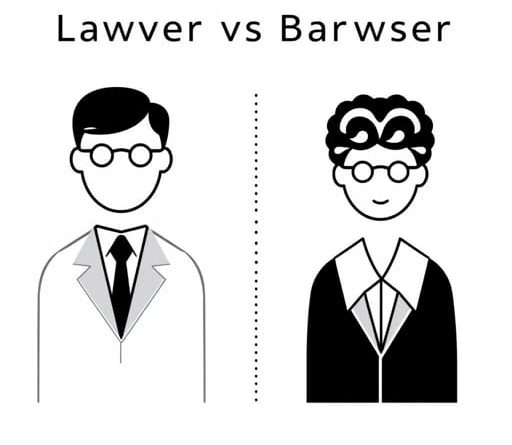
Difference Between Lawyer And Barrister
When it comes to the legal profession, terms like lawyer and barrister are often used interchangeably. However, these terms have distinct meanings depending on the legal system of a country. Understanding the difference between lawyer and barrister is essential, especially for individuals dealing with legal matters across jurisdictions. The legal roles, qualifications, rights of audience in court, and client interaction vary significantly between these two designations, especially in countries like the United Kingdom, Australia, and other common law nations.
Understanding the Term ‘Lawyer’
A lawyer is a general term used to describe anyone who has obtained a law degree and is licensed to practice law. This term encompasses various legal professionals, including solicitors, attorneys, legal consultants, and barristers in some jurisdictions. Lawyers provide legal advice, draft legal documents, conduct negotiations, and may represent clients in court depending on their licensing and area of specialization.
Responsibilities of a Lawyer
The specific responsibilities of a lawyer vary depending on the type of law they practice and the region in which they work. Common responsibilities include:
- Advising clients on legal rights and obligations
- Preparing contracts, wills, and legal documents
- Negotiating settlements and conducting mediations
- Representing clients in court (in jurisdictions where permitted)
- Researching case law and statutes
Understanding the Term ‘Barrister’
A barrister is a type of lawyer who specializes in courtroom advocacy and litigation. This term is mainly used in countries with a split legal profession, such as England and Wales, where the roles of solicitors and barristers are distinct. Barristers are often retained by solicitors to provide expert legal opinions or to represent a client in court. Unlike solicitors, barristers usually do not have direct contact with clients, except in specific legal situations such as public access cases.
Roles and Duties of a Barrister
The duties of a barrister focus more on trial work and legal argumentation. These include:
- Presenting cases in higher courts
- Cross-examining witnesses during trials
- Drafting legal pleadings and opinions
- Providing specialist legal advice to solicitors
- Representing clients in tribunals and appeal hearings
Key Differences Between Lawyer and Barrister
1. Scope of Definition
One of the primary differences between lawyer and barrister lies in their definitions. A lawyer is a general term encompassing all legal practitioners, while a barrister is a specific type of lawyer who primarily handles court advocacy.
2. Jurisdictional Usage
The term lawyer is commonly used in countries like the United States and Canada to describe all legal professionals, whether they appear in court or not. In contrast, countries like the UK and Australia distinguish between barristers and solicitors.
3. Training and Qualification
While both lawyers and barristers must obtain a law degree, the path to becoming a barrister often involves additional specialized training. For example, in the UK, aspiring barristers must complete the Bar Professional Training Course (BPTC) and undertake a one-year pupillage (apprenticeship) with a qualified barrister or chambers before they can practice independently.
4. Courtroom Role
Barristers are known for their expertise in courtroom litigation. They have rights of audience in higher courts, whereas not all lawyers or solicitors have this privilege. Barristers often wear traditional robes and wigs in court, especially in the UK, reflecting their historic role in the judicial system.
5. Client Interaction
Lawyers, particularly solicitors, interact directly with clients, offering initial consultations, legal advice, and managing the client’s case throughout the legal process. Barristers, on the other hand, are usually briefed by solicitors and have limited client interaction unless allowed under public access schemes.
Legal Professions Around the World
United Kingdom
In England and Wales, the legal profession is divided between solicitors and barristers. Solicitors handle client interaction and legal paperwork, while barristers focus on court representation. Both fall under the umbrella of lawyers.
Australia
Australia also maintains a split profession in some states, with distinct roles for barristers and solicitors. In others, such as South Australia, the legal profession is fused, and a practitioner may act as both a solicitor and a barrister.
United States
In the United States, the profession is unified. All licensed legal professionals are considered lawyers and can perform both advocacy and advisory roles. The term barrister is not commonly used.
Canada
Canada follows a fused legal system similar to the US. Lawyers are authorized to provide legal advice and represent clients in court. In Quebec, due to the civil law tradition, the legal system differs slightly from the rest of the country.
Why the Distinction Matters
Understanding the difference between lawyer and barrister is important when dealing with international legal systems. Whether you need legal advice, contract drafting, or court representation, knowing the appropriate legal professional to approach can save time and money. Additionally, legal terminology can affect how cases are handled, especially when transferring matters across borders or working with international law firms.
Choosing the Right Legal Professional
When to Consult a Lawyer
Consult a general lawyer if you need legal advice, documentation, contract review, or dispute resolution that does not necessarily require court intervention. Lawyers can guide you through legal procedures, help with compliance, and offer mediation services.
When to Engage a Barrister
Engaging a barrister is ideal when your case is going to court, especially in complex litigation or appeals. Barristers are skilled in advocacy and legal argumentation, making them the right choice for courtroom battles and high-stakes legal issues.
The difference between lawyer and barrister can appear subtle at first but becomes clearer upon examining their roles, training, and jurisdictions. While all barristers are lawyers, not all lawyers are barristers. Understanding this distinction helps individuals navigate legal systems more effectively, especially in common law countries with a split profession. Whether you need a barrister to argue your case in court or a lawyer to manage your legal affairs, knowing their functions ensures you choose the right professional for your needs.