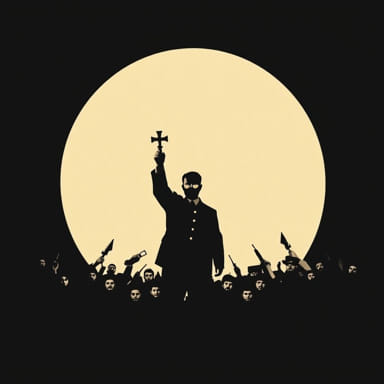
The Dictatorship Of Augusto Pinochet
The dictatorship of Augusto Pinochet in Chile remains one of the most controversial and impactful periods in Latin American history. His rise to power through a military coup in 1973 marked a dramatic end to Chile’s democratic governance and ushered in nearly two decades of authoritarian rule. Pinochet’s regime was characterized by widespread human rights abuses, economic liberalization policies, and efforts to reshape Chilean society. The legacy of his dictatorship continues to influence Chilean politics and public discourse to this day.
The Rise of Augusto Pinochet
Augusto Pinochet was a career military officer who served in the Chilean Army for decades before becoming Commander-in-Chief in 1973. On September 11 of that year, he led a military coup that overthrew the democratically elected socialist president, Salvador Allende. The coup was supported by conservative sectors in Chile and allegedly aided by foreign intelligence agencies, including the CIA, due to Cold War fears of socialism spreading in South America.
Following the coup, Pinochet dissolved Congress, suspended the constitution, and declared a state of emergency. A military junta was established, with Pinochet quickly emerging as the dominant figure. By 1974, he had formally assumed the role of President of Chile, consolidating his power and establishing a dictatorial regime that would last until 1990.
Establishment of the Military Regime
The dictatorship of Augusto Pinochet was built on tight control over all aspects of governance. Political parties were banned, media was censored, and public dissent was harshly punished. The regime operated through fear and repression, ensuring its grip on power by silencing opposition and dismantling democratic institutions.
The Chilean military and secret police, particularly the Dirección de Inteligencia Nacional (DINA), played a central role in maintaining the regime. DINA was responsible for widespread surveillance, arrests, torture, and disappearances. Thousands of Chileans were detained in secret prisons, and many were never seen again.
Human Rights Violations
One of the defining characteristics of the Pinochet dictatorship was its systematic violation of human rights. According to official reports such as the Rettig Report and the Valech Report, more than 3,000 people were killed or disappeared during Pinochet’s rule, while tens of thousands were tortured or imprisoned for political reasons.
The regime targeted leftist activists, trade union leaders, students, intellectuals, and anyone suspected of opposing the government. The brutality of the security forces instilled fear in the population and created a climate of silence and submission. Exile was another common tactic, with many Chileans forced to flee the country to escape persecution.
Methods of Repression
- Forced Disappearances: Many individuals were abducted by government agents and never seen again, their fates remaining unknown.
- Torture Centers: Secret facilities were used to interrogate and torture detainees, often without any legal process.
- Exile and Intimidation: Intellectuals and political figures were driven into exile or forced into silence through fear of retaliation.
- Censorship: The media was strictly controlled, and independent journalism was nearly impossible during the dictatorship.
Economic Policies Under Pinochet
In stark contrast to his political repression, Pinochet embraced radical economic reforms that transformed Chile’s economy. These reforms were heavily influenced by a group of Chilean economists trained at the University of Chicago, often referred to as the ‘Chicago Boys.’ They implemented free-market policies aimed at reducing government involvement in the economy.
These neoliberal reforms included privatizing state-owned enterprises, cutting public spending, eliminating trade barriers, and encouraging foreign investment. Initially, the policies caused economic hardship, including high unemployment and social inequality. However, by the late 1980s, Chile’s economy began to stabilize and grow, earning praise from some international observers.
Impact of Economic Reforms
- Privatization: State industries, including utilities and transportation, were sold off to private investors.
- Pension Reform: A controversial switch from a state-run system to private pension funds was implemented.
- Liberalization: Deregulation and openness to foreign trade became cornerstones of the economic model.
- Inequality: While macroeconomic indicators improved, income inequality widened significantly.
Opposition and Resistance
Despite the repressive environment, resistance to Pinochet’s dictatorship persisted. Underground political movements, human rights organizations, and exiled Chileans worked to expose the regime’s abuses. The Catholic Church, led by figures like Cardinal Raúl Silva Henríquez, played a crucial role in defending victims of the regime and providing sanctuary to dissidents.
In the 1980s, widespread protests and labor strikes increased pressure on the government. Civil society began to organize more openly, demanding democratic reforms and accountability. These efforts culminated in a national plebiscite held in 1988, where Chileans voted ‘No’ to extending Pinochet’s rule for another eight years. The results forced him to accept a transition to democracy.
The 1988 Plebiscite and Transition
The 1988 plebiscite marked a turning point in Chilean history. Over 55% of voters rejected Pinochet’s continued rule, leading to democratic elections in 1989. Although Pinochet stepped down as president in 1990, he retained significant power as commander-in-chief of the army until 1998 and became a lifetime senator under a constitution he had helped shape.
Chile’s return to democracy was gradual and carefully negotiated, with many elements of the dictatorship’s institutional framework remaining in place for years. Nevertheless, the transition allowed Chile to begin addressing its painful past and rebuilding democratic institutions.
Legacy of Augusto Pinochet
The dictatorship of Augusto Pinochet left a complex and deeply divisive legacy. Supporters argue that his economic reforms modernized Chile and laid the foundation for future prosperity. Critics emphasize the immense human cost of his authoritarian rule, the loss of civil liberties, and the trauma inflicted on thousands of families.
Legal battles continued well into the 21st century as victims sought justice. In 1998, Pinochet was arrested in London on charges of human rights violations, but due to his failing health and legal complexities, he was never fully prosecuted. He died in 2006 without being held accountable in a court of law.
Debate Over Historical Memory
In Chile, debates over how to remember Pinochet’s rule remain highly contentious. Memorials, public events, and school curricula continue to reflect divergent views. Some see him as a savior who rescued Chile from socialism, while others remember him as a brutal dictator who trampled democracy and committed countless crimes.
The question of how to address the dictatorship’s legacy continues to shape political discourse, with ongoing demands for truth, justice, and reconciliation.
The dictatorship of Augusto Pinochet was a period marked by political repression, economic transformation, and social upheaval. His regime fundamentally altered Chile’s political landscape and left deep scars on its society. While some credit him with economic modernization, the widespread human rights abuses committed under his rule remain a dark chapter in Chilean history. Understanding this era is essential not only for comprehending Chile’s modern development but also for ensuring that such authoritarianism is never repeated.