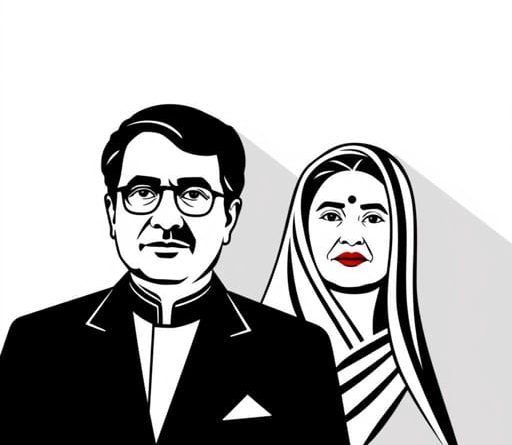
Zulfiqar Ali Bhutto And Fatima Jinnah
Zulfiqar Ali Bhutto and Fatima Jinnah were two of the most influential political figures in Pakistan’s history, each representing different eras, ideologies, and approaches to leadership. Though they belonged to separate political generations, both played critical roles in shaping the trajectory of Pakistani politics. Their contributions and legacies continue to be widely discussed in both academic and public spheres. Understanding their political journeys provides insight into the development of democracy, nationalism, and leadership in Pakistan.
Early Life and Political Origins
Fatima Jinnah: The Mother of the Nation
Fatima Jinnah, the sister of Muhammad Ali Jinnah, was born in 1893 and was trained as a dental surgeon. Her political activism began alongside her brother during the Pakistan Movement, where she emerged as a leading voice advocating for Muslim rights in British India. After Pakistan’s independence in 1947, she gradually stepped back from politics but reemerged in the early 1960s to challenge the military regime of President Ayub Khan.
Her decision to run for president in 1965 was historic. It was rare at the time for a woman in South Asia to seek such a powerful position. Fatima Jinnah represented the democratic aspirations of many Pakistanis and voiced strong opposition to authoritarian rule. She campaigned on a platform of civilian governance, civil liberties, and the restoration of parliamentary democracy.
Zulfiqar Ali Bhutto: A Rising Star
Zulfiqar Ali Bhutto was born in 1928 into a wealthy landowning family in Sindh. Educated at the University of California, Berkeley, and later at Oxford, Bhutto entered politics in the 1950s. Initially a close ally of military ruler Ayub Khan, he served as foreign minister and gained popularity for his assertive foreign policy, particularly regarding relations with India and China.
However, by the late 1960s, Bhutto broke away from the military regime and founded the Pakistan People’s Party (PPP) in 1967. His platform centered on ‘Islamic socialism,’ economic reform, and populist empowerment. Bhutto’s charisma and eloquence quickly won over large segments of the working class, students, and rural voters disillusioned with the existing political order.
Political Ideologies and Leadership Styles
Fatima Jinnah’s Democratic Legacy
Fatima Jinnah believed in constitutionalism, civilian supremacy, and democratic values. Her 1965 presidential campaign was a defining moment in Pakistan’s political history. Despite allegations of electoral manipulation, her presence gave hope to those who yearned for civilian rule after years of military dominance. Her vision aligned closely with that of her brother Muhammad Ali Jinnah: a secular and democratic Pakistan with rights protected for all citizens.
- Advocated free and fair elections
- Opposed military dictatorship
- Promoted gender equality in leadership
Bhutto’s Populism and Reforms
In contrast, Zulfiqar Ali Bhutto combined populist rhetoric with radical policy initiatives. After the secession of East Pakistan in 1971 and the creation of Bangladesh, Bhutto assumed leadership of a deeply fragmented nation. As Prime Minister (19731977), he introduced land reforms, nationalized major industries, and attempted to reduce the power of Pakistan’s traditional elites.
His government drafted Pakistan’s 1973 Constitution, a landmark document that reinstated parliamentary democracy. However, Bhutto was also known for his authoritarian tendencies, including suppression of dissent and crackdowns on opposition parties. His leadership style often blended idealism with political pragmatism.
Impact on Pakistan’s Political Landscape
Fatima Jinnah’s Influence
Fatima Jinnah passed away in 1967, but her political legacy endured. She set a precedent for women in leadership and became a symbol of resistance against military rule. In modern Pakistan, her image continues to inspire democratic movements and is frequently invoked by civil society and women’s rights organizations.
Her stance against dictatorship also influenced later generations of political leaders and thinkers who saw her as a guardian of the country’s democratic principles. Though she never held office, her role as a moral authority shaped the national consciousness.
Zulfiqar Ali Bhutto’s Long-Term Legacy
Bhutto’s impact on Pakistan is profound and enduring. His economic and social policies brought significant changes, especially for the working class. The PPP became a dominant force in Pakistani politics for decades. His daughter, Benazir Bhutto, would later become Prime Minister, continuing his political lineage.
However, his downfall was equally dramatic. In 1977, General Zia-ul-Haq overthrew Bhutto’s government in a military coup. Bhutto was later tried and executed in 1979 under controversial circumstances. His death marked the beginning of a prolonged period of military rule but also cemented his status as a martyr in the eyes of many Pakistanis.
Contrasting Symbols in Pakistan’s History
Two Paths to Political Influence
Fatima Jinnah and Zulfiqar Ali Bhutto represent two very different approaches to political engagement in Pakistan. Jinnah’s politics were rooted in dignity, democratic ideals, and principled resistance, while Bhutto embodied the dynamic, mass-based politics of reform and populism.
While Jinnah emphasized restoring the vision of a democratic Pakistan envisioned by the nation’s founder, Bhutto focused on transforming the socio-economic structure of the country. Both were controversial figures in their own right, but both also remain deeply respected by segments of the population.
Shared Struggles Against Military Rule
Despite their different timelines, both Fatima Jinnah and Zulfiqar Ali Bhutto clashed with Pakistan’s military establishment. Jinnah openly confronted Ayub Khan’s dictatorship, while Bhutto’s eventual execution was at the hands of another military ruler, General Zia. This shared opposition highlights the enduring tension between civilian leaders and military authorities in Pakistan’s political history.
Enduring Relevance
The lives and legacies of Fatima Jinnah and Zulfiqar Ali Bhutto continue to shape the political discourse in Pakistan. Their contributions to democratic ideals, civil liberties, and social reform serve as foundational chapters in the nation’s story. For future generations, understanding their influence is key to grasping the complex interplay of ideology, leadership, and resistance in South Asian politics.
Today, both figures are commemorated in public memory through writings, political speeches, and historical reflection. Fatima Jinnah is remembered for her courage and moral strength, while Bhutto is celebrated for his ambition to revolutionize society. Together, they reflect the multiple paths through which political change can be pursued, and their stories remain central to any discussion of Pakistan’s past and future.