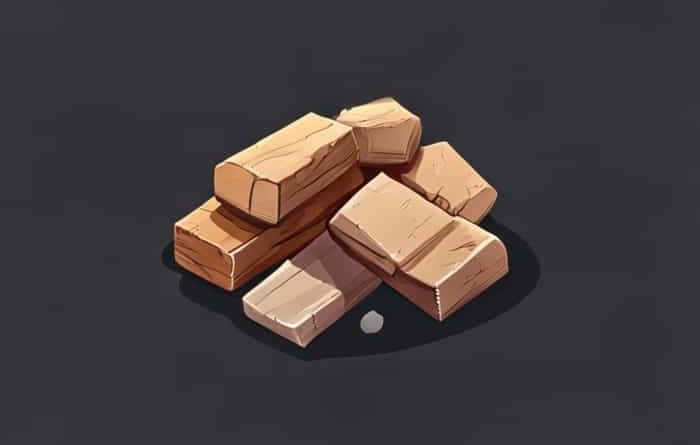
What Are Lignite Briquettes
When people talk about alternative fuels for heating and cooking, the term lignite briquettes often comes up. These compact fuel blocks are made from lignite, a type of coal that is considered to be lower in carbon content compared to hard coal but still widely used in various regions. Lignite briquettes are especially popular in areas where natural gas or other energy sources are either expensive or not easily available. Because they are uniform, easy to handle, and relatively efficient, they have become a household staple for many people, particularly in colder climates. Understanding what lignite briquettes are and how they are used can provide insights into the role they play in energy production and daily life.
Understanding Lignite as a Fuel Source
Lignite, also known as brown coal, is a type of coal that has a lower carbon content and higher moisture levels than black coal or anthracite. While it may not burn as hot or as long as higher-grade coal, lignite is abundant and easy to mine. In many countries, lignite reserves are significant, making it a practical fuel choice.
The process of turning lignite into briquettes involves drying and compressing the raw material into dense blocks. This improves its burn quality, reduces moisture content, and makes it easier to transport and store. As a result, lignite briquettes are more convenient and efficient compared to raw lignite.
How Lignite Briquettes Are Produced
The production of lignite briquettes is relatively straightforward but highly effective. The steps usually include
- DryingMoisture is reduced from the lignite, making it easier to ignite and improving efficiency.
- CrushingThe lignite is broken down into smaller pieces for processing.
- PressingThe material is compressed under high pressure, forming solid, uniform briquettes.
- PackagingOnce shaped, the briquettes are cooled and packaged for storage and sale.
Through this method, the fuel becomes more manageable, consistent, and long-lasting compared to untreated lignite.
Uses of Lignite Briquettes
Lignite briquettes are versatile and can be used in several ways, making them valuable in both domestic and industrial settings. Their main uses include
- Household HeatingMany homes rely on them for stoves, furnaces, and fireplaces because they provide steady heat and are easy to store.
- CookingIn some regions, especially rural areas, they are used for cooking due to their affordability and availability.
- Industrial ApplicationsFactories and plants use them as a cost-effective energy source for generating heat.
- Backup FuelIn situations where gas or electricity is not available, lignite briquettes serve as a reliable alternative.
Advantages of Lignite Briquettes
There are several benefits associated with using lignite briquettes as a fuel source
- They are easy to ignite and maintain a steady burn.
- Compact size makes them convenient for transport and storage.
- Cheaper compared to many other fuels, making them accessible to low-income households.
- They provide consistent heat, which is useful for both cooking and warming homes.
- Production is relatively simple, ensuring widespread availability in regions with lignite reserves.
Challenges and Environmental Concerns
Despite their advantages, lignite briquettes also come with certain drawbacks. One major issue is their environmental impact. Burning lignite releases more carbon dioxide compared to natural gas or renewable energy sources. It also produces ash and other pollutants, which can affect air quality.
Additionally, because lignite is not as energy-dense as higher-grade coal, more briquettes are needed to produce the same amount of heat. This leads to higher emissions over time. While they are convenient, lignite briquettes are often seen as less eco-friendly compared to cleaner alternatives.
Comparison with Other Fuels
To better understand lignite briquettes, it is useful to compare them with other common fuels
- Versus FirewoodBriquettes are easier to store and handle, and they provide a more consistent heat than raw wood.
- Versus CharcoalCharcoal burns hotter and cleaner but is usually more expensive than lignite briquettes.
- Versus Natural GasGas is cleaner and more efficient but may not be available in rural or low-income areas.
- Versus Hard CoalHard coal burns longer and hotter, but it is generally more costly and harder to obtain in some regions.
Global Use of Lignite Briquettes
The popularity of lignite briquettes varies depending on location. In Europe, particularly in Germany, they have been widely used for decades, especially in rural households. In Asia, they are still common in countries with large lignite reserves and growing populations that require affordable energy solutions.
In developing regions, they remain a practical option where modern infrastructure is lacking. However, in more developed areas, the shift toward renewable energy has reduced their role, as environmental concerns push societies toward cleaner energy solutions.
Storage and Safety Considerations
Like any fuel, proper storage of lignite briquettes is essential. They should be kept in a dry place to prevent moisture absorption, which can affect their burning efficiency. Handling should be done carefully to avoid excess dust, which may cause irritation when inhaled. Ventilation is also important when using them indoors, as burning can release smoke and harmful gases if ventilation is poor.
The Future of Lignite Briquettes
The future of lignite briquettes is closely tied to the global energy transition. With increasing awareness of climate change, many countries are looking for cleaner alternatives. Renewable energy sources such as solar, wind, and biomass are gradually replacing fossil fuels. However, in areas where affordability and availability are priorities, lignite briquettes will likely continue to play a role for years to come.
Technological improvements may also make them cleaner and more efficient. For example, research into reducing emissions and improving burn quality could extend their use while minimizing their environmental footprint.
Lignite briquettes are an important energy source that has supported households and industries for decades. Made from brown coal, they are easy to produce, affordable, and widely accessible, making them especially valuable in regions where other fuels are scarce or costly. While they have advantages in terms of convenience and cost, their environmental impact cannot be ignored. As the world moves toward greener solutions, lignite briquettes may eventually become less common, but for now, they remain a significant part of the global energy mix. Understanding their role helps highlight the balance between accessibility, affordability, and sustainability in energy use.