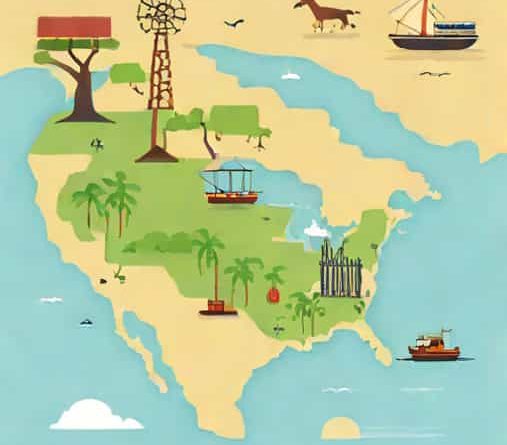
A Journey In The Seaboard Slave States
A journey in the seaboard slave states is not just a physical movement through geography, but a passage through some of the most complex and painful chapters of American history. Traveling along the Atlantic coastline of the southern United States invites reflection on landscapes shaped by both natural beauty and human suffering. These regions once formed the economic backbone of a system built on enslaved labor, and their history continues to influence culture, memory, and identity today.
Understanding the Seaboard Slave States
The seaboard slave states generally refer to the southern states along the Atlantic Ocean where slavery was deeply embedded before the Civil War. These included states such as Maryland, Virginia, North Carolina, South Carolina, Georgia, and parts of Florida. Their coastal access made them central to trade, agriculture, and the transatlantic slave system.
Plantations, ports, and towns developed rapidly along the coast, supported by enslaved African labor. A journey through these regions reveals how geography and economy were tightly connected to slavery.
The Atlantic Coast and Its Role in Slavery
The Atlantic Ocean was both a source of wealth and a route of human suffering. Coastal ports served as entry points for enslaved Africans and as export hubs for crops like tobacco, rice, cotton, and indigo.
As one travels these coastal areas today, it is impossible to ignore how close the beauty of the shoreline sits next to sites of historical trauma. The ocean that once carried ships of trade also carried stories of loss and survival.
Ports and Coastal Cities
Cities such as Charleston, Savannah, and Norfolk played central roles in the slave economy. These ports were bustling centers of commerce where enslaved people were bought, sold, and transported.
Walking through historic districts now filled with tourists, museums, and restored buildings, the past often feels close beneath the surface.
Plantations and Rural Landscapes
Moving inland from the coast, the journey passes through plantation regions where enslaved labor shaped the land itself. Fields, rivers, and forests were transformed to support large-scale agriculture.
Many plantation houses still stand, some preserved as historic sites. These places tell two stories at once one of wealth and architecture, and another of forced labor and resistance.
Life on the Plantation
For enslaved people, plantation life meant long hours of labor, limited freedom, and constant control. Families were often separated, and daily life was defined by survival.
Yet these communities also developed rich cultural traditions, including music, storytelling, and spiritual practices that endure today.
Human Stories Along the Journey
A journey in the seaboard slave states is incomplete without recognizing the individual lives that shaped this history. Enslaved men, women, and children were not just laborers but people with names, families, and hopes.
Many historical sites now focus on telling these personal stories, shifting attention away from plantation owners and toward those who endured slavery.
- Stories of resistance and rebellion
- Accounts of escape and self-emancipation
- Generations preserving memory through oral history
These narratives add depth and humanity to the journey.
Religion and Culture in the Seaboard States
Religion played a complex role in the slave states. Christianity was often used by enslavers to justify the system, yet it also became a source of strength and hope for enslaved communities.
Spirituals, prayer meetings, and later Black churches became spaces of resilience and quiet resistance.
The Impact of Geography on Enslavement
The geography of the seaboard states influenced how slavery developed. Coastal wetlands supported rice plantations, while inland areas favored tobacco and cotton.
Rivers and waterways allowed for transportation of goods and people, further entrenching slavery into everyday economic life.
Resistance and the Road to Freedom
Despite harsh conditions, resistance was constant. Enslaved people resisted through everyday acts such as slowing work, preserving culture, or learning to read in secret.
Some escaped through networks that later became known as the Underground Railroad, often heading north or toward free Black communities.
Coastal Routes and Escape
The coast sometimes offered opportunities for escape by sea. Enslaved people with maritime skills could sometimes flee aboard ships or reach free territories.
These stories highlight courage and determination in the face of immense danger.
After Emancipation
The end of slavery did not end hardship in the seaboard states. After emancipation, formerly enslaved people faced new systems of oppression, including segregation and economic exploitation.
Still, Black communities built schools, churches, and businesses, laying foundations for future generations.
Modern Reflections Along the Journey
Today, traveling through the seaboard slave states is an opportunity for education and reflection. Museums, memorials, and historic markers encourage visitors to confront the past honestly.
At the same time, these regions are vibrant places where African American culture continues to shape music, food, language, and art.
The Importance of Remembering
Remembering the history of slavery along the seaboard is essential to understanding the present. The legacy of slavery is visible in economic disparities, cultural traditions, and ongoing discussions about justice and equality.
A thoughtful journey encourages listening, learning, and empathy rather than simple observation.
Lessons From the Seaboard Slave States
The journey teaches that history is not distant or abstract. It is embedded in landscapes, buildings, and communities.
It also shows the resilience of people who endured unimaginable hardship and still shaped a lasting cultural legacy.
A journey in the seaboard slave states is a journey through contradiction beauty and brutality, progress and pain, memory and hope. These coastal regions played a central role in shaping American history, and their stories continue to matter.
By engaging with this history thoughtfully, travelers and readers alike can gain a deeper understanding of the past and its influence on the present. The journey is not only about where one goes, but about what one learns, remembers, and carries forward.