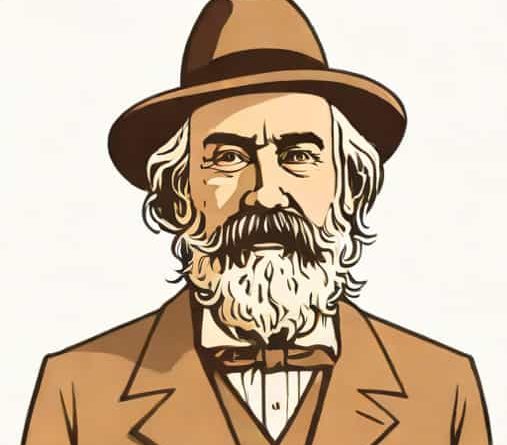
Discuss Walt Whitman As An Elegiac Poet
Walt Whitman, one of the most influential American poets of the 19th century, is widely recognized for his innovative style and profound exploration of human experience. While he is often celebrated for his exuberant and expansive poetry that celebrates life, democracy, and the human body, he also occupies a significant place as an elegiac poet. Whitman’s elegiac verse captures the somber realities of mortality, grief, and the inevitability of death, while simultaneously affirming the continuity of life and the spiritual unity of all beings. Through his elegiac poetry, Whitman demonstrates an ability to transform personal and collective loss into a universal meditation on life, offering readers both consolation and reflection.
Understanding Elegiac Poetry
Elegiac poetry traditionally mourns the death of a person or laments the passage of time. It often reflects themes of loss, mortality, and remembrance, providing both emotional catharsis and philosophical insight. While classical elegies were often structured and formal, Whitman’s approach to elegy is expansive and free-verse, reflecting his belief in the organic rhythms of speech and thought. In Whitman’s hands, the elegy becomes not only a personal lament but also a meditation on the collective human experience and the spiritual dimensions of life and death.
The Civil War and Whitman’s Elegiac Response
Whitman’s most profound elegiac work emerged during and after the American Civil War, a period marked by unprecedented loss and suffering. The war’s human toll profoundly influenced his poetry, prompting reflections on death, patriotism, and the shared grief of a nation. In his collectionDrum-Taps(1865), Whitman mourns fallen soldiers while celebrating their courage and humanity. His poetry captures both the individual sorrow of loss and the larger communal mourning that accompanies national tragedy.
- Personal Loss and Witnessing DeathWhitman worked as a nurse during the Civil War, tending to wounded soldiers. His direct exposure to suffering deepened his understanding of grief and informed the elegiac tone in his poetry.
- Collective MourningPoems like When Lilacs Last in the Dooryard Bloom’d address national loss, particularly the assassination of Abraham Lincoln, blending personal grief with public commemoration.
- Spiritual ReflectionWhitman’s elegies often transcend conventional mourning, exploring the eternal nature of the soul and the interconnectedness of all living things.
When Lilacs Last in the Dooryard Bloom’d as an Elegy
One of the most famous examples of Whitman’s elegiac poetry is When Lilacs Last in the Dooryard Bloom’d, written in 1865 following the assassination of Abraham Lincoln. The poem mourns Lincoln’s death while reflecting on themes of national loss, mortality, and the cyclical nature of life. Whitman employs rich natural imagery, including lilacs, the star, and the hermit thrush, to symbolize mourning, guidance, and the continuity of life. The poem exemplifies Whitman’s approach to the elegy, blending personal emotion with a universal meditation on death.
Techniques and Style in Whitman’s Elegiac Poetry
Whitman’s elegiac poetry is characterized by several distinctive features
- Free VerseWhitman abandons strict meter and rhyme schemes, allowing his elegies to flow organically and reflect natural speech patterns.
- Repetition and ParallelismRepetitive phrases and parallel structures create rhythm and emphasize the emotional weight of mourning and remembrance.
- SymbolismNatural imagery, such as flowers, birds, and celestial bodies, serves as metaphors for life, death, and spiritual continuity.
- Inclusive PerspectiveWhitman often situates individual grief within a broader human and cosmic context, transforming personal sorrow into universal reflection.
The Philosophical Dimension of Whitman’s Elegy
Whitman’s elegiac poetry is not limited to mourning; it engages deeply with philosophical questions about mortality and the meaning of life. He views death not as an end but as part of an eternal cycle, connecting the living and the dead. In poems like Out of the Cradle Endlessly Rocking, Whitman explores loss and longing, yet affirms the persistence of memory, art, and nature as vehicles for immortality. His approach to elegy integrates emotional depth with philosophical reflection, allowing readers to confront mortality while finding solace in continuity and interconnectedness.
Integration of Personal and Collective Grief
Whitman’s ability to intertwine personal and collective grief sets his elegiac poetry apart. His direct experiences with loss, both personal and observed, inform his portrayal of universal sorrow. This dual focus allows his readers to relate to the immediacy of personal grief while also participating in broader societal or historical mourning. In this sense, Whitman’s elegies serve both as intimate meditations and communal rituals, reflecting the shared human experience of confronting mortality.
Legacy of Whitman as an Elegiac Poet
Whitman’s contributions as an elegiac poet have left a lasting impact on American literature and the understanding of grief in poetry. By expanding the boundaries of the elegy through free verse and philosophical reflection, he influenced subsequent generations of poets who sought to address personal and collective loss in innovative ways. Whitman’s integration of the natural world, democratic ideals, and human interconnectedness into his elegies exemplifies a uniquely American approach to mourning and remembrance.
Relevance to Contemporary Readers
Whitman’s elegiac poetry continues to resonate with contemporary readers due to its universal themes of loss, memory, and hope. In times of personal grief or societal tragedy, his works provide solace, reflection, and a sense of continuity. The blending of emotional depth with spiritual and philosophical insight allows readers to engage with mourning in a holistic way, making Whitman’s elegiac vision timeless and enduring.
Walt Whitman’s identity as an elegiac poet highlights the depth and versatility of his poetic vision. Through works such as When Lilacs Last in the Dooryard Bloom’d and other Civil War-inspired poems, he transforms personal and collective grief into universal reflections on life, death, and the eternal human spirit. His use of free verse, symbolism, and inclusive perspective redefines the traditional elegy, blending emotional immediacy with philosophical contemplation. By integrating personal experiences of loss with broader societal and spiritual concerns, Whitman offers a model of elegiac poetry that is both intimate and expansive, ensuring his place as one of the most significant elegiac voices in American literature.