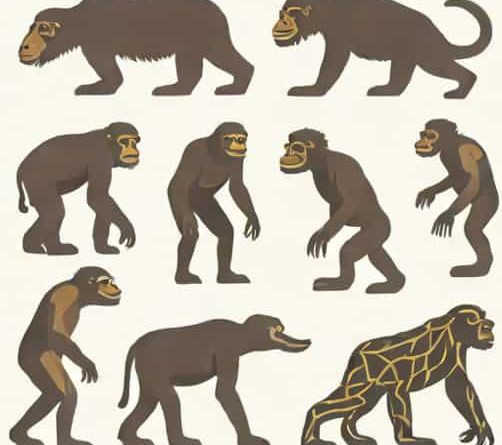
Evolution Of Australopithecus Afarensis
The evolution of Australopithecus afarensis represents one of the most significant chapters in human evolutionary history. This species, which lived approximately 3.9 to 2.9 million years ago, provides critical insights into the development of bipedalism, brain expansion, and early hominin behavior. Fossil evidence, particularly the famous specimen known as Lucy, has allowed scientists to reconstruct aspects of A. afarensis’ anatomy, ecology, and lifestyle. Understanding the evolution of Australopithecus afarensis is essential for tracing the roots of the human lineage and exploring how early hominins adapted to environmental challenges in the African landscape.
Origins and Discovery of Australopithecus afarensis
Australopithecus afarensis was first identified in the 1970s, following extensive paleontological work in East Africa. The species name afarensis refers to the Afar Triangle in Ethiopia, where many key fossils have been found. Among these discoveries, the 1974 unearthing of Lucy, a nearly complete skeleton, revolutionized our understanding of early hominins. Lucy’s skeletal features, particularly the pelvis and lower limbs, provided definitive evidence of habitual bipedalism, highlighting the evolutionary transition from tree-dwelling ancestors to more ground-oriented locomotion.
Physical Characteristics
A. afarensis exhibited a combination of ape-like and human-like features, reflecting its transitional status in the hominin lineage. Key physical characteristics include
- Skull and Brain SizeThe cranial capacity ranged from 375 to 550 cubic centimeters, slightly larger than chimpanzees but significantly smaller than modern humans.
- Facial FeaturesPrognathic face with a pronounced jaw, large teeth, and a flat nose area.
- Limbs and LocomotionLong arms relative to legs, suggesting retained climbing ability, but a pelvis and leg structure suited for upright walking.
- Hands and FeetCurved fingers for grasping branches, yet feet adapted for walking long distances.
The mosaic of traits in A. afarensis illustrates the species’ adaptability to both arboreal and terrestrial environments, reflecting evolutionary pressures in the varied African habitats.
Habitat and Ecology
Australopithecus afarensis inhabited a range of environments, including open savannas, woodlands, and riverine forests. Fossil evidence suggests that these hominins were opportunistic foragers, feeding on fruits, leaves, seeds, and possibly small animals. The varied diet likely provided resilience against environmental fluctuations and contributed to evolutionary success. Fossilized footprints at Laetoli, Tanzania, dating to approximately 3.6 million years ago, provide further evidence of bipedal locomotion and group movement, suggesting social behavior and collective foraging strategies.
Significance of Laetoli Footprints
The Laetoli footprints are one of the most remarkable pieces of evidence for understanding A. afarensis locomotion. Preserved in volcanic ash, these footprints show a clearly defined arch and forward-pointing toes, characteristic of efficient bipedal walking. The footprints also indicate that A. afarensis traveled in small groups, implying some degree of social organization and communication within the species.
Evolutionary Significance
Australopithecus afarensis occupies a pivotal place in the hominin evolutionary tree, bridging earlier australopithecines and later Homo species. The adaptations observed in A. afarensis, including bipedalism and dietary flexibility, provided a foundation for further evolutionary developments. By analyzing skeletal morphology, scientists have inferred that this species could exploit a wide range of ecological niches, an advantage that likely contributed to its long survival period.
Adaptations for Bipedalism
Bipedal locomotion is one of the defining traits of hominins, and A. afarensis exhibits multiple adaptations for walking upright. These include a broad and short pelvis, angled femurs, and aligned knees that provide stability during bipedal walking. The spine also shows lumbar curvature, contributing to balance and efficient weight distribution. These anatomical features mark a significant evolutionary step, setting the stage for increased mobility and the eventual development of tool use and complex social structures in later Homo species.
Brain Evolution
Although A. afarensis had a relatively small brain compared to modern humans, incremental increases in cranial capacity reflect early cognitive evolution. The species likely possessed problem-solving skills, spatial awareness, and social intelligence sufficient for survival in challenging environments. The small brain size did not prevent A. afarensis from adapting to environmental pressures, demonstrating that early hominins could develop complex behaviors without large brains.
Behavior and Social Structure
While direct evidence of social behavior is limited, inferences from fossil assemblages and footprint trails suggest that A. afarensis lived in small, organized groups. Social structures may have included cooperative foraging, shared vigilance against predators, and possibly some form of communication. Sexual dimorphism in skeletal remains, with males being larger than females, indicates that competition for mates likely influenced social dynamics.
Diet and Foraging Strategies
A. afarensis had a versatile diet, consisting of both plant and animal resources. Dental morphology indicates the ability to process tough plant material, while isotopic analyses suggest occasional consumption of meat or insects. The species likely relied on both foraging and opportunistic scavenging, showcasing adaptability to seasonal variations and environmental challenges. These dietary strategies played a crucial role in the evolutionary success of Australopithecus afarensis.
Fossil Evidence and Discoveries
Key fossil discoveries have shaped our understanding of A. afarensis evolution. Notable finds include
- Lucy (AL 288-1)Discovered in 1974 in Hadar, Ethiopia, Lucy’s nearly complete skeleton provided critical insight into bipedal anatomy.
- Laetoli FootprintsPreserved 3.6 million-year-old tracks in Tanzania demonstrating upright walking.
- Other Skeletal RemainsFossils such as the First Family collection illustrate variability within the species and hint at group living.
These discoveries collectively help reconstruct the morphology, behavior, and ecological adaptations of A. afarensis, offering a window into early hominin life.
Implications for Human Evolution
The study of Australopithecus afarensis has profound implications for understanding human evolution. Its combination of bipedalism, tool-use potential, and ecological adaptability provides evidence for the evolutionary pathways that led to Homo habilis and eventually Homo sapiens. By examining A. afarensis, scientists can trace the gradual accumulation of traits that define modern humans, including upright walking, social behavior, and environmental versatility.
The evolution of Australopithecus afarensis represents a critical stage in hominin history. Through anatomical adaptations for bipedalism, dietary flexibility, and emerging social structures, A. afarensis exemplifies the transition from ape-like ancestors to early human forms. Fossil evidence, including skeletal remains and footprints, provides a detailed glimpse into their lives and ecological challenges. Studying A. afarensis not only enhances our understanding of early human evolution but also highlights the remarkable adaptability and resilience of our distant ancestors. As research continues, new discoveries will further illuminate the role of Australopithecus afarensis in shaping the trajectory of human evolution.
“`