Godzilla Minus One Which Godzilla Is It
Godzilla Minus One has generated a great deal of discussion among fans and casual viewers alike, especially around one central question which Godzilla is it? For a character with nearly seven decades of history, multiple timelines, reboots, and interpretations, this question matters more than it might seem at first glance. Godzilla Minus One does not simply reuse an existing version of the monster. Instead, it reintroduces Godzilla in a way that feels both familiar and unsettlingly new, grounded in history while reshaping the identity of the iconic kaiju for a modern audience.
The Meaning Behind Godzilla Minus One
The title Godzilla Minus One itself offers an important clue. The phrase Minus One refers to post-World War II Japan, a nation already reduced to nothing by war. Godzilla’s arrival pushes the country even further into despair, taking it below zero, or minus one.
This framing immediately places the film in a specific historical and emotional context, setting it apart from many other Godzilla movies.
Is Godzilla Minus One Part of an Existing Timeline?
One of the most common questions is whether Godzilla Minus One belongs to an established Godzilla era such as Showa, Heisei, Millennium, or Reiwa. The answer is no in a traditional sense.
Godzilla Minus One is a standalone reboot that exists in its own continuity. While it draws inspiration from earlier films, it does not directly connect to them.
Why a Standalone Godzilla Matters
By creating a separate timeline, the filmmakers avoid being constrained by decades of lore. This allows them to reimagine Godzilla’s origins, motivations, and symbolism.
The result is a version of Godzilla that feels raw and immediate.
Connection to the Original 1954 Godzilla
Although Godzilla Minus One is not a direct sequel to the 1954 film, it is heavily inspired by it. Both films are set in post-war Japan and use Godzilla as a metaphor for destruction, trauma, and nuclear fear.
In this sense, Godzilla Minus One can be seen as a spiritual successor to the original Godzilla.
Which Godzilla Design Is Used?
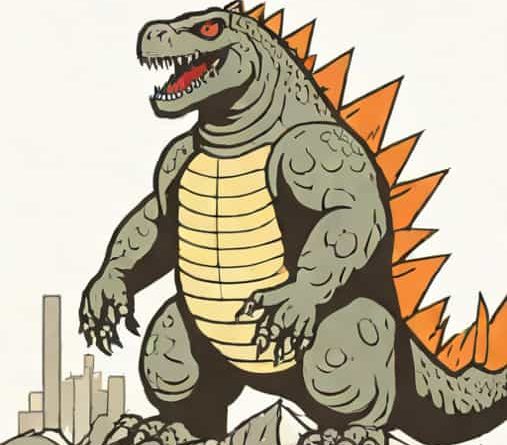
Visually, the Godzilla in Minus One resembles classic incarnations rather than the more exaggerated designs seen in some later films. The creature has a powerful, muscular build, rough skin texture, and menacing dorsal plates.
This design emphasizes weight and realism, making Godzilla feel like a true force of nature.
Atomic Breath and Abilities
The atomic breath in Godzilla Minus One is portrayed as devastating and terrifying. It is not just a flashy power but a symbol of overwhelming destruction.
This approach aligns closely with early portrayals of Godzilla as a walking nuclear disaster.
Is This Godzilla a Villain or a Force of Nature?
In many later films, Godzilla becomes a protector of Earth or a reluctant hero. Godzilla Minus One takes a different route.
This version of Godzilla is largely antagonistic, closer to a natural disaster than a character with moral alignment.
Thematic Focus of Godzilla Minus One
The film focuses heavily on human suffering, responsibility, and survival. Godzilla is not the protagonist but the catalyst that exposes human vulnerability.
This thematic direction reinforces the idea that this Godzilla is meant to inspire fear rather than admiration.
Comparison With Other Modern Godzillas
Comparing Godzilla Minus One to other recent incarnations helps clarify which Godzilla it is.
- Unlike Legendary’s MonsterVerse Godzilla, this version is not a guardian of balance.
- Unlike Shin Godzilla, it does not focus on bureaucratic satire.
- Unlike anime Godzilla, it is not a long-term evolutionary entity.
Godzilla Minus One stands on its own.
Is Godzilla Minus One Part of the Reiwa Era?
Chronologically, Godzilla Minus One was released during the Reiwa era of Godzilla films. However, stylistically and thematically, it does not fully align with the experimental tone of Shin Godzilla or the animated trilogy.
It feels more like a return to classical storytelling.
Godzilla’s Origin in Minus One
The film suggests that Godzilla existed before nuclear testing but was mutated and empowered by it. This idea blends older interpretations with modern scientific anxieties.
The origin reinforces Godzilla’s role as a symbol of unintended consequences.
Human Perspective as the Core of the Story
Unlike some Godzilla films that emphasize spectacle, Godzilla Minus One keeps the focus on ordinary people.
The monster is seen through the eyes of survivors, making its presence more frightening.
Why Fans Ask Which Godzilla Is It?
The question arises because Godzilla has become a multiverse of interpretations. Fans want to know whether this Godzilla connects to others they know.
The answer is that Godzilla Minus One is intentionally its own identity.
Symbolism of This Godzilla
This Godzilla symbolizes guilt, loss, and unresolved trauma. It represents what happens when society fails to confront its past.
Rather than evolving into a hero, this Godzilla remains a reminder of devastation.
How Godzilla Minus One Respects the Franchise
Even while standing alone, the film pays homage to the franchise’s roots.
From sound design to pacing, it echoes the spirit of classic Godzilla films.
Audience Reception and Interpretation
Many viewers have praised Godzilla Minus One for making Godzilla scary again. Others appreciate its emotional depth.
This response shows that the film successfully redefines Godzilla for a new generation.
Is This the Definitive Godzilla?
Rather than being definitive, Godzilla Minus One is best seen as one powerful interpretation.
It does not replace other versions but adds to the character’s legacy.
Why Godzilla Minus One Feels Unique
The combination of historical setting, grounded storytelling, and restrained spectacle makes this Godzilla stand out.
It feels less like a franchise product and more like a focused narrative.
The Role of Fear in This Godzilla
Fear is central to this incarnation. Godzilla is unpredictable, unstoppable, and indifferent to human suffering.
This restores the monster’s original horror roots.
How This Godzilla Fits Into the Broader Mythos
Even as a standalone version, Godzilla Minus One enriches the overall mythos.
It reminds audiences that Godzilla can be many things, depending on the story being told.
So, which Godzilla is it? Godzilla Minus One is its own incarnation, inspired by the 1954 original but shaped by modern storytelling. It is not a sequel, not a remake, and not part of a shared universe.
This Godzilla exists to confront audiences with fear, history, and responsibility. By standing alone, it proves that Godzilla remains a powerful symbol capable of being reinterpreted without losing its core identity. Godzilla Minus One is not just another Godzilla; it is a reminder of why the monster endures.