How Many Legs Does A Grasshopper Have
Grasshoppers are fascinating insects that capture the curiosity of many, especially children and students learning about the natural world. One common question people ask is, How many legs does a grasshopper have? Understanding the anatomy of grasshoppers not only answers this question but also provides insight into their unique abilities, such as jumping, climbing, and even communicating through sound. Grasshoppers belong to the order Orthoptera, and their physical structure has evolved to support survival in various environments, making the study of their legs particularly interesting for entomology enthusiasts and nature lovers alike.
Basic Anatomy of a Grasshopper
Grasshoppers have a segmented body that consists of three main parts the head, thorax, and abdomen. Each part plays a specific role in the insect’s life, but when it comes to locomotion, the thorax is the most important. The thorax is divided into three segments, and each segment supports a pair of legs. This arrangement is characteristic of all insects and is key to understanding why grasshoppers have a specific number of legs and how they function. The legs are not only essential for movement but also play a role in feeding and defense mechanisms.
How Many Legs Does a Grasshopper Have?
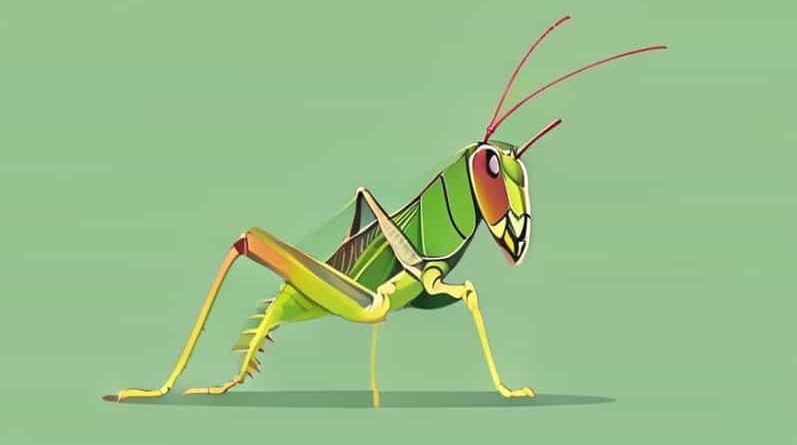
A grasshopper has six legs, which is typical for insects. These legs are attached to the thorax and are divided into three pairs the front legs, middle legs, and hind legs. Each pair serves a different purpose, allowing the grasshopper to perform a variety of movements efficiently. The six-legged structure is an evolutionary trait that provides balance, stability, and mobility, enabling grasshoppers to escape predators, hunt for food, and interact with their environment.
The Function of Grasshopper Legs
Each pair of grasshopper legs has specialized functions that contribute to the insect’s overall survival and agility. Understanding these functions explains why the number and type of legs are so important.
Front Legs
The front legs are primarily used for holding and manipulating food. Grasshoppers feed on plants, and these legs help them grip leaves and stems while they chew. Additionally, the front legs assist in walking and maintaining balance, ensuring the insect can navigate uneven terrain without falling or losing stability.
Middle Legs
The middle legs serve as support and help in walking. They work in coordination with the front legs to maintain balance during movement. These legs are also essential for stability when the grasshopper is stationary, allowing it to stay poised and alert to threats in its environment. The coordination between the front and middle legs is vital for efficient movement and survival.
Hind Legs
The hind legs are the most powerful and specialized pair. These legs are adapted for jumping and can propel a grasshopper several times its body length in a single leap. The hind legs are muscular and contain elastic structures that store energy, releasing it rapidly for sudden jumps. This adaptation helps grasshoppers escape predators, move quickly between plants, and cover large distances with minimal energy expenditure. The extraordinary strength and design of the hind legs make them a remarkable feature of grasshopper anatomy.
Additional Features of Grasshopper Legs
Besides their primary functions, grasshopper legs have other interesting features that contribute to their survival and behavior.
- Spines and Sensory HairsGrasshopper legs often have spines and tiny hairs that help detect changes in the environment, such as vibrations, air currents, or the approach of predators.
- ClawsThe tarsi, or the end segments of the legs, have small claws that help grip surfaces, allowing grasshoppers to climb plants and navigate uneven terrain effectively.
- Flexibility and Joint StructureEach leg has multiple joints, giving grasshoppers remarkable flexibility and the ability to adjust their position for walking, jumping, or landing.
- Strength-to-Size RatioThe hind legs are especially strong relative to the grasshopper’s size, enabling jumps that seem disproportionate to its body length, a key survival mechanism.
Comparison with Other Insects
Grasshoppers’ six-legged configuration is common among insects, but their hind legs are particularly specialized compared to many other species. For example, ants and beetles also have six legs, but their legs are more uniform and not adapted for jumping. Grasshoppers’ unique hind leg design allows them to escape predators effectively and move efficiently in their habitat, showcasing a fascinating example of evolutionary adaptation. Studying these differences helps entomologists understand how various insects have evolved to occupy different ecological niches.
Importance of Knowing Grasshopper Leg Anatomy
Understanding how many legs a grasshopper has and their functions is important for several reasons. It helps students, educators, and nature enthusiasts learn about insect anatomy, evolution, and behavior. For farmers and gardeners, knowledge about grasshopper movement and jumping ability can inform pest control strategies. For scientists, studying the structure and mechanics of grasshopper legs can inspire innovations in robotics, biomechanics, and materials science, as the energy storage and release mechanisms in the hind legs are highly efficient and adaptable.
Grasshopper Legs and Behavior
The legs of grasshoppers are closely tied to their behavior. Their jumping ability allows them to escape predators quickly, while the front and middle legs support feeding and interaction with the environment. The placement and functionality of legs influence how grasshoppers communicate, mate, and forage. Observing how grasshoppers use their legs in different contexts provides insights into their survival strategies and ecological role.
Fun Facts About Grasshopper Legs
Grasshopper legs are not only functional but also fascinating from a biological perspective. Here are some interesting facts
- Grasshoppers can jump up to 20 times their body length using their powerful hind legs.
- The muscles in the hind legs store energy like a spring, releasing it rapidly to generate high-speed jumps.
- Spines on their legs can serve as both sensory tools and defense mechanisms against predators.
- Grasshoppers’ legs can help them produce sounds called stridulation, which is used in mating calls or communication.
- The six-legged design provides optimal balance and stability for both walking and climbing vegetation.
Grasshoppers are remarkable insects with six legs, each serving specialized functions that support survival, mobility, and behavior. The front legs aid in feeding and balance, the middle legs assist with walking and stability, and the powerful hind legs enable extraordinary jumping capabilities. Understanding the anatomy and function of grasshopper legs provides insight into their behavior, adaptation, and ecological role. From their spines and sensory hairs to the energy-storing structures in their hind legs, grasshoppers demonstrate a perfect example of evolutionary efficiency. By studying these insects, we gain not only answers to questions like how many legs does a grasshopper have but also a deeper appreciation for the complexity and ingenuity of the natural world.