How Many Light Years Away Is Fomalhaut
When people look up at the night sky, some stars stand out not because they are the brightest, but because of the stories and mysteries attached to them. Fomalhaut is one of those stars. Often noticed by astronomers and sky watchers alike, it has sparked curiosity for decades. A common question that arises is how many light years away is Fomalhaut, and why its distance matters so much in astronomy. Understanding this star’s location helps explain its role in our cosmic neighborhood and why it continues to attract scientific attention.
Understanding What Fomalhaut Is
Fomalhaut is a bright star located in the southern part of the sky. It is the main star of the constellation Piscis Austrinus, also known as the Southern Fish. Because it shines brightly and appears relatively isolated, it has been easy to observe since ancient times.
The name Fomalhaut comes from Arabic origins, meaning mouth of the fish, which reflects its position in the constellation. Today, it is known not just for its brightness but also for the fascinating features surrounding it.
How Many Light Years Away Is Fomalhaut
The distance to Fomalhaut is one of the most frequently asked questions about this star. Fomalhaut is located approximately 25 light years away from Earth. In astronomical terms, this makes it relatively close compared to many other stars that are hundreds or thousands of light years away.
When astronomers say a star is 25 light years away, they mean that the light we see today left the star about 25 years ago. This concept helps illustrate how vast space truly is.
Why 25 Light Years Is Considered Close
In everyday terms, 25 light years sounds unimaginably far. However, within our galaxy, this distance places Fomalhaut in our local stellar neighborhood.
- It is closer than most stars visible to the naked eye
- Its proximity allows detailed observation
- It is part of studies about nearby planetary systems
What Is a Light Year
To understand how far away Fomalhaut is, it helps to understand what a light year means. A light year is the distance that light travels in one year through space. Light moves incredibly fast, about 300,000 kilometers per second.
When you multiply that speed by the number of seconds in a year, the result is a distance of nearly 9.5 trillion kilometers. So, when we say Fomalhaut is 25 light years away, we are talking about a distance of over 200 trillion kilometers.
Why Distance Matters in Astronomy
The distance to a star like Fomalhaut is crucial for many reasons. It helps astronomers calculate the star’s true brightness, size, and influence on its surroundings.
Knowing how many light years away Fomalhaut is also helps scientists study how stars form and evolve over time.
Impact on Observations
Because Fomalhaut is relatively close, telescopes can capture more detail than they can with distant stars. This has led to several important discoveries.
- Observation of dust and debris around the star
- Studies of potential planetary formation
- Better understanding of stellar environments
Fomalhaut and Its Surrounding Disk
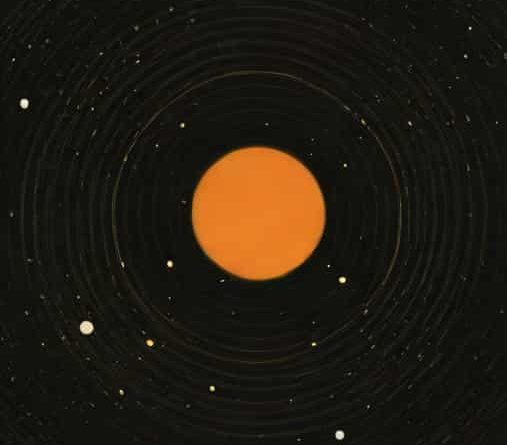
One of the reasons Fomalhaut is so famous is because it has a large debris disk surrounding it. This disk is made of dust and rocky material, similar to the Kuiper Belt in our own solar system.
The proximity of Fomalhaut, at about 25 light years away, allows astronomers to study this disk in detail and learn how planetary systems might develop.
The Search for Planets Around Fomalhaut
Because Fomalhaut is relatively nearby, it has been a key target in the search for exoplanets. At one point, scientists believed they had directly imaged a planet orbiting the star.
Although later research suggested the object might be a cloud of debris rather than a planet, the star remains an important subject for ongoing study.
Why Nearby Stars Are Ideal for Planet Searches
Stars that are closer to Earth offer better opportunities for detecting planets. Fomalhaut’s distance makes it an excellent example.
- Less distortion from interstellar material
- Clearer images with advanced telescopes
- More accurate measurements of motion and brightness
How Astronomers Measure the Distance to Fomalhaut
Measuring stellar distances is a complex task. For stars like Fomalhaut, astronomers use a method called parallax. This technique involves observing how a star appears to shift against distant background stars as Earth moves around the Sun.
By measuring this tiny shift, scientists can calculate how many light years away Fomalhaut is with impressive accuracy.
Fomalhaut’s Place in the Local Stellar Neighborhood
At 25 light years away, Fomalhaut is part of a group of stars that make up our local region of the Milky Way. These stars are often studied together to understand how stellar systems interact.
Being relatively close also means Fomalhaut is sometimes mentioned alongside stars like Vega and Altair, which share similar characteristics.
Visibility From Earth
Fomalhaut’s distance and brightness make it visible to the naked eye under good conditions. It is most easily seen from the Southern Hemisphere, but it can also be observed from parts of the Northern Hemisphere during certain times of the year.
Knowing how many light years away Fomalhaut is adds to the sense of wonder when spotting it in the night sky.
Comparing Fomalhaut to Other Nearby Stars
When comparing distances, Fomalhaut is farther away than the closest star system, Alpha Centauri, which is about 4.3 light years away. However, it is much closer than many bright stars visible in the sky.
This balance of brightness and distance makes it especially useful for scientific research.
Why Fomalhaut Continues to Fascinate Scientists
Fomalhaut remains a star of interest because it offers clues about how solar systems form and change. Its debris disk, possible planetary remnants, and relative proximity all contribute to its importance.
The question of how many light years away is Fomalhaut often serves as a starting point for deeper discussions about our place in the universe.
Educational Value of Studying Fomalhaut
For students and astronomy enthusiasts, Fomalhaut provides a clear example of how distance, light, and observation work together. Its manageable distance makes abstract concepts easier to understand.
Learning about stars like Fomalhaut helps build a foundation for understanding larger cosmic structures.
Fomalhaut is located about 25 light years away from Earth, placing it within our local stellar neighborhood. While that distance is enormous by human standards, it is relatively close in the vast scale of the universe.
Understanding how far away Fomalhaut is helps explain why it has played such an important role in modern astronomy. Its proximity allows scientists to study it in detail, offering valuable insights into star systems, planetary formation, and the nature of our galaxy. Each time we look toward Fomalhaut, we are seeing light that began its journey a quarter of a century ago, reminding us of the immense and fascinating scale of space.