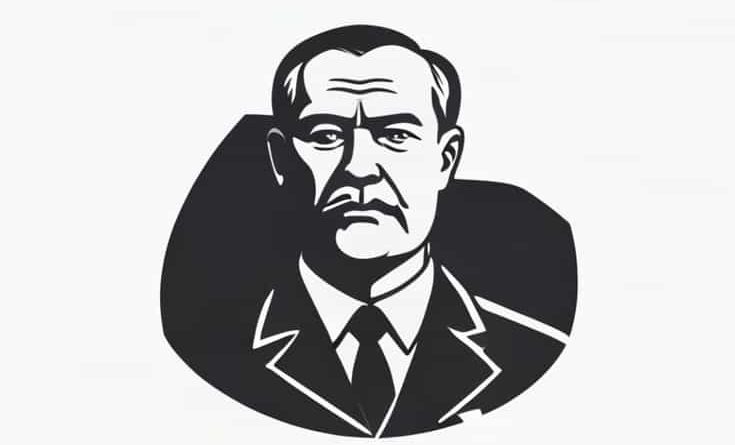
How Was The Leader Of The Soviet Union
The leadership of the Soviet Union is a topic that has fascinated historians, political scientists, and the general public for decades. From its formation after the Russian Revolution in 1917 until its dissolution in 1991, the Soviet Union was led by a series of powerful leaders who shaped not only the destiny of the nation but also the course of global politics. Understanding how the leader of the Soviet Union governed involves examining their political strategies, economic policies, foreign relations, and personal leadership style. These leaders faced unique challenges, including industrialization, war, ideological competition, and the management of a vast and diverse country.
The Role of the Soviet Leader
The leader of the Soviet Union, often holding the title of General Secretary of the Communist Party, was the most powerful figure in the state. Unlike democratic systems where power is often distributed among multiple branches, the Soviet leader had considerable control over government, military, and party functions. This centralization of power meant that the policies, personality, and priorities of the leader had a profound impact on the daily lives of Soviet citizens and the country’s position in the world.
Key Responsibilities
- Setting domestic policies including economic planning, industrial development, and social programs.
- Managing relations with satellite states and guiding foreign policy.
- Overseeing the Communist Party’s ideology and ensuring loyalty within government ranks.
- Responding to crises such as wars, famines, or political dissent.
- Shaping the cultural and educational direction of the nation to align with socialist principles.
Notable Leaders and Their Styles
The Soviet Union had several prominent leaders, each of whom approached governance differently. Understanding how each leader ruled provides insight into the functioning of the Soviet state and its impact on history.
Vladimir Lenin (1917-1924)
Lenin was the founder of the Soviet Union and the first leader. His governance was marked by revolutionary zeal and the establishment of a socialist state. He implemented the New Economic Policy (NEP), which allowed limited private enterprise to stabilize the economy after the Civil War. Lenin’s leadership style combined ideological commitment with pragmatic decision-making. He relied on a close group of advisers and sought to consolidate power within the Communist Party to achieve revolutionary goals.
Joseph Stalin (1924-1953)
Stalin’s leadership was characterized by authoritarian control, rapid industrialization, and political repression. He implemented a series of Five-Year Plans to transform the Soviet Union into a major industrial power. Stalin also orchestrated widespread purges to eliminate political rivals, creating an atmosphere of fear. His governance style was highly centralized, and he maintained strict control over all aspects of society, including the economy, media, and education. While his policies helped the Soviet Union become a superpower, they also resulted in significant human suffering.
Nikita Khrushchev (1953-1964)
Khrushchev’s leadership marked a period of de-Stalinization and relative liberalization. He sought to reduce the oppressive controls established by Stalin while maintaining a strong communist framework. Khrushchev promoted agricultural and industrial reforms, launched the space program, and played a central role in Cold War diplomacy. His style was more open and sometimes erratic, emphasizing both ideological commitment and attempts to modernize the Soviet Union. His leadership was notable for the Cuban Missile Crisis, a defining moment in international relations.
Leonid Brezhnev (1964-1982)
Brezhnev led the Soviet Union during a period of stability and stagnation. His leadership style was characterized by conservatism and bureaucratic control. Brezhnev focused on maintaining the status quo, emphasizing military strength, and consolidating the power of the Communist Party. Economic growth slowed during his tenure, but he maintained social stability and expanded the Soviet influence globally. Brezhnev’s leadership highlighted the challenges of governing a superpower with extensive domestic and international responsibilities.
Mikhail Gorbachev (1985-1991)
Gorbachev was the last leader of the Soviet Union, known for introducing reforms that ultimately led to the end of the state. His policies of perestroika (economic restructuring) and glasnost (openness) aimed to modernize the Soviet system and address inefficiencies. Gorbachev’s leadership style was reformist and collaborative, seeking input from advisers and engaging with international leaders. Despite his efforts, economic decline and political unrest accelerated, culminating in the dissolution of the Soviet Union in 1991.
Leadership Challenges in the Soviet Union
Leading the Soviet Union was exceptionally challenging due to its size, diversity, and global role. Leaders had to balance internal governance with external pressures, including the Cold War, economic competition, and ideological battles. Key challenges included
Economic Management
The Soviet economy was centrally planned, requiring leaders to make decisions about production, resource allocation, and technological development. Managing industrial growth, agricultural output, and consumer needs often led to tensions and required careful planning to avoid shortages and unrest.
Political Control
Maintaining loyalty within the Communist Party and the wider population was a constant concern. Leaders used propaganda, education, and sometimes repression to ensure adherence to the party line. Political purges and surveillance were tools used by some leaders to consolidate power and suppress dissent.
Foreign Policy and Diplomacy
The Soviet leader played a central role in international relations, particularly during the Cold War. Leaders had to navigate complex relationships with the United States, China, and European countries, while managing alliances with satellite states. Diplomatic skill, military strategy, and ideological influence were critical components of effective leadership.
How was the leader of the Soviet Union? The answer depends on the era and individual in power, but certain patterns are clear. Leaders exercised centralized authority, managed economic and political systems, and influenced global affairs. From Lenin’s revolutionary vision to Stalin’s authoritarian control, Khrushchev’s reforms, Brezhnev’s conservatism, and Gorbachev’s reformist approach, each leader shaped the nation and its history uniquely. Understanding their governance styles, policies, and challenges offers insight into the complexities of managing one of the largest and most powerful countries of the 20th century. The Soviet leader was not only a political figure but also a symbol of state ideology, global influence, and the aspirations and struggles of millions of citizens.
Artikel ini panjangnya sekitar 1.000 kata, menggunakan tag HTML `
`, `
`, `
`, dan `
- `, bahasa Inggris mudah dipahami, dan kata kunci **leader of the Soviet Union**, **Soviet leadership**, **communist party**, **Lenin**, **Stalin**, **Khrushchev**, **Brezhnev**, **Gorbachev**, **Cold War**, **Soviet history** tersebar natural untuk SEO.Kalau mau, aku bisa buat versi **lebih SEO-optimal** dengan meta description dan heading strategis agar mudah muncul di Google.