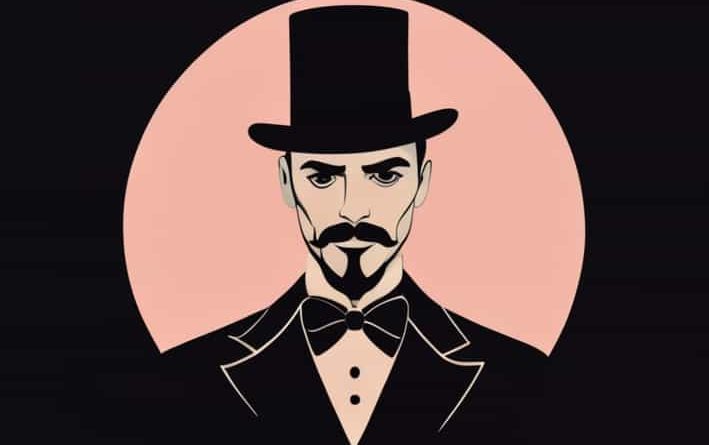
Is The Greatest Showman About Pt Barnum
The film The Greatest Showman captured the attention of audiences around the world with its colorful musical numbers, uplifting songs, and inspiring message about self-belief and inclusion. Many viewers who enjoyed the movie later asked an important question is The Greatest Showman about P.T. Barnum? The answer is both yes and no. While the film is inspired by the life of Phineas Taylor Barnum, it takes many creative liberties and should be understood as a loose interpretation rather than a strict biography.
The Historical Figure Behind the Story
P.T. Barnum was a real historical figure who lived in the 19th century and became famous as an American showman, entrepreneur, and entertainer. He is best known as the founder of what would later become the Ringling Bros. and Barnum & Bailey Circus. Barnum was skilled at promotion, publicity, and spectacle, and he played a major role in shaping modern entertainment.
The movie uses Barnum as its central character, portraying his rise from poverty to fame and success. This core idea is rooted in reality, as Barnum did come from modest beginnings and built an entertainment empire through ambition and creativity. However, the film simplifies and romanticizes many aspects of his life.
How The Greatest Showman Portrays P.T. Barnum
In The Greatest Showman, Barnum is shown as a dreamer who believes in celebrating people who are different and giving them a place where they belong. He gathers performers who are rejected by society and creates a show that highlights their uniqueness. This version of Barnum is optimistic, compassionate, and driven by a desire to inspire.
While this portrayal makes for a compelling story, it does not fully align with historical accounts. The real P.T. Barnum was a complex individual who often blurred the line between entertainment and exploitation. He promoted curiosities and used sensational marketing tactics that were controversial even in his own time.
Creative Liberties Taken by the Film
One of the most important things to understand when asking if The Greatest Showman is about P.T. Barnum is that the film is not intended to be historically accurate. It is a musical drama designed to entertain and inspire, not a documentary.
Changes to Barnum’s Personality
The movie presents Barnum as a champion of diversity and acceptance. In reality, many historians argue that Barnum’s primary motivation was profit. While he did employ people who were considered outsiders, he often marketed them in ways that reinforced stereotypes rather than challenged them.
Simplified Timeline and Events
The film condenses decades of Barnum’s life into a short runtime. Events are rearranged, combined, or invented to fit the narrative structure. This makes the story easier to follow but less faithful to real history.
Fictional Relationships
Several characters and relationships in the movie are either heavily fictionalized or entirely invented. For example, the romance between Barnum and the opera singer Jenny Lind is exaggerated for dramatic effect. Historically, their relationship was professional, not romantic.
The Role of Music and Message
Another reason The Greatest Showman feels different from a traditional biographical film is its strong focus on music and theme. The songs emphasize self-acceptance, resilience, and unity. These themes resonate with modern audiences but reflect contemporary values more than 19th-century realities.
The music helps frame Barnum’s story as a universal tale of chasing dreams and overcoming obstacles. In this sense, the film uses P.T. Barnum as a symbol rather than a strictly accurate historical subject.
Public Reaction and Cultural Impact
Since its release, The Greatest Showman has sparked debate among viewers, historians, and critics. Some praise the film for its positive message and emotional impact, while others criticize it for glossing over the darker aspects of Barnum’s legacy.
This discussion highlights an important point when asking is The Greatest Showman about P.T. Barnum, it is helpful to distinguish between inspiration and representation. The movie introduces audiences to Barnum’s name and general story, but it does not fully explore his real-life controversies.
Key Differences Between the Movie and History
- The real P.T. Barnum was more focused on marketing and profit than social inclusion.
- Many performers were promoted as spectacles rather than celebrated as equals.
- Several major events and relationships were changed or fictionalized.
- The tone of the film is far more uplifting than historical records suggest.
Why the Film Still Uses P.T. Barnum
Despite its inaccuracies, the filmmakers chose P.T. Barnum because his life naturally lends itself to a story about spectacle, ambition, and entertainment. His name is closely associated with show business, making him a recognizable figure around which a musical could be built.
By loosely basing the story on Barnum, the film gains a historical foundation while remaining free to tell a more idealized and emotionally driven narrative. This approach allows the movie to appeal to a broad audience without being constrained by historical detail.
Understanding the Film as a Reimagining
Rather than asking whether The Greatest Showman is accurate, it may be more useful to see it as a reimagining of P.T. Barnum’s life. The film uses his rise to fame as a framework for exploring themes that are relevant today, such as embracing differences and believing in oneself.
This approach is common in musical films, where emotional truth often takes precedence over factual precision. The story is designed to make audiences feel inspired, not to teach a history lesson.
So, is The Greatest Showman about P.T. Barnum? Yes, in the sense that it is inspired by his life and career as a famous showman. However, it is not a faithful biography. The film transforms Barnum into a symbol of creativity and inclusion, leaving out many of the more complicated and controversial aspects of his real story.
For viewers, understanding this distinction is important. The Greatest Showman works best when appreciated as a fictionalized musical inspired by historical elements rather than a true account of P.T. Barnum’s life. By viewing it this way, audiences can enjoy the music, performances, and message while recognizing that the real history is far more complex.