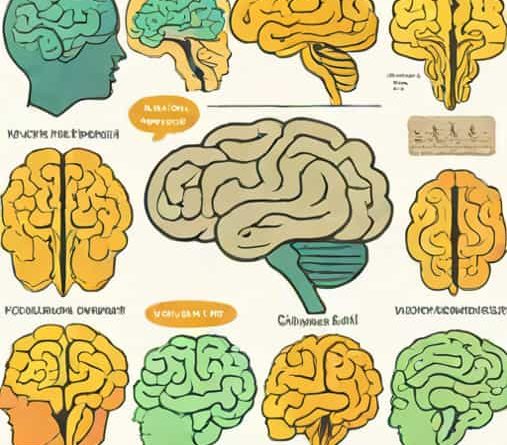
Lobes Of The Brain And Their Functions
The human brain is one of the most complex and fascinating organs in the body, responsible for controlling thoughts, emotions, movements, and vital functions. To better understand how the brain works, scientists divide it into different sections known as lobes. Each lobe of the brain has specific roles, yet they work together constantly to support everyday activities such as speaking, remembering, moving, and problem-solving. Learning about the lobes of the brain and their functions helps explain how behavior, personality, and cognition are connected.
Understanding the Structure of the Brain
The brain is divided into two hemispheres, left and right, and each hemisphere contains four main lobes. These lobes are named after the bones of the skull that cover them frontal, parietal, temporal, and occipital. Although each lobe has specialized functions, they do not operate independently. Communication between lobes allows the brain to process information smoothly and efficiently.
In addition to these four lobes, some experts also discuss the limbic lobe or limbic system, which plays a key role in emotion and memory. Together, these brain lobes form a highly organized system that supports both conscious and unconscious processes.
The Frontal Lobe and Its Functions
The frontal lobe is located at the front of the brain, just behind the forehead. It is one of the largest and most important lobes, especially when it comes to higher-level thinking and decision-making. The frontal lobe is often associated with personality and behavior.
Key Roles of the Frontal Lobe
This lobe is responsible for executive functions, which include planning, reasoning, problem-solving, and self-control. It helps people set goals, evaluate consequences, and make choices based on logic rather than impulse.
- Decision-making and problem-solving
- Emotional regulation and impulse control
- Voluntary muscle movement
- Speech production
The frontal lobe contains the motor cortex, which controls voluntary movements of the body. Damage to this area can affect movement, behavior, and the ability to speak clearly.
The Parietal Lobe and Sensory Processing
The parietal lobe is located near the upper back portion of the brain. Its primary role is to process sensory information from the body. This includes touch, temperature, pain, and spatial awareness.
How the Parietal Lobe Interprets Sensations
When you feel heat from a cup of coffee or sense the position of your hands without looking, the parietal lobe is at work. It integrates sensory input and helps the brain understand where the body is in space.
- Touch and pressure perception
- Body awareness and spatial orientation
- Understanding shapes and textures
- Basic mathematical and logical skills
The parietal lobe also plays a role in reading, writing, and interpreting symbols. Problems in this area can lead to difficulty recognizing objects or navigating familiar environments.
The Temporal Lobe and Memory Functions
The temporal lobe is located on the sides of the brain, near the ears. It is closely linked to hearing, language comprehension, and memory. This lobe helps the brain make sense of sounds and spoken words.
Important Functions of the Temporal Lobe
One of the most critical roles of the temporal lobe is processing auditory information. It allows people to recognize voices, music, and environmental sounds. The temporal lobe is also essential for forming long-term memories.
- Hearing and sound interpretation
- Language comprehension
- Memory storage and recall
- Emotional responses
Within the temporal lobe lies the hippocampus, a structure vital for learning and memory formation. Damage to this area can result in memory loss or difficulty understanding language.
The Occipital Lobe and Vision
The occipital lobe is found at the back of the brain and is primarily responsible for visual processing. Although the eyes capture visual information, the occipital lobe interprets what is seen.
Visual Processing in the Occipital Lobe
This lobe processes elements such as color, shape, depth, and motion. When you recognize faces, read text, or judge distances, the occipital lobe is actively working.
- Visual recognition
- Color and light perception
- Motion detection
- Spatial awareness related to sight
Damage to the occipital lobe can lead to visual impairments, even if the eyes themselves are healthy. This shows how important brain processing is for vision.
The Limbic System and Emotional Control
Although not always listed as a separate lobe, the limbic system is a group of structures that work together to regulate emotions, motivation, and memory. It includes the amygdala, hippocampus, and parts of other lobes.
Functions of the Limbic System
The limbic system helps humans respond to emotional experiences such as fear, pleasure, and stress. It also plays a major role in forming emotional memories.
- Emotion regulation
- Motivation and reward
- Memory formation
- Stress response
This system connects emotional reactions to physical responses, such as a racing heart during fear or calmness during relaxation.
How the Brain Lobes Work Together
Although each lobe of the brain has distinct responsibilities, everyday tasks usually involve multiple lobes working at once. For example, reading a book requires the occipital lobe for vision, the temporal lobe for language understanding, and the frontal lobe for focus and comprehension.
This collaboration allows the brain to function as a unified system rather than separate parts. Efficient communication between lobes is essential for learning, creativity, and emotional balance.
Why Understanding Brain Lobes Matters
Learning about the lobes of the brain and their functions is important for understanding how injuries, illnesses, or developmental conditions affect behavior and abilities. It also helps explain why damage to specific brain areas leads to certain symptoms.
Knowledge of brain lobes is useful in education, psychology, medicine, and everyday life. It allows people to appreciate how complex mental processes are shaped by physical structures.
Brain Lobes and Their Roles
The lobes of the brain form the foundation of human thought, sensation, and behavior. From decision-making in the frontal lobe to visual processing in the occipital lobe, each part plays a vital role in daily functioning.
By understanding the functions of each brain lobe, it becomes easier to see how the brain supports learning, emotion, movement, and perception. This knowledge highlights the incredible design of the human brain and its importance in shaping who we are.