The Bathysphere Was Used To Explore The
The deep ocean has always been one of the least explored and most mysterious parts of our planet. For centuries, humans have wondered what lies beneath the surface of the vast seas, from strange creatures to unknown geological formations. In the early 20th century, one of the most groundbreaking tools for exploring these underwater realms was the bathysphere. This innovative spherical vessel allowed scientists to descend to unprecedented depths and observe the deep ocean firsthand. By providing a safe and controlled environment for deep-sea exploration, the bathysphere revolutionized our understanding of marine life, oceanography, and the hidden landscapes of the ocean floor. Its historical significance and contributions to science continue to be celebrated in both educational and research contexts.
The Invention of the Bathysphere
The bathysphere was invented in the early 1930s by American engineer Otis Barton and marine biologist William Beebe. Their goal was to create a vessel capable of withstanding the immense pressure of the deep ocean while allowing humans to observe marine life directly. The design was simple yet ingenious a spherical steel shell with thick walls and a small window for viewing. The spherical shape helped distribute the external pressure evenly, making it possible to reach depths that had never been explored before. The bathysphere was lowered into the ocean using a cable attached to a surface ship, with observers inside monitoring marine life and recording their observations.
Design and Engineering
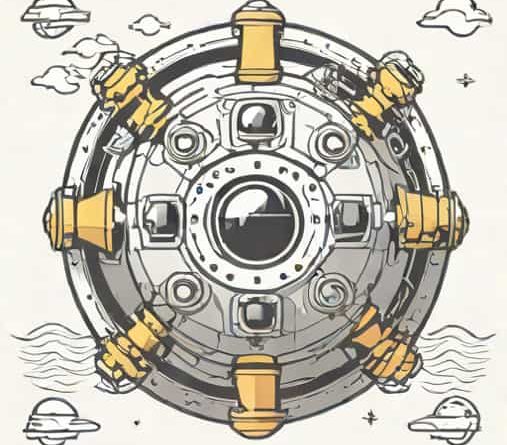
The bathysphere was constructed from steel and designed to resist crushing forces at extreme depths. Its small, thick-glass window allowed scientists to observe the underwater environment while remaining protected from the high pressure. Inside, the space was cramped, with just enough room for two people and their essential instruments. Despite its simplicity, the bathysphere was a marvel of engineering for its time, demonstrating how careful design and scientific ingenuity could overcome the challenges of deep-sea exploration.
Early Challenges
Exploring the ocean at great depths was not without risks. The bathysphere had no propulsion system, so it relied entirely on winches and cables to ascend and descend. Observers inside had to endure long periods in confined spaces, often facing extreme cold and darkness. Additionally, communication with the surface was limited, requiring innovative solutions such as telephone lines running through the cable. Despite these challenges, the bathysphere became a critical tool for expanding human knowledge of the deep ocean.
Scientific Achievements of the Bathysphere
The bathysphere was instrumental in providing some of the first direct observations of deep-sea creatures. Before its invention, scientists relied on nets and dredges to study ocean life, which often damaged specimens and provided limited insight into their natural behavior. The bathysphere allowed researchers to witness the ocean’s inhabitants in their native environment, leading to discoveries that changed the field of marine biology forever.
Exploration of Marine Life
During their dives, William Beebe and Otis Barton observed a variety of previously unknown deep-sea creatures. They recorded sightings of luminous fish, giant squid, and other mysterious species that had never been documented before. These observations were published in scientific journals and popular books, capturing the public’s imagination and sparking interest in oceanography. The bathysphere enabled scientists to study behavior, bioluminescence, and interactions among deep-sea animals in ways that were impossible with traditional sampling methods.
Oceanography and Underwater Environments
In addition to studying marine life, the bathysphere provided valuable information about the physical characteristics of the deep ocean. Observers could see underwater formations such as steep slopes, coral structures, and deep trenches. They also noted temperature changes, water clarity, and other environmental factors. This firsthand data helped shape early theories about ocean currents, the distribution of marine organisms, and the structure of the ocean floor.
Notable Dives and Milestones
The bathysphere achieved several historic milestones in the history of deep-sea exploration. William Beebe and Otis Barton set world records for the deepest dives at the time, reaching depths of over 3,000 feet. These dives were groundbreaking, demonstrating that humans could survive extreme pressures and directly observe life in the deep ocean. Each descent provided new insights and documented previously unknown species, making the bathysphere an invaluable tool for science.
Beebe and Barton’s Expeditions
Between 1930 and 1934, Beebe and Barton conducted multiple dives off the coast of Bermuda. These expeditions became famous for the detailed observations recorded in field notes, sketches, and scientific reports. Their work inspired future generations of marine biologists and engineers to continue exploring the deep ocean. Many of the species they documented remain subjects of study today, and their reports laid the groundwork for modern deep-sea exploration techniques.
Legacy and Influence
The bathysphere’s legacy extends beyond its historical dives. It influenced the design of subsequent submersibles, such as the bathyscaphe, which could descend even deeper into the ocean and included self-propulsion systems. Modern deep-sea vehicles owe much to the principles demonstrated by the bathysphere, including pressure-resistant design, safety considerations, and the importance of direct observation. The achievements of Beebe and Barton also popularized oceanography as a field of study, inspiring public interest and scientific funding for underwater research.
Modern Relevance of the Bathysphere
Although technology has advanced significantly since the 1930s, the bathysphere remains an important symbol of human curiosity and ingenuity. Today’s submersibles and remotely operated vehicles (ROVs) build upon the foundation established by Beebe and Barton, exploring the deepest parts of the ocean, including the Mariana Trench. Researchers still study the bathysphere dives to understand early observations of deep-sea life and compare them with modern findings. The historical significance of the bathysphere continues to be celebrated in museums, documentaries, and educational programs.
Inspiring Future Exploration
The bathysphere serves as a reminder of how far humans can push the boundaries of knowledge. It inspires students, scientists, and explorers to pursue marine research and deepen our understanding of the ocean. The courage and ingenuity demonstrated in these early dives encourage innovation in submersible technology, deep-sea mapping, and marine conservation.
Educational Value
Today, the story of the bathysphere is used to teach students about marine biology, engineering, and the history of exploration. Its design and achievements provide a case study in problem-solving, scientific observation, and teamwork. The excitement generated by the bathysphere dives helps to engage the public with oceanography and fosters a sense of wonder about the natural world.
The bathysphere was a pioneering tool that opened the door to deep-sea exploration and transformed our understanding of the ocean. By allowing humans to directly observe marine life and underwater environments, it provided invaluable scientific data and inspired generations of researchers. Its innovative design, historic dives, and contributions to oceanography highlight the importance of curiosity, ingenuity, and perseverance in scientific discovery. The bathysphere’s legacy continues to influence modern submersible technology, deep-sea research, and public fascination with the mysteries of the ocean. As we continue to explore the deep, the pioneering spirit of the bathysphere reminds us of the remarkable achievements that can be accomplished when human creativity meets the challenges of the natural world.