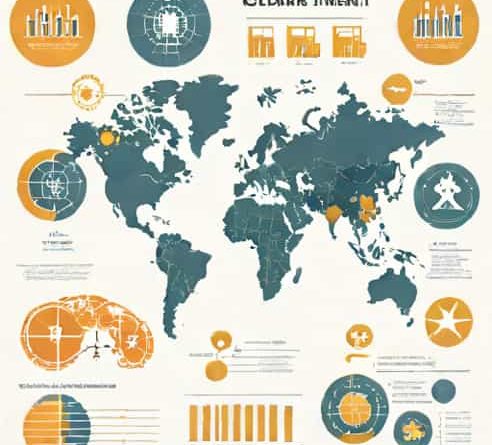
The Global Talent Competitiveness Index
Every country in the world seeks to attract, develop, and retain the best talent in order to compete in the modern global economy. The importance of skilled individuals has never been higher, as innovation, technology, and human creativity shape the future of industries. To understand how different nations perform in this race for talent, the Global Talent Competitiveness Index was created. It offers an in-depth view of how countries build environments that nurture skills, enable growth, and support competitiveness on the international stage. By analyzing its results, businesses, policymakers, and individuals can better understand the global distribution of talent and opportunities.
What is the Global Talent Competitiveness Index?
The Global Talent Competitiveness Index, often abbreviated as GTCI, is an annual benchmarking report that measures how countries compete for talent. It evaluates the ability of nations to grow, attract, and retain talented individuals, providing a ranking system that helps highlight strengths and weaknesses. The index is widely recognized as a reliable resource for understanding international talent dynamics and the challenges that economies face in a fast-changing world.
The Purpose of the Index
The main goal of the Global Talent Competitiveness Index is to give policymakers and leaders a framework for assessing their talent strategies. Talent competitiveness is not only about having a skilled workforce but also about creating the right conditions for innovation, business growth, and education. By comparing nations across different dimensions, the GTCI reveals which countries are setting the standards and which need to address gaps in their systems.
Key Objectives
- To evaluate how well countries are able to attract foreign talent and skilled professionals.
- To assess how nations create policies and systems that foster learning and skill development.
- To compare retention rates of talent and explore brain drain issues.
- To measure innovation, entrepreneurship, and global connectivity as talent indicators.
How the Index is Structured
The Global Talent Competitiveness Index uses a multi-dimensional approach to assess countries. It is not limited to one factor such as education or employment but instead looks at several interlinked pillars. This makes the index more comprehensive, as it considers both the supply of talent and the quality of environments in which individuals thrive.
Major Pillars of the Index
- EnableExamines how political, regulatory, and market landscapes support talent growth.
- AttractMeasures how well countries attract both domestic and international talent.
- GrowFocuses on education, training, and opportunities for lifelong learning.
- RetainLooks at lifestyle, sustainability, and the ability to keep talent within the country.
- Vocational and Technical SkillsHighlights workforce readiness in technical fields.
- Global Knowledge SkillsAssesses innovation, entrepreneurship, and research-based skills.
Top-Performing Countries
Each year, the Global Talent Competitiveness Index highlights the nations that excel at building talent-friendly environments. Typically, smaller advanced economies and highly developed nations rank near the top. These countries have established strong education systems, innovation hubs, and attractive living conditions that appeal to global professionals.
Examples of High Rankings
- Switzerland has consistently ranked high due to its strong economy, excellent education system, and stable environment.
- Singapore performs well thanks to its openness to global talent, supportive policies, and focus on innovation.
- Countries in Scandinavia, such as Sweden and Denmark, stand out for their high quality of life and strong social support systems.
Challenges for Developing Nations
While advanced economies dominate the top rankings, many developing nations face obstacles when it comes to talent competitiveness. Issues such as brain drain, weak infrastructure, and limited access to education prevent them from performing at the same level. The index provides insights into these challenges and encourages targeted policy reforms.
Common Barriers
- Lack of investment in higher education and technical training.
- Poor infrastructure and unstable governance that discourage foreign talent.
- Limited innovation ecosystems and weaker entrepreneurial opportunities.
- High emigration rates of skilled workers seeking better opportunities abroad.
The Role of Innovation and Technology
One of the most important aspects of the Global Talent Competitiveness Index is its focus on innovation and technology. In today’s world, talent is not only measured by education but also by the ability to adapt and thrive in digital environments. Nations that prioritize research, digital transformation, and startup ecosystems often perform better on the index.
Examples of Tech-Driven Talent
- Countries with thriving technology sectors, like the United States, benefit from strong innovation scores.
- Emerging economies investing in tech hubs, such as India, are gradually improving their positions.
- Innovation-driven education systems contribute directly to higher rankings in the index.
Impact on Businesses and Policymakers
The Global Talent Competitiveness Index is not just for governments-it is also useful for businesses and organizations. Companies can use the insights to decide where to expand operations, recruit skilled professionals, or invest in research. Policymakers, on the other hand, use the data to identify weaknesses and design strategies for workforce development.
Why It Matters
- Businesses gain clarity on which markets offer the best access to skilled professionals.
- Governments can benchmark their policies against high-performing countries.
- Educational institutions can align curricula with the demands of a global workforce.
Future of Talent Competitiveness
As the global economy continues to change, the importance of talent competitiveness will only grow. Factors such as remote work, artificial intelligence, and sustainable development are influencing how talent is distributed and retained. The Global Talent Competitiveness Index will likely continue to evolve, adding new dimensions to reflect the shifting landscape.
Emerging Trends
- Remote work opportunities are reshaping how countries attract international professionals.
- Sustainability and green innovation are becoming key measures of competitiveness.
- Digital literacy is now as important as traditional education in defining skilled talent.
The Global Talent Competitiveness Index serves as a vital tool for understanding how nations perform in attracting, developing, and retaining skilled individuals. By analyzing key pillars such as education, innovation, retention, and global openness, the index provides valuable insights into the future of competitiveness. Countries that invest in talent strategies are better positioned to succeed in a rapidly evolving world, while those that lag behind risk losing valuable human capital. For policymakers, businesses, and individuals, the index is more than just a ranking-it is a roadmap for building stronger, smarter, and more sustainable societies.