What Happened At The Battle Of Plataea
The Battle of Plataea, fought in 479 BCE, was a decisive engagement during the Greco-Persian Wars, marking the end of Persian invasions into mainland Greece. This confrontation involved a coalition of Greek city-states, led primarily by Sparta and Athens, against the Persian forces commanded by Mardonius. The battle is significant in history because it ended Persian ambitions in Greece, secured Greek independence, and set the stage for the rise of classical Greek culture. Understanding what happened at the Battle of Plataea provides insight into ancient military strategy, the unity of Greek states, and the broader historical consequences for the Mediterranean world.
Background to the Battle
The Battle of Plataea occurred in the context of ongoing conflicts between the Persian Empire and Greek city-states. Following the earlier invasions by Persian kings Darius I and Xerxes I, Greek forces had successfully resisted Persian advances at battles such as Marathon and Salamis. After the Persian navy was defeated at Salamis in 480 BCE, the remnants of the Persian army, led by Mardonius, sought to consolidate control over Greek territories. The Greeks, learning of Mardonius’ intentions to attack, formed a united army comprising troops from various city-states, with Sparta providing the backbone of the military force and Athens contributing naval and infantry support.
Greek Preparations
Greek leaders carefully planned their response to the Persian threat. The army gathered near Plataea, a strategic location in Boeotia, which allowed them to control key terrain and prevent Persian maneuvers. The Greeks aimed to defend their homeland while coordinating attacks that would exploit Persian weaknesses. Leadership roles were divided among city-states, with Spartan generals often holding command positions due to their reputation for discipline and military expertise. The cohesion of the Greek forces, despite differences among city-states, was crucial for their success at Plataea.
The Persian Forces
The Persian army at Plataea was composed of diverse troops from various regions of the vast empire, including infantry, cavalry, and specialized archers. Mardonius, a seasoned commander, sought to exploit the mobility and size of his forces. The Persian army was larger in number compared to the Greek forces, but this numerical advantage was counterbalanced by the Greeks’ superior coordination, knowledge of local terrain, and heavily armed hoplite soldiers. Persian strategy often relied on overwhelming enemy formations with massed attacks, but this approach proved vulnerable to disciplined Greek phalanxes.
Initial Movements
The battle began with both sides maneuvering for advantageous positions. The Greeks initially withdrew to more defensible terrain, avoiding direct confrontation until they could coordinate a strong defense. Mardonius attempted to draw the Greeks into open ground where Persian cavalry could dominate, but Greek leaders resisted, knowing that their hoplite formations excelled in close combat on narrow fronts. Skirmishes and minor engagements occurred, but the main confrontation developed as the two armies came into direct contact near Plataea.
The Main Battle
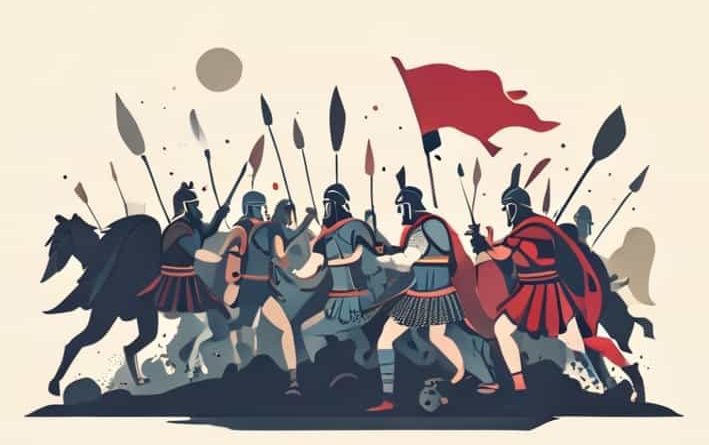
The decisive phase of the Battle of Plataea involved heavy infantry combat. Greek hoplites formed tight phalanx formations, providing mutual protection with overlapping shields and projecting spears. Persian forces attacked with cavalry and infantry, but the Greeks held their ground. Key moments included the disciplined Spartan-led units maintaining cohesion under pressure and the Athenians providing crucial support to flank movements.
Turning Points
Several factors contributed to the Greek victory
- Greek unityThe cooperation of multiple city-states allowed coordinated maneuvers and effective use of reserves.
- Terrain advantageGreeks occupied positions that minimized Persian cavalry effectiveness and favored the defensive strength of hoplites.
- Discipline and trainingSpartan troops and other hoplite contingents maintained formation integrity under heavy pressure, unlike Persian troops who were less organized in close combat.
- Leadership decisionsGreek commanders exploited weaknesses in the Persian lines, leading to breakthroughs that caused disarray and eventual retreat.
Aftermath of the Battle
The Battle of Plataea resulted in a decisive Greek victory, with Mardonius killed in combat and the Persian forces suffering heavy losses. The defeat forced the remaining Persian troops to retreat from mainland Greece, ending Persian ambitions to dominate the region. The victory solidified the military reputation of Sparta and Athens and reinforced the effectiveness of the hoplite phalanx and cooperative strategies among Greek city-states.
Historical Significance
The consequences of the Battle of Plataea were profound
- Preservation of Greek independenceGreek city-states retained sovereignty, allowing the development of unique political systems such as Athenian democracy.
- Decline of Persian influencePersia shifted its focus away from Greece, reducing direct interference in the Aegean and the Mediterranean.
- Boost to Greek moraleThe victory encouraged unity and cultural confidence among Greek communities.
- Influence on military tacticsThe battle highlighted the effectiveness of heavily armored infantry and disciplined formations, influencing subsequent Greek and later European military strategies.
Legacy of Plataea
The Battle of Plataea remains a symbol of resistance and unity. It demonstrated how strategic planning, cooperation, and disciplined military tactics could overcome a numerically superior opponent. Greek historians, including Herodotus, documented the battle in detail, emphasizing both the heroism of Greek soldiers and the broader implications for Greek civilization. The victory at Plataea, combined with the naval successes at Salamis, marked a turning point in the Greco-Persian Wars and ensured that Greek culture, politics, and philosophy could flourish in the centuries that followed.
In summary, the Battle of Plataea was a decisive conflict that shaped the course of ancient history. It showcased the ability of Greek city-states to unite against a common enemy, the effectiveness of strategic planning and disciplined hoplite formations, and the limitations of numerical superiority without cohesion. The battle ended Persian invasions of Greece, preserved Greek independence, and influenced future military strategies. Understanding what happened at the Battle of Plataea provides insight not only into military history but also into the cultural and political developments that emerged from this pivotal moment in the ancient world.