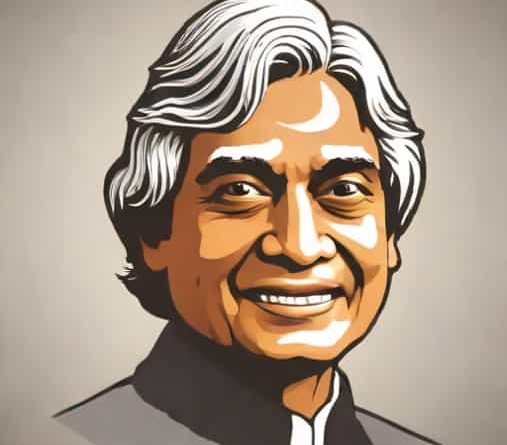
A Biography Of Apj Abdul Kalam
Growing up on the southern coast of India, APJ Abdul Kalam’s journey from a humble childhood to becoming one of the most respected scientists and leaders in the country is a story that continues to inspire people around the world. His life reflects dedication, resilience, simplicity, and an unwavering belief in the power of education. Understanding his biography allows us to appreciate how determination and passion can shape not only an individual’s destiny but also the progress of a nation. His influence continues to reach students, professionals, and dreamers everywhere.
Early Life and Family Background
Avul Pakir Jainulabdeen Abdul Kalam was born on October 15, 1931, in Rameswaram, a small island town in Tamil Nadu. His family belonged to the modest boat-building and ferrying tradition that had existed in the region for generations. Though not wealthy, they valued honesty, hard work, and community spirit, qualities that shaped Kalam’s early worldview.
As a child, Kalam displayed curiosity and a deep love for learning. He helped his family financially by distributing newspapers, but he never let the challenges of daily life overshadow his studies. His early exposure to the vast skies above Rameswaram played a role in inspiring his future fascination with science and flight.
Education and Early Inclination Toward Science
Kalam’s school life was marked by perseverance and an intense interest in mathematics and physics. After completing his schooling in Rameswaram, he moved to Tiruchirappalli to study at St. Joseph’s College. He later pursued aeronautical engineering at the Madras Institute of Technology (MIT), a turning point that set the stage for his career in aerospace.
At MIT, he worked tirelessly, often surprising his mentors with his determination despite limited resources. It was here that his desire to contribute to India’s scientific advancement grew stronger.
The Beginning of a Scientific Career
After graduating, Kalam joined the Defense Research and Development Organisation (DRDO). Though his initial years at DRDO were foundational, it was his shift to the Indian Space Research Organisation (ISRO) that marked a significant milestone. At ISRO, he became the project director of India’s first satellite launch vehicle (SLV-3), which successfully deployed the Rohini satellite in 1980.
This achievement placed India among the few nations capable of launching satellites independently. It also established Kalam as a visionary within India’s emerging space program.
Key Contributions at ISRO
-
Development of the SLV-3, India’s first experimental satellite launch vehicle.
-
Participation in the early stages of India’s satellite and missile programs.
-
Leadership in shaping India’s independent space capabilities.
Return to DRDO and the Missile Development Program
Later, Kalam returned to DRDO, where he played a leading role in India’s Integrated Guided Missile Development Program (IGMDP). Under this initiative, India developed a series of strategic missiles, including Agni and Prithvi. These advancements strengthened the nation’s defense capabilities and showcased Kalam’s ability to transform large-scale scientific visions into reality.
His remarkable achievements earned him the title Missile Man of India, a recognition that captured his influence in advancing India’s defense technology.
Major Missile Projects
-
Agni seriesMedium and long-range ballistic missiles designed for strategic defense.
-
Prithvi seriesIndia’s first indigenously developed ballistic missiles for the armed forces.
Contributions to India’s Nuclear Advancements
Another crucial moment in Abdul Kalam’s biography was his involvement in India’s nuclear tests at Pokhran in 1998. As the chief scientific advisor to the Prime Minister and head of the DRDO, he played a central role in coordinating the scientific and strategic components of the tests. The success of these efforts reinforced India’s position on the global stage and highlighted Kalam’s ability to unify teams across different fields.
Philosophy, Values, and Vision for India
Kalam’s scientific achievements were complemented by his human values. He believed strongly in education, youth empowerment, and national development. His speeches emphasized creativity, courage, and self-belief. He often encouraged students to dream big and transform those dreams into action.
His vision for India centered on technological advancement blended with moral responsibility. He advocated for a developed India that embraced innovation while upholding compassion and unity.
Core Beliefs
-
Every child has the potential to achieve greatness.
-
Education is the most powerful tool for development.
-
Science and spirituality can coexist harmoniously.
Becoming the President of India
In 2002, APJ Abdul Kalam was elected as the 11th President of India. His presidency was widely admired across political, social, and cultural boundaries. Known as the People’s President, he earned respect for his humility, accessibility, and commitment to national progress.
During his term, he visited countless schools, interacted with students, and worked to inspire young minds. His presidency was marked not only by policy contributions but by his ability to connect with people from all walks of life.
Life as a Teacher and Mentor
After completing his presidential term in 2007, Kalam returned to what he loved most-teaching. He became a visiting professor at several institutions and traveled widely to speak with students and educators. His writings, speeches, and mentorship continued to shape the outlook of future generations.
He encouraged innovation through projects and initiatives focused on rural development, healthcare, and sustainable technology. His role as a teacher became one of the most celebrated chapters of his life.
The Final Moments and Lasting Legacy
On July 27, 2015, while delivering a lecture at the Indian Institute of Management Shillong, Kalam collapsed and passed away. His final moments reflected his lifelong dedication to education and youth.
His legacy lives on through his writings, scientific contributions, and the millions he inspired. He remains a symbol of humility, knowledge, and national pride.
Lasting Influence
-
Inspiration for students and young innovators worldwide.
-
A guiding figure in India’s scientific and technological growth.
-
A reminder that simplicity and greatness can coexist.
A biography of APJ Abdul Kalam reveals more than a list of achievements-it tells the story of a man who believed in possibility even when circumstances were difficult. From a modest childhood in Rameswaram to shaping India’s space and missile programs, serving as President, and inspiring countless youth, his journey reflects purpose and passion. His life encourages everyone to dream boldly, work hard, and contribute positively to society. APJ Abdul Kalam remains one of the most respected figures in modern India, remembered not just for scientific excellence but for his kindness, wisdom, and hope for a better future.