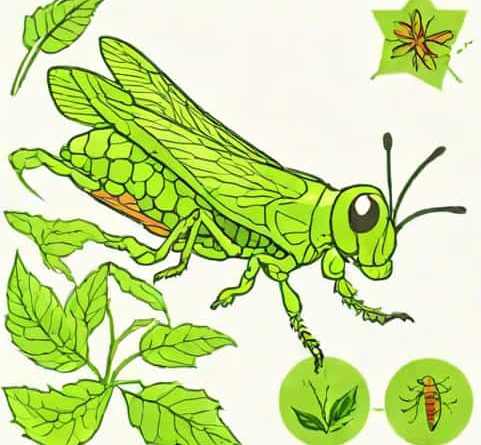
The Life Cycle Of A Grasshopper
Grasshoppers are fascinating insects that have captured the attention of scientists and nature enthusiasts alike due to their unique behaviors, adaptability, and remarkable life cycle. These small yet powerful creatures are found in various environments across the world, from grassy meadows to agricultural fields. Understanding the life cycle of a grasshopper provides insight into how these insects grow, reproduce, and survive, while also highlighting their ecological significance. From eggs to adults, the grasshopper undergoes a series of stages that showcase the incredible transformations within the insect world. Studying these stages not only helps us appreciate the complexity of their life but also plays an important role in agriculture and ecosystem management.
Introduction to Grasshoppers
Grasshoppers belong to the order Orthoptera, which includes crickets and locusts. They are primarily herbivorous insects, feeding on a variety of grasses, leaves, and crops. Known for their powerful hind legs, grasshoppers are capable of jumping long distances, which helps them escape predators. Their life cycle, like many insects, is divided into distinct stages, which allows them to adapt to environmental changes and ensures the survival of the species. By understanding each stage of the grasshopper’s life cycle, we can better understand their development, behavior, and role in nature.
The Egg Stage
The life of a grasshopper begins with the egg stage. Female grasshoppers lay their eggs in soil or plant stems, often choosing protected areas that provide moisture and warmth for the developing embryos. A single female can lay hundreds of eggs during her lifetime, which are typically grouped together in clusters called pods. These eggs are oval-shaped and have a hard outer shell that protects the embryo inside. Depending on environmental conditions such as temperature and humidity, the eggs can take several weeks to months to hatch, with many species overwintering as eggs to survive colder seasons.
Characteristics of Grasshopper Eggs
- Small and oval-shaped with a hard protective coating.
- Laid in pods to maximize survival rate.
- Development influenced by temperature, moisture, and season.
The egg stage is crucial because it sets the foundation for the next stages of development. Proper selection of the laying site and environmental conditions determines whether the eggs will survive and hatch successfully.
The Nymph Stage
After hatching from the eggs, grasshoppers enter the nymph stage. Nymphs resemble miniature adults but lack fully developed wings and reproductive organs. During this stage, they undergo a series of molts, shedding their exoskeleton multiple times to grow larger. Each molt, called an instar, brings the nymph closer to adult form. The nymph stage is primarily focused on feeding and growth, and it is a period of high vulnerability to predators and environmental stressors.
Development During the Nymph Stage
- Nymphs go through 5 to 6 instars before reaching adulthood.
- Molting allows the nymph to grow and develop stronger body structures.
- Feeding is intense, as they need energy for rapid growth.
- Nymphs gradually develop wing buds during later instars.
Throughout the nymph stage, grasshoppers are highly active, consuming leaves and other plant materials to build the energy reserves needed for adulthood. This stage is critical for the overall health and survival of the insect.
The Adult Stage
The final stage in the grasshopper life cycle is the adult stage. Adults are fully developed, with functional wings and reproductive organs. Their primary goals are to reproduce and continue the species. Adult grasshoppers are typically larger and stronger than nymphs, and their enhanced mobility allows them to find mates and evade predators more effectively. The lifespan of an adult grasshopper varies depending on the species and environmental conditions, but most live several weeks to a few months.
Reproduction in Adults
- Adult grasshoppers seek mates using visual and auditory signals, including songs produced by rubbing their hind legs against their wings.
- Females lay eggs in soil or plant stems, beginning the life cycle again.
- Adults continue to feed on vegetation, which can impact agriculture and natural ecosystems.
The adult stage represents the peak of the grasshopper’s physical abilities and reproductive potential. Successful mating and egg-laying ensure the continuation of the species and maintain ecological balance.
Factors Affecting the Grasshopper Life Cycle
The life cycle of grasshoppers is influenced by several environmental and biological factors. Temperature, humidity, and food availability play major roles in determining the duration of each stage. Predation and human activities, such as pesticide use, can also impact survival rates. Understanding these factors is essential for managing grasshopper populations, especially in agricultural areas where they may become pests.
Environmental Influence
- Warm temperatures accelerate development and shorten the nymph stage.
- High humidity helps prevent egg desiccation and supports hatching success.
- Scarcity of food can slow growth and reduce survival of nymphs.
Predation and Survival
- Birds, spiders, and small mammals are common predators.
- Natural predators help control population growth.
- High mortality during nymph stages ensures only the strongest reach adulthood.
The life cycle of a grasshopper, from egg to nymph to adult, demonstrates the remarkable adaptability and survival strategies of insects. Each stage is critical, with eggs ensuring reproduction, nymphs focusing on growth, and adults contributing to species continuity. Understanding this life cycle not only enriches our knowledge of biology but also informs agriculture, pest management, and environmental studies. By studying grasshoppers and their development, we gain valuable insights into the intricate balance of ecosystems and the fascinating transformations that occur within the insect world.