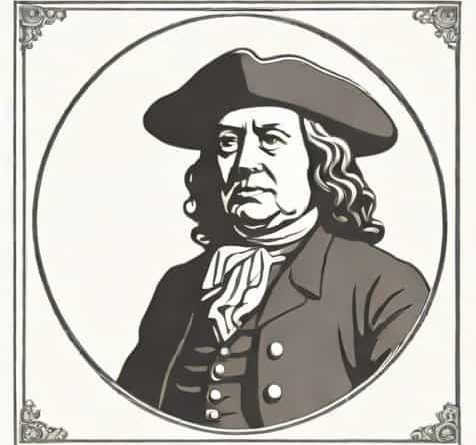
Was William Penn A Slaveholder
William Penn is remembered as the founder of Pennsylvania, a visionary leader who promoted religious freedom, fair treatment of Indigenous peoples, and a more just society. However, his legacy also raises difficult questions, particularly regarding slavery. The issue of whether William Penn was a slaveholder is complex, as it involves both his personal practices and the policies he allowed in his colony. Exploring this history provides a clearer understanding of Penn’s role in early American society and the contradictions between his ideals and his actions.
The Background of William Penn
Born in 1644 in London, William Penn came from a wealthy English family. His father, Sir William Penn, was a distinguished admiral, and this privileged background gave young Penn access to education and influence. After converting to Quakerism, Penn became deeply committed to religious freedom and equality. His beliefs inspired him to found Pennsylvania in 1681, envisioned as a holy experiment where people of different faiths could live peacefully.
Despite these noble aspirations, Penn’s era was one in which slavery was widespread in both England and its colonies. The Atlantic slave trade was thriving, and enslaved labor was considered by many Europeans as a normal aspect of economic development. Understanding Penn’s position requires considering this broader context.
Evidence of Slaveholding by William Penn
Historical records indicate that William Penn did in fact own enslaved people. At his estate in Pennsylvania, known as Pennsbury Manor, there are accounts that enslaved Africans worked alongside indentured servants. These individuals were forced into labor to maintain the estate and support Penn’s household. Documents from the late 17th century show references to enslaved persons under his ownership, suggesting that Penn directly participated in slavery during his lifetime.
Why Did Penn Own Slaves?
Several factors help explain why William Penn, a man of principle in other areas, might have engaged in slaveholding
- Economic necessityPenn’s estates were large and required substantial labor to maintain. Like many landowners of his time, he turned to enslaved labor as a practical solution.
- Social normsSlavery was widely accepted in English colonies, and many leaders, even those with strong moral visions, failed to challenge it.
- Contradictory beliefsWhile Penn promoted religious tolerance and fairness, his understanding of equality did not extend universally to all races in his lifetime.
Pennsylvania and the Institution of Slavery
When Pennsylvania was founded, slavery was permitted within the colony. Enslaved Africans were brought into the region, particularly in Philadelphia and surrounding areas. Wealthy landowners, merchants, and even political leaders participated in the system. Although Pennsylvania would later become a center for abolitionist movements, in Penn’s time it was still tied to slavery’s economic and social structures.
William Penn himself encouraged settlement by offering land to those willing to cultivate it, and he accepted the presence of slavery within his colony. This acceptance stands in contrast to his broader vision of justice, raising questions about the limitations of his reformist ideals.
Quakers and Their Relationship with Slavery
William Penn was a Quaker, and Quakers are often associated with early abolitionist movements. However, in the late 17th century, the Quaker position on slavery was not yet unified. Many Quakers, especially wealthy landowners, owned slaves, while others began to express discomfort with the practice. It was not until the mid-18th century that Quakers collectively took a strong stand against slavery, with leaders like John Woolman and Anthony Benezet calling for abolition.
Penn’s own views seemed to reflect this transitional period. He did not challenge the institution directly during his lifetime, but later Quakers in Pennsylvania would carry forward the fight that he did not pursue.
The Contradictions in William Penn’s Legacy
The fact that William Penn was a slaveholder creates a moral tension when evaluating his legacy. On one hand, he is praised for promoting tolerance, democratic governance, and peaceful relations with Native Americans. On the other, his acceptance of slavery shows how even progressive leaders of his time were shaped by economic and cultural norms that perpetuated injustice.
These contradictions highlight the complexity of historical figures. Penn was both a reformer and a man who participated in oppressive systems. Recognizing this duality allows us to understand him not as a flawless hero, but as a human being influenced by his environment.
Key Contradictions in His Legacy
- Promoted freedom of religion, yet tolerated slavery in his colony.
- Believed in fair treatment of Native Americans but exploited African labor.
- Sought justice and equality within certain boundaries, but failed to extend them universally.
The Broader Historical Context
William Penn’s involvement in slavery reflects a broader reality of the colonial period. Many leaders who are remembered for advancing liberty, including Thomas Jefferson and George Washington, also owned enslaved people. This demonstrates how deeply entrenched slavery was in colonial society and how ideals of freedom were often applied selectively.
In the case of Pennsylvania, it would take decades before the colony moved toward abolition. The Pennsylvania Gradual Abolition Act of 1780 marked the first legislative attempt in America to end slavery, long after Penn’s death in 1718. Thus, while Penn set the stage for many progressive movements, he did not initiate the struggle against slavery himself.
Modern Perspectives on William Penn
Today, historians and the public grapple with how to interpret Penn’s legacy. Some emphasize his contributions to religious freedom, democracy, and fair governance. Others argue that his acceptance of slavery must be confronted openly in discussions about his role in history. Museums such as Pennsbury Manor now address the presence of slavery on his estate, ensuring that the stories of enslaved Africans are not erased from history.
This reevaluation reflects a broader trend of reassessing historical figures in light of their complicity in oppressive systems. Acknowledging that William Penn was a slaveholder allows for a more honest and complete understanding of his impact.
Was William Penn a Slaveholder?
The historical evidence clearly shows that William Penn did own enslaved people and that he permitted slavery in his colony. While he championed freedom of religion, political participation, and fair treatment of some marginalized groups, his vision did not extend to African slaves. This contradiction makes him both a visionary and a participant in injustice. Understanding this complexity does not erase his accomplishments but reminds us that progress in one area often coexisted with oppression in another.
Ultimately, William Penn’s legacy is a mixture of reform and compromise, idealism and conformity. Recognizing that he was a slaveholder forces us to confront the uncomfortable reality that even those who shaped ideals of liberty were entangled in systems of inequality. This awareness allows us to appreciate his contributions while also holding space for the voices of those whose labor and suffering helped build Pennsylvania, yet were denied the freedoms Penn envisioned for others.