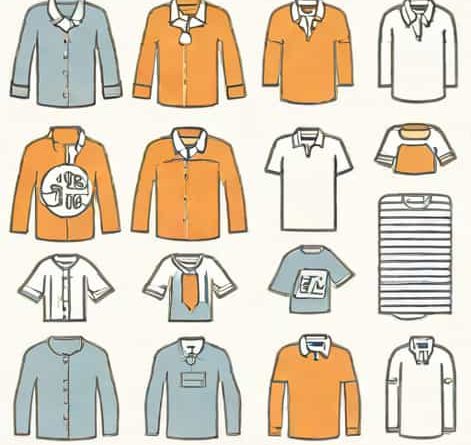
You Have Twelve Shirt In French
Learning how to express everyday phrases in another language is one of the best ways to build practical communication skills. A simple sentence such as you have twelve shirts may seem basic, but it actually teaches you several important concepts in French, including numbers, possession, and agreement between nouns and adjectives. By understanding how this sentence is constructed, you gain confidence not only in vocabulary but also in forming similar sentences that use quantity, clothing terms, and possessive structures. This makes it easier to talk about daily life, shopping, travel, and personal belongings while practicing the French language in a meaningful way.
How to Say You Have Twelve Shirts in French
The correct French translation of you have twelve shirts depends on whether you are speaking formally, informally, or to more than one person. The basic structure uses the verbavoir(to have) combined with the number and the clothing item.
Informal Version
When speaking to a friend, family member, or someone your age, you use the informaltuform
Tu as douze chemises.
This sentence uses the following elements
- Tuinformal you
- assecond-person singular form ofavoir
- douzethe number twelve
- chemisesthe plural form of shirt when referring to a blouse-style shirt, typically for women
Formal or Plural Version
When addressing someone formally or speaking to more than one person, French usesvous
Vous avez douze chemises.
The structure is the same, but the verb changes to matchvous. This form sounds more neutral and is suitable in professional, polite, or group settings.
Understanding the Word Shirt in French
The English word shirt can refer to many different styles, but French distinguishes between types of shirts. In many situations, shirt translates tochemise, but context matters if you want to be precise.
Chemisevs.T-shirt
Chemisegenerally refers to a dress shirt, button-down shirt, or blouse. It is often associated with more formal or structured clothing. Meanwhile, the English word T-shirt is used directly in French.
If you want to say you have twelve T-shirts, the sentence becomes
Tu as douze T-shirts.
or
Vous avez douze T-shirts.
Both spellings, T-shirt and tee-shirt, are understood in French, though the hyphenated form is more common.
Breaking Down the Number Twelve in French
The number twelve isdouzein French. Pronunciation is key it sounds similar to dooz. Learning this number also helps you build familiarity with other teen numbers.
- 10 dix
- 11 onze
- 12 douze
- 13 treize
- 14 quatorze
Knowing these numbers helps you talk about quantities when shopping, organizing belongings, or describing possessions. A phrase like you have twelve shirts in French becomes a foundation for constructing many similar sentences.
The Importance of the VerbAvoir
One of the first verbs learners encounter isavoir, meaning to have. It is used frequently in daily conversation. Understanding how to conjugate it is essential for forming sentences like you have twelve shirts.
Conjugation ofAvoir
- J’ai I have
- Tu as you have (informal)
- Il/elle/on a he/she/one has
- Nous avons we have
- Vous avez you have (formal/plural)
- Ils/elles ont they have
When you saytu as douze chemises, the verb must match the subjecttu. This rule remains consistent across all subjects, which helps you understand the structure of many basic French sentences.
Using Quantity in French Sentences
In French, numbers used before nouns do not require additional topics. This means you do not add words like the or some beforechemiseswhen using numbers.
CorrectTu as douze chemises.
IncorrectTu as les douze chemises.(This changes the meaning to you have the twelve shirts, which refers to a specific set.)
This is why quantity words are straightforward the number is placed directly before the noun, and the noun must be in plural form.
Expanding Your Vocabulary Beyond Shirts
Once you know how to say you have twelve shirts in French, you can easily replace the noun with other clothing items. This is a useful method for building out your vocabulary while practicing the same grammar pattern.
Common Clothing Words in French
- pantalonspants
- robesdresses
- jupesskirts
- manteauxcoats
- chaussuresshoes
- pullssweaters
- vestesjackets
Examples
Tu as trois vestes.You have three jackets.
Vous avez six pantalons.You have six pairs of pants.
This repetition helps the structure become natural and automatic.
Using the Phrase in Real-Life Situations
Knowing how to express possession is useful in several scenarios, especially when traveling, shopping, or organizing your belongings.
Travel Situations
If you’re packing for a trip and someone comments on how many shirts you brought, you might respond
J’ai douze chemises.I have twelve shirts.
Or someone might tell you
Tu as douze chemises, c’est assez.You have twelve shirts, that’s enough.
Shopping Scenarios
When buying clothing, you may need to explain how many items you already own or want to purchase. Phrases like these become helpful
Vous avez déjà douze chemises.You already have twelve shirts.
This makes everyday interactions smoother and more natural.
Common Mistakes Learners Make
Even a simple sentence like you have twelve shirts in French can lead to mistakes if you are not familiar with grammar patterns.
Incorrect Use of topics
As mentioned earlier, addinglesbefore the noun changes the meaning. Learners often add an unnecessary topic because English frequently uses the or a, but French grammar treats numbers differently.
Forgetting Plural Forms
Since the quantity is greater than one, the noun must be plural. Beginners sometimes writechemiseinstead ofchemises, which makes the sentence grammatically incorrect.
Why This Phrase Helps Build French Skills
Mastering simple phrases like you have twelve shirts in French creates a strong foundation for learning the language. It teaches you to
- Use the verbavoircorrectly
- Apply numbers in practical sentences
- Understand plural nouns
- Recognize informal and formal structures
- Talk about everyday objects smoothly
These building blocks form the basis for more complex grammar and conversation skills.
Saying you have twelve shirts in French may seem like a small milestone, but it represents several key parts of the language you need for fluent communication. Whether you usetu as douze chemisesorvous avez douze chemises, the structure helps you practice possession, numbers, and vocabulary all at once. As you expand into other clothing items and daily phrases, this foundation supports clear, confident expression in French. Small sentences like this build the everyday fluency that makes learning a new language enjoyable and practical.