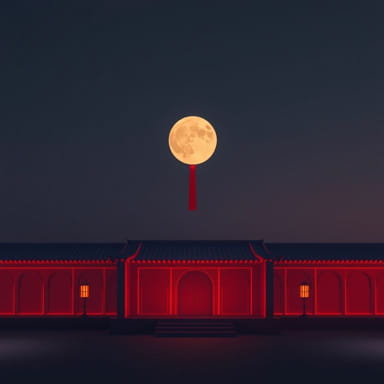
A Dream Of The Red Chamber
Among the greatest masterpieces of classical Chinese literature, A Dream of the Red Chamber stands as an epic, emotional, and philosophical exploration of life, family, love, and the inevitable decline of fortune. Written in the 18th century during the Qing Dynasty by Cao Xueqin, this novel provides an intimate portrayal of the aristocratic Jia family and offers rich insights into Chinese society at the time. With its complex characters, poetic language, and underlying themes of fate and impermanence, it remains one of the most significant cultural works ever produced in China and has captivated readers worldwide for generations.
Overview of the Novel
A Dream of the Red Chamber, also known as The Story of the Stone, is both a romantic drama and a spiritual allegory. It tells the story of Jia Baoyu, a young man born with a magical piece of jade in his mouth, and his relationships with the women in his family particularly his two cousins, Lin Daiyu and Xue Baochai. The novel intertwines dream-like mysticism with precise depictions of daily aristocratic life.
Historical and Cultural Context
Set in the Qing Dynasty, the story reflects a time of social refinement and internal decay. The novel’s portrayal of court customs, family hierarchy, Confucian expectations, and Daoist undertones reveals a deeply stratified world that is nonetheless fragile and fleeting. At its heart, A Dream of the Red Chamber offers a meditation on the transience of wealth and the fragility of human relationships.
Main Characters and Relationships
Jia Baoyu
The central figure of the novel, Baoyu, is a sensitive, poetic young man who resists the rigid conventions expected of him. His disdain for officialdom and preference for feminine company marks him as unconventional in a patriarchal society. The novel follows his emotional and spiritual journey through a world full of both love and loss.
Lin Daiyu
Lin Daiyu is Baoyu’s cousin and first love. She is intelligent, talented in poetry, and emotionally fragile. Her delicate health and tragic love for Baoyu form a core thread in the narrative. Her personality represents the emotional and artistic depth of the novel.
Xue Baochai
Another cousin and a potential bride for Baoyu, Baochai is graceful, composed, and a model of Confucian virtue. She represents societal expectations and the ideal woman from a traditional point of view. Her presence creates a love triangle that carries significant emotional tension throughout the novel.
Symbolism in A Dream of the Red Chamber
The novel is rich in symbolism and allegory. One of the most significant symbols is the jade stone from which the alternative title, The Story of the Stone, is derived. This stone connects Baoyu to the spiritual realm and foreshadows his destiny. The Red Chamber itself referring to the women’s quarters represents both a literal place and the broader world of dreams, emotions, and female consciousness.
Use of Dreams
Dreams play a critical narrative and philosophical role. Characters receive spiritual revelations, warnings, or glimpses of future sorrow through their dreams. These sequences often blur the line between reality and illusion, reinforcing the theme that life itself is transient and dreamlike.
Names and Fate
The names of characters often carry symbolic weight. For instance, Daiyu (meaning black jade”) suggests preciousness and melancholy. Such naming practices highlight the inescapable role of destiny, as many characters seem to fulfill the emotional tone their names predict.
Themes and Philosophical Undertones
Impermanence and Decline
One of the novel’s main messages is the inevitability of change and decay. The Jia family’s fall from grace mirrors the decline of human desires and attachments. The emotional suffering of the characters is often tied to their inability to accept the impermanence of life.
Love and Loss
Romantic longing and unfulfilled love are central themes. The tender bond between Baoyu and Daiyu is ultimately doomed, reflecting a belief that true emotional intimacy cannot survive in a world governed by materialism and duty.
Gender and Power
Though set in a male-dominated society, the novel elevates female voices. The women in the Red Chamber are depicted with depth, intelligence, and agency. Their lives are constrained by social norms, but the novel grants them space to express themselves through art, conversation, and emotion. It can be interpreted as a critique of the limited roles available to women at the time.
Literary Style and Structure
Poetry and Language
Cao Xueqin’s prose is interspersed with poetry, enhancing the lyrical quality of the novel. Characters compose poems to express emotions or commemorate events. This interweaving of verse and prose creates a deeply artistic and meditative tone throughout the book.
Narrative Complexity
The novel’s structure is sprawling, encompassing over 400 characters and multiple subplots. It uses both a realist narrative and magical elements, such as prophetic dreams and celestial beings, to create a layered story that engages readers on both literal and metaphorical levels.
Reception and Legacy
Historical Reception
Originally circulated in manuscript form, A Dream of the Red Chamber quickly gained acclaim. It was finally printed in the late 18th century, though the last 40 chapters were added posthumously by another writer, Gao E. Scholars continue to debate the authorship and completeness of the work.
Modern Interpretations
Today, the novel is studied worldwide and has inspired countless adaptations in television, film, opera, and visual art. It has also become a major subject of academic study, spawning a field known as “Redology” that examines its themes, characters, and historical context in depth.
Global Significance
A Dream of the Red Chamber has been translated into many languages, allowing global audiences to experience its emotional and philosophical depth. Its themes of love, loss, and societal pressure are universal, resonating across cultures and time periods.
A Dream of the Red Chamber is far more than a tale of family decline or romantic entanglements. It is a deeply philosophical novel that blends the spiritual with the mundane, the personal with the universal. Through the eyes of Baoyu and the women around him, readers are invited to reflect on beauty, sorrow, and the passing nature of all things. For anyone interested in classical literature, Chinese culture, or simply a moving story told with elegance and complexity, this novel remains an essential read that continues to inspire and enlighten readers around the world.