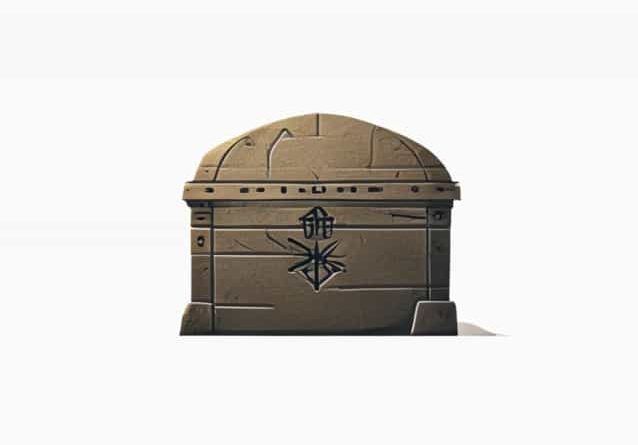
Ark Of The Covenant Axum
The Ark of the Covenant is one of the most fascinating and mysterious artifacts in human history. According to the Hebrew Bible, it was a sacred chest that held the two stone tablets of the Ten Commandments, given by God to Moses on Mount Sinai. For centuries, the location of the Ark has been a matter of speculation, religious belief, and historical intrigue. One of the most captivating claims is that the Ark of the Covenant rests in the ancient city of Axum, located in the Tigray region of northern Ethiopia. This story has inspired historians, theologians, and adventurers to seek the truth behind the legend of the Ark of the Covenant in Axum.
The Biblical Origins of the Ark of the Covenant
The Ark of the Covenant was originally built by the Israelites during their exodus from Egypt. It was made of acacia wood and overlaid with pure gold, both inside and out. The Ark was not just a sacred container; it was a symbol of God’s presence among the people of Israel. According to biblical accounts, it was carried by priests during their travels and played a central role in important events, such as the crossing of the Jordan River and the fall of Jericho.
The Ark was kept in the Holy of Holies, the innermost chamber of the Tabernacle, and later in Solomon’s Temple in Jerusalem. However, after the destruction of the First Temple by the Babylonians in 586 BCE, the Ark vanished from historical records. Since then, its location has become one of the greatest mysteries in religious history.
The Ethiopian Claim The Ark in Axum
According to Ethiopian tradition, the Ark of the Covenant was brought to Ethiopia by Menelik I, the son of King Solomon and the Queen of Sheba. This legend is described in an ancient Ethiopian text called the Kebra Nagast (The Glory of Kings). The story says that when Menelik visited his father Solomon in Jerusalem, he secretly took the Ark and brought it back to his mother’s kingdom in Ethiopia, where it has remained ever since.
In the modern era, the supposed resting place of the Ark is the Church of St. Mary of Zion in Axum. The church, which is considered the most sacred site in Ethiopian Orthodoxy, is said to house the Ark in a small chapel guarded by a single monk known as the Guardian of the Ark. This monk is chosen for life and is the only person permitted to enter the chapel, making the claim both mysterious and unverifiable.
The Church of St. Mary of Zion
The Church of St. Mary of Zion is a spiritual center for Ethiopian Christians and a symbol of their ancient faith. According to tradition, the Ark has resided there for thousands of years, protected by generations of monks. Visitors are not allowed to see or photograph the relic, and even high-ranking clergy do not have access. This secrecy adds to the mystique of the Ark’s supposed presence in Axum.
Every year, the church holds a festival known as Timkat, which celebrates the Epiphany. During this celebration, replicas of the Ark, known as tabots, are paraded through the streets in honor of the sacred covenant. This deep connection between Ethiopian culture and the Ark reinforces the belief that the true Ark of the Covenant remains in Axum.
Historical and Archaeological Perspectives
While the story of the Ark in Axum is compelling, historians and archaeologists have yet to find concrete evidence to support it. No reliable artifacts or documents from ancient Israel mention the Ark’s journey to Ethiopia, and no modern expedition has been granted access to the chapel where it is said to be kept. Nevertheless, Ethiopia’s long-standing Jewish and Christian heritage gives some historical weight to the idea that the Ark-or at least its symbolism-could have found a home there.
Some researchers suggest that the Ark of the Covenant could have been moved from Jerusalem during periods of political turmoil, possibly ending up in Egypt and then in Ethiopia through trade or migration routes along the Nile. Others propose that the Ark described in Axum is a sacred replica, created to represent the covenant between God and His people rather than the original artifact itself.
Alternative Theories About the Ark’s Whereabouts
Beyond Axum, there are numerous theories about what happened to the Ark of the Covenant. Some believe it was hidden by the priests of Jerusalem before the Babylonian invasion and remains buried beneath the Temple Mount. Others think it was destroyed or lost in the chaos of war. A few fringe theories even suggest it could be stored in secret vaults in Europe or the Middle East.
Despite these differing accounts, the Ethiopian claim stands out because of its continuous religious tradition and the enduring role the Ark plays in Ethiopian Orthodox worship. While Western scholars may question the historical accuracy of the Axum legend, for Ethiopians, the Ark’s presence is a matter of faith rather than evidence.
The Cultural and Religious Significance of the Ark in Ethiopia
In Ethiopia, the Ark of the Covenant is more than just a relic-it is a living symbol of national and spiritual identity. The belief that God’s covenant resides within their land gives Ethiopians a profound sense of divine favor and purpose. The Ethiopian Orthodox Church considers every church in the country to contain a replica of the Ark, emphasizing its central role in worship and theology.
These replicas, or tabots, are treated with utmost reverence. They are usually kept hidden behind curtains in the church sanctuary and are brought out only on special religious occasions. The existence of these replicas across the nation shows how deeply the Ark legend has influenced Ethiopian culture, art, and spirituality.
Modern Interest and Controversy
In recent decades, international interest in the Ark of the Covenant has grown, fueled by books, documentaries, and films. Many explorers and journalists have traveled to Axum, hoping to glimpse the sacred relic or speak with the Guardian. However, none have been granted access, and the Ethiopian Orthodox Church remains firm in its stance that the Ark cannot be revealed to the public.
This secrecy has led to ongoing debate among historians and theologians. Some argue that the lack of transparency undermines the claim, while others say that faith itself does not require physical proof. The enduring mystery continues to attract attention, blending history, religion, and legend in one of humanity’s most fascinating stories.
The Enduring Mystery of the Ark of the Covenant in Axum
The legend of the Ark of the Covenant in Axum remains one of the most enduring religious mysteries in the world. Whether it is the true Ark or a powerful symbol of faith, its presence in Ethiopian tradition has shaped the spiritual landscape of the country for centuries. The story captures the imagination because it lies at the intersection of faith, history, and mystery.
Until the day the chapel doors are opened-if that ever happens-the question of whether the Ark truly rests in Axum will remain unanswered. Yet for millions of believers, the truth of the legend is not measured by archaeological evidence but by the strength of faith and the sacred traditions that keep it alive.
In the end, the Ark of the Covenant in Axum represents more than an ancient artifact; it embodies humanity’s longing for connection with the divine, the preservation of history, and the enduring power of belief that transcends time and proof.