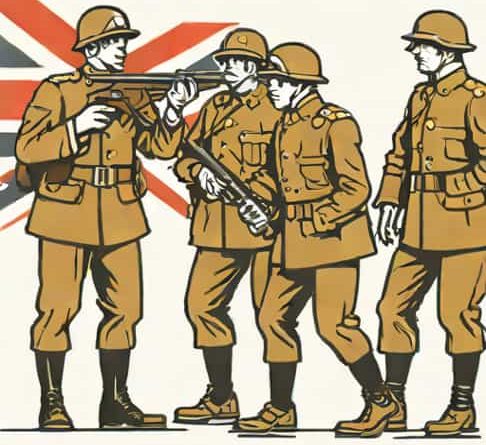
British Soldiers Shot For Cowardice Ww1
During World War I, the British Army faced unprecedented challenges on the battlefield, including trench warfare, artillery bombardments, and chemical attacks. Amidst these extreme conditions, soldiers were expected to display unwavering courage and discipline. However, some soldiers experienced overwhelming fear, stress, and psychological trauma, leading to instances of desertion, refusal to fight, or retreat under fire. Tragically, many of these men were executed by their own military for alleged cowardice or desertion. This controversial aspect of military history highlights the harsh realities of war and the complex understanding of mental health during the early 20th century.
Understanding Cowardice in WWI
The term cowardice during World War I was often applied to soldiers who failed to perform their duties on the battlefield, particularly during critical moments of combat. Military authorities believed that strict enforcement of discipline was necessary to maintain order and morale. Soldiers accused of cowardice could face court-martial, imprisonment, or even execution. It is important to understand that what was deemed cowardice at the time often included actions resulting from extreme fear, shell shock, or other psychological conditions that modern medicine recognizes as trauma-related disorders.
The Legal Framework
British military law during World War I provided for the execution of soldiers found guilty of desertion, cowardice, or disobedience under fire. Courts-martial were the formal process used to assess alleged offenses. Sentences were severe, and officers were often encouraged to make examples of individuals to deter others from similar actions. The standard of proof was sometimes limited, and evidence could be influenced by fear, stress, or misunderstanding of a soldier’s mental state.
- Desertion Leaving one’s post without orders.
- Cowardice Failing to advance, retreating without command, or refusing to fight under threat.
- Mutiny or disobedience Openly defying orders or leading resistance against military authority.
Psychological Factors
Many historians now believe that a significant number of soldiers executed for cowardice were actually suffering from severe psychological trauma. The term shell shock emerged during World War I to describe the mental and emotional impact of constant artillery bombardment, long periods in trenches, and the horrors of combat. Symptoms included trembling, paralysis, mutism, and severe anxiety. Soldiers exhibiting these symptoms were often misunderstood and labeled as cowards instead of receiving medical care.
Shell Shock and Misinterpretation
Shell shock was not well understood during World War I. Medical and military authorities often considered it a sign of moral weakness or lack of courage rather than a legitimate medical condition. As a result, soldiers who froze under fire, fled from danger, or displayed uncontrollable fear were frequently punished instead of treated. Modern analysis suggests that many of these men were victims of trauma rather than moral failings.
Execution Statistics
Records indicate that approximately 306 British and Commonwealth soldiers were executed for cowardice, desertion, or other related offenses during World War I. These numbers include men from various regiments and backgrounds, highlighting the indiscriminate nature of the punishments. Many of the executed soldiers were young, inexperienced, or conscripted, further emphasizing the human cost of rigid military discipline.
- Executions were carried out by firing squad, typically following a court-martial.
- Some cases involved repeated exposure to extreme battlefield stress.
- Others may have been victims of hasty judgments or insufficient evidence.
Controversy and Posthumous Pardons
The execution of soldiers for cowardice remains a highly controversial topic. Critics argue that many men were unjustly punished for conditions beyond their control. Public perception at the time often supported harsh discipline, but modern historians and military ethicists question the morality and fairness of these executions. In recognition of this, the British government issued posthumous pardons in 2006 for all soldiers executed during World War I for cowardice, desertion, and related offenses. These pardons acknowledged that many were likely suffering from psychological trauma and were unfairly labeled as cowards.
Impact on Families
The families of executed soldiers often faced stigma, shame, and silence. Many were told little about the circumstances of their loved one’s death, and records were sometimes suppressed. Posthumous pardons helped restore dignity to these families, recognizing the human suffering and bravery of soldiers who endured unimaginable conditions.
Lessons Learned
The story of British soldiers shot for cowardice during World War I offers important lessons about military discipline, human psychology, and the treatment of mental health in high-stress environments. Modern armed forces have implemented better support systems, including mental health services, psychological evaluations, and more humane disciplinary procedures. Understanding the experiences of soldiers in World War I helps prevent similar injustices in contemporary military contexts.
Changing Perspectives on Mental Health
World War I highlighted the need to recognize psychological trauma as a legitimate medical concern. Today, conditions such as post-traumatic stress disorder (PTSD) are understood to affect soldiers in combat, with treatment, support, and rehabilitation replacing punishment as the primary response. The lessons learned from the executions for cowardice have influenced both military policy and broader societal understanding of mental health.
The execution of British soldiers for cowardice during World War I represents a tragic and complex chapter in military history. While intended to enforce discipline, these actions often punished men suffering from extreme stress and psychological trauma. Over time, recognition of the unfairness of these executions led to posthumous pardons and a reevaluation of military practices. Understanding these events underscores the importance of compassion, psychological support, and fair treatment for soldiers, reminding us of the human cost of war and the need to balance discipline with humanity.