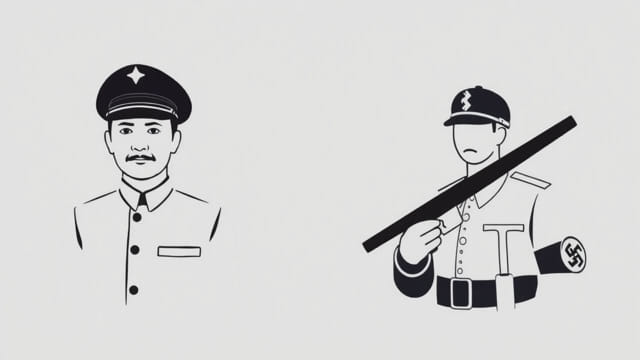
Chiang Kai Shek Son Wehrmacht
Chiang Kai-shek, the prominent Chinese nationalist leader and military commander, is widely remembered for his leadership during the Second Sino-Japanese War and his pivotal role in shaping modern China. However, lesser known to many is the intriguing story of his son, Chiang Wei-kuo, who had a unique military experience that connected the East and West during the tumultuous decades leading up to World War II. What makes this story particularly remarkable is Chiang Wei-kuo’s military education and training in Nazi Germany, where he served with the Wehrmacht, Germany’s unified armed forces. This unusual chapter in history reveals how international military cooperation and ideological alignment shaped personal trajectories, even during highly volatile global events.
Chiang Kai-shek and His Political Legacy
Before delving into the military career of Chiang Wei-kuo, it is essential to understand the legacy of his father, Chiang Kai-shek. As the leader of the Chinese Nationalist Party (Kuomintang or KMT), Chiang Kai-shek succeeded Sun Yat-sen and worked to unify China during a time of intense internal conflict and external threats. His commitment to opposing both Communist influence and Japanese aggression earned him significant Western support during World War II.
Chiang Kai-shek’s political ideology combined Chinese nationalism with authoritarian leadership. His leadership heavily influenced the upbringing and education of his children, particularly Chiang Wei-kuo, whom he adopted and raised as his own son. Chiang Kai-shek’s interest in creating a modern, militarized China led him to seek foreign military expertise, which included sending Chinese students abroad for training.
Chiang Wei-kuo’s Early Life and Education
Chiang Wei-kuo was born in 1916 in Tokyo, Japan. Though not the biological son of Chiang Kai-shek, he was legally adopted and raised with all the privileges and responsibilities of a member of the powerful Chiang family. Educated in both China and abroad, Wei-kuo was groomed for leadership, particularly in military affairs. With China seeking to modernize its armed forces, his training abroad became a strategic investment.
In the 1930s, Chiang Wei-kuo was sent to Germany for military training. At the time, Germany and the Republic of China shared cordial diplomatic and military relations. German military advisors were already working with the Chinese National Revolutionary Army, and the Nazi regime welcomed the idea of training elite Chinese officers. Chiang Wei-kuo’s education in Germany would not only give him advanced tactical knowledge but also expose him to European militarism at its peak.
Training with the Wehrmacht
Chiang Wei-kuo was enrolled at a German military academy, eventually serving with the Wehrmacht. His training included tank warfare, infantry tactics, and leadership skills. He was exposed to rigorous discipline and the ideological framework of National Socialism, although there is little evidence to suggest he became politically aligned with Nazi ideology.
During his time in Germany, he participated in military maneuvers and even commanded a Panzer (tank) unit during training exercises. This was a significant achievement for a non-European foreigner, especially given the racial ideologies that dominated Nazi policies. His success in the program illustrated his competence and the close military relationship between China and Germany during the pre-World War II era.
Uniform and Rank
Chiang Wei-kuo wore the German military uniform and achieved the rank of lieutenant within the Wehrmacht. However, his involvement was strictly as part of a foreign exchange program. He was not involved in any real combat missions under the Nazi regime and left Germany before the outbreak of full-scale war.
His presence in the Wehrmacht was both symbolic and practical. It represented China’s willingness to collaborate with European powers for military advancement, while also providing Wei-kuo with experience that could be used to support China’s national defense strategies upon his return.
China-Germany Military Relations in the 1930s
The connection between Chiang Kai-shek’s China and Hitler’s Germany may seem surprising, but both nations shared strategic interests during the 1930s. Germany saw China as a counterweight to Japanese expansion in East Asia, while China needed modern weapons and training. Military cooperation included German advisors helping to train Chinese divisions and develop logistical systems.
- Germany supplied China with weapons and military vehicles.
- German advisors helped modernize Chinese army formations.
- Dozens of Chinese cadets, like Chiang Wei-kuo, studied in German military institutions.
This cooperation slowed in the late 1930s when Germany shifted its alliance toward Japan, especially after the signing of the Anti-Comintern Pact. Eventually, German military support to China was withdrawn, and Chiang Wei-kuo’s training concluded during this transitional phase.
Return to China and Military Career
Upon returning to China in the late 1930s, Chiang Wei-kuo applied the knowledge and training he had received in Europe to his military career. He served as a commander in the Nationalist forces during the Second Sino-Japanese War and later in the Chinese Civil War against Communist forces led by Mao Zedong.
Following the Nationalist retreat to Taiwan in 1949, Chiang Wei-kuo held various military and political posts under the Republic of China government. He rose through the ranks of the Taiwanese military, eventually becoming a general and serving in advisory roles to the defense ministry.
Influence of German Training
Chiang Wei-kuo’s Wehrmacht experience influenced his strategic thinking and leadership style. He was known for advocating modern armored warfare and combined arms tactics, elements that he had studied and practiced in Germany. These approaches distinguished him from other Chinese military leaders who had only local or Soviet-style training.
Legacy and Historical Significance
The story of Chiang Kai-shek’s son in the Wehrmacht is not just a historical curiosity; it reflects broader themes of global politics, military exchange, and the complex alliances of the early 20th century. Chiang Wei-kuo’s journey from the East to the heart of Europe’s most powerful army and back again symbolizes the intersection of cultures, ideologies, and geopolitical strategies.
Although he did not play a central role in shaping world history, Chiang Wei-kuo’s military career sheds light on the personal dimension of international diplomacy. His experiences underline how individual lives can become deeply entwined with global forces beyond their control, especially during times of war and upheaval.
Chiang Wei-kuo’s time in the Wehrmacht is a fascinating footnote in the history of the 20th century. It showcases the unexpected paths that individuals could take as nations navigated shifting alliances and turbulent times. Trained in Nazi Germany yet loyal to the Chinese Nationalist cause, Wei-kuo’s story highlights the complexity of international military education and the far-reaching influence of global politics. His life serves as a reminder of the unpredictable and often ironic twists in world history, where the son of a Chinese leader could become an officer in the army of a future enemy, only to return and serve his own country with the skills and insights gained abroad.