Describe How And Where The Anasazi Lived
The Anasazi people, also known as the Ancestral Puebloans, were a Native American culture that lived in the southwestern region of the present-day United States. Their civilization thrived for hundreds of years before mysteriously disappearing around the 13th century. They are remembered for their remarkable architecture, complex society, and adaptation to an arid environment. By understanding how and where the Anasazi lived, we gain insight into the ingenuity and endurance of one of the most fascinating pre-Columbian cultures in North America.
Geographic Location of the Anasazi
Four Corners Region
The Anasazi lived primarily in the Four Corners area where the present-day states of Utah, Colorado, New Mexico, and Arizona meet. This high desert region features rugged mesas, deep canyons, and scattered plateaus. The Anasazi made use of the natural landscape for shelter, agriculture, and defense.
- Colorado Plateau: A broad area of high elevation with mesas and canyons where many Anasazi settlements were located.
- Chaco Canyon: In northwest New Mexico, it served as a major center of Anasazi culture with monumental buildings and ceremonial sites.
- Mesa Verde: A Colorado site known for well-preserved cliff dwellings and agricultural terraces.
Environmental Adaptation
The region where the Anasazi lived was dry and subject to drought. Despite this, they developed successful farming methods. They selected locations near water sources such as rivers, springs, or seeps and constructed water collection systems to support agriculture.
Types of Dwellings
Pit Houses
Early Anasazi communities, dating back to around 100 CE, lived in semi-subterranean homes called pit houses. These structures were dug into the ground and had roofs made of wood and mud. The walls were often reinforced with stone or clay. Pit houses provided insulation from the extreme heat and cold of the desert environment.
Pueblos
As their society advanced, the Anasazi began building above-ground structures known as pueblos. These were made from stone and adobe (a mixture of mud and straw). Pueblo buildings were often multi-storied and had flat roofs. Families lived in separate rooms clustered around a central courtyard.
- Stone masonry: Used in later periods for building tall, stable walls.
- Adobe bricks: Provided thermal mass for heat regulation.
- Communal living: Several families often lived together in large complexes.
Cliff Dwellings
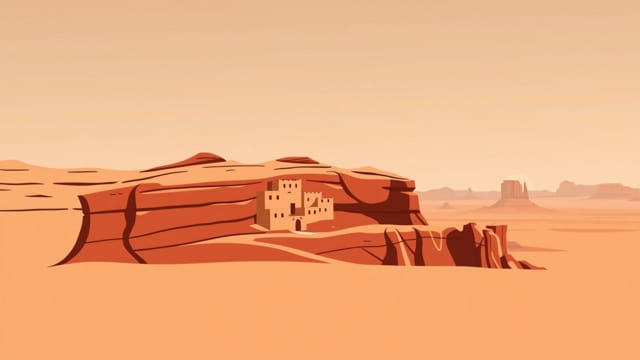
In their later period, particularly from the 1100s onward, the Anasazi began building homes into the sides of cliffs. These cliff dwellings offered protection from enemies and harsh weather. Constructed from sandstone blocks and adobe mortar, the dwellings were carefully fitted into natural alcoves in the cliffs.
Some of the most famous cliff dwellings include:
- Cliff Palacein Mesa Verde, Colorado
- Betatakin and Keet Seelin Navajo National Monument, Arizona
- Tsegi Canyondwellings in northeastern Arizona
Agricultural Practices
Farming in the Desert
Despite the arid conditions, the Anasazi were skilled farmers. They grew maize (corn), beans, squash, and cotton. Maize was their staple crop and held both dietary and cultural significance.
To support agriculture, the Anasazi used innovative techniques:
- Dry farming: Planting seeds in areas where water naturally accumulated from rainfall.
- Dikes and terraces: Used to slow runoff and preserve moisture in the soil.
- Irrigation canals: Dug to divert water from streams and springs to fields.
Storage Systems
They built granaries and storage rooms to keep surplus crops. These were often sealed to keep pests and moisture out, ensuring a stable food supply during times of drought or poor harvest.
Social and Cultural Life
Kivas and Religion
Religious and social life centered around structures called kivas circular, subterranean rooms used for ceremonies and community meetings. Kivas typically had a fire pit, a ventilation shaft, and a sipapu (a small hole symbolizing the origin of life).
Kivas were usually built below ground level and accessed by ladders through a hole in the roof. Important rituals, storytelling, and decision-making took place here, often involving only men.
Trade and Communication
The Anasazi were part of an extensive trade network. They exchanged goods such as turquoise, cotton textiles, feathers, pottery, and food items with neighboring groups across the Southwest and into Mesoamerica.
Roads, including the Great North Road leading out of Chaco Canyon, connected distant Anasazi settlements. These routes supported economic, political, and ceremonial connections between communities.
Art and Pottery
They produced intricate black-on-white pottery, basketry, petroglyphs, and weaving. Pottery was often decorated with geometric patterns and used for storage, cooking, or ceremonial purposes. Petroglyphs carved into rock surfaces depict animals, humans, and symbolic figures that provide insight into Anasazi beliefs and experiences.
Decline and Disappearance
Environmental Stress
By the late 1200s, many Anasazi settlements were abandoned. Scholars suggest multiple contributing factors:
- Drought: Prolonged dry periods made farming unsustainable.
- Soil depletion: Agricultural overuse may have led to reduced yields.
- Deforestation: Clearing trees for building materials and fuel may have worsened environmental degradation.
Social and Political Pressure
Conflict with neighboring groups, internal social unrest, or overpopulation may have also played roles in the Anasazi migration away from established settlements. Evidence of warfare, such as defensive structures and signs of violence, has been found at some archaeological sites.
Migrating to New Homelands
The descendants of the Anasazi did not disappear but relocated to other regions. Today’s Pueblo peoples, including the Hopi, Zuni, and Taos, trace their heritage to the Anasazi. These communities maintain many of the traditions, agricultural practices, and spiritual beliefs inherited from their ancestors.
Legacy of the Anasazi
Preserved Heritage
Modern archaeologists and historians continue to study Anasazi ruins to learn more about their way of life. Sites like Mesa Verde and Chaco Canyon are protected national parks and serve as reminders of the Anasazi’s ingenuity and cultural richness.
Influence on Modern Culture
Contemporary Pueblo communities keep the Anasazi spirit alive through ceremonies, language, and oral traditions. Their resilience and adaptability continue to inspire respect and admiration among historians and Native American groups alike.
The Anasazi people lived in one of the harshest environments in North America and flourished through innovation, cooperation, and cultural richness. Their homes whether pit houses, pueblos, or cliff dwellings reflect a deep understanding of their surroundings and the ability to adapt to changing conditions. By exploring where and how the Anasazi lived, we appreciate the complexity and resilience of a society that left a lasting legacy on the American Southwest.