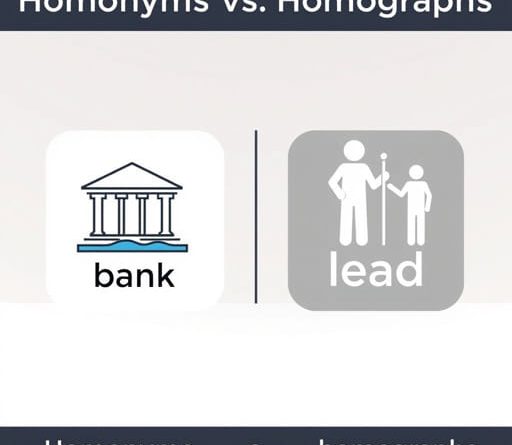
Difference Between Homonyms And Homographs With Examples
Language is full of fascinating complexities, and among these are words that look or sound alike but have different meanings. Two important categories of such words are homonyms and homographs. Understanding thedifference between homonyms and homographsis crucial for improving vocabulary, enhancing reading comprehension, and avoiding confusion in communication. Although these terms are often mixed up, they have distinct characteristics. This topic explores these differences with clear explanations and examples, making it easy to grasp for learners at any level.
What Are Homonyms?
Definition of Homonyms
Homonymsare words that sound the same or are spelled the same but have different meanings. The term homonym comes from Greek roots meaning same name. Homonyms can be further divided into two categories: homophones and homographs, but in a broader sense, homonyms often refer to words that share pronunciation and sometimes spelling but differ in meaning.
Characteristics of Homonyms
- Sound the same (pronunciation is identical)
- May or may not be spelled the same
- Have completely different meanings
Examples of Homonyms
- Batbat(used in sports): Both words sound and are spelled the same, but one refers to a flying mammal, and the other is a piece of sports equipment.
- Bankbank(side of a river): Identical in spelling and pronunciation but different meanings.
- Barkbark(outer covering of a tree): Same spelling and pronunciation, but different meanings.
What Are Homographs?
Definition of Homographs
Homographsare words that are spelled the same but have different meanings. Importantly, homographs may or may not be pronounced the same. The term means same writing, emphasizing the shared spelling regardless of pronunciation differences.
Characteristics of Homographs
- Share the same spelling
- Have different meanings
- May have different pronunciations
Examples of Homographs
- Leadlead(a type of metal): Spelled the same but pronounced differently leed for guiding, led for the metal.
- Bowbow(a type of weapon or decorative knot): Same spelling, different pronunciations bau for bending and boh for the weapon or ribbon.
- Teartear(liquid from the eye): Same spelling but pronounced differently teer for ripping and tair for crying.
Key Differences Between Homonyms and Homographs
Spelling
While both homonyms and homographs can share the same spelling, homonyms can also include words that sound alike but are spelled differently (homophones), whereas homographs strictly focus on words with the same spelling.
Pronunciation
- Homonyms: Usually sound the same (though some definitions include homographs that differ in pronunciation).
- Homographs: May have the same or different pronunciations.
Meaning
Both homonyms and homographs have different meanings despite the spelling or pronunciation similarities.
Scope
Homonyms is a broader term that can include homographs and homophones, while homographs refer specifically to words with the same spelling.
How Homonyms and Homographs Affect Communication
Potential Confusion
Because these words sound or look the same, they can sometimes cause misunderstandings, especially in spoken language or when reading without context. Recognizing whether a word is a homonym or homograph can help determine its correct meaning based on context clues.
Importance in Language Learning
English learners often struggle with these words because they require paying close attention to pronunciation, spelling, and context. Mastering them enhances comprehension and fluency.
Use in Literature and Wordplay
Writers and poets often use homonyms and homographs creatively to add humor, ambiguity, or emphasis to their works. Puns, for example, rely heavily on such words.
More Examples to Clarify
Homonyms (Homophones) Examples
- SeaSee: Sound the same but spelled differently and have different meanings.
- FlourFlower: Same pronunciation but different spelling and meaning.
Homographs Examples
- WindWind(to turn or twist): Same spelling, different pronunciation and meaning.
- RowRow(to paddle): Same spelling but different pronunciations and meanings.
Tips for Distinguishing and Using Them Correctly
- Look for Context: The meaning often depends on the sentence or situation.
- Pay Attention to Pronunciation: If the pronunciation changes, it’s likely a homograph with different meanings.
- Practice Common Examples: Familiarity helps reduce confusion in everyday communication.
- Use Dictionaries: Good dictionaries indicate pronunciation and meanings, helping learners understand differences.
Summary
In summary, the difference between homonyms and homographs lies primarily in spelling and pronunciation. Homonyms are words that sound alike and may or may not be spelled the same but have different meanings. Homographs are words spelled the same but can have different meanings and pronunciations. Recognizing these distinctions enriches understanding and makes communication clearer. By learning examples and practicing context usage, one can master these intriguing features of the English language.