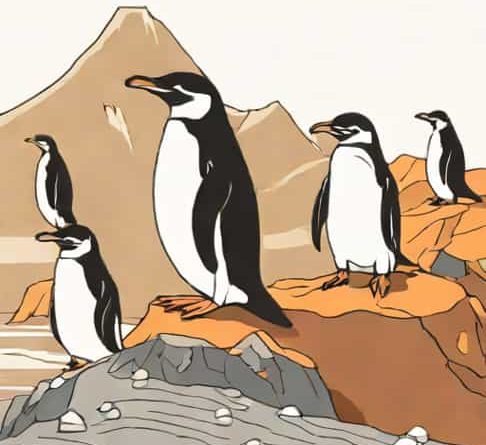
Do Chinstrap Penguins Live On Volcanoes
Chinstrap penguins are fascinating creatures known for their distinctive black band under their chin, which gives them their name. They are one of the most numerous penguin species in the world and are primarily found in the Southern Hemisphere. These penguins are highly adapted to harsh climates, including extreme cold, icy terrain, and strong winds. A common question among wildlife enthusiasts and researchers is whether chinstrap penguins live on volcanoes. Understanding their habitat preferences, breeding grounds, and adaptations provides insight into why they choose specific areas for nesting and survival.
Chinstrap Penguins An Overview
Chinstrap penguins (Pygoscelis antarcticus) are medium-sized penguins, reaching about 68-76 cm in height and weighing around 3-5 kg. They are agile swimmers and excellent divers, which helps them catch their primary food sources such as krill, fish, and small squid. These penguins are highly social, often forming large colonies that can consist of tens of thousands of individuals. Their social behavior plays a crucial role in survival, protection from predators, and reproduction.
Physical Characteristics
- Distinctive black band under the chin
- White face and underbelly
- Black back and flippers
- Strong, webbed feet adapted for swimming
- Streamlined body for efficient diving
Natural Habitat of Chinstrap Penguins
Chinstrap penguins are native to the Antarctic and sub-Antarctic regions. Their primary habitats include islands and coastal areas with easy access to the ocean, where they hunt for food. These regions often feature rocky slopes and ice-free areas that are suitable for nesting. While they are highly adaptable to cold environments, their habitat selection is largely influenced by the availability of food, safe nesting grounds, and minimal predator interference.
Breeding Grounds
During the breeding season, chinstrap penguins gather in large colonies on rocky shores or flat, ice-free terrain. They build nests using stones and pebbles, which help protect their eggs from the cold ground and harsh weather. Breeding usually occurs in colonies that are close to the ocean, ensuring that adults can easily access food while taking turns incubating the eggs. This nesting behavior is vital for the survival of chicks, as it reduces exposure to predators and extreme temperatures.
Volcanoes as Habitat
While chinstrap penguins are adaptable, they do not typically live on active volcanoes. Volcanoes, especially those that are active, present dangerous conditions such as lava flows, toxic gases, and unstable terrain, which are unsuitable for nesting or foraging. However, some volcanic islands in the Southern Ocean, such as those in the South Shetland Islands or around the Antarctic Peninsula, provide suitable habitats because they are often dormant or extinct. In these cases, the volcanic soil and rocky landscape can support large penguin colonies.
Volcanic Islands with Penguin Colonies
- Deception Island An extinct volcanic island in the South Shetlands hosting thousands of chinstrap penguins.
- Livingston Island Features rocky shores formed from volcanic activity, providing nesting grounds.
- Other sub-Antarctic volcanic islands Some offer ice-free coastal areas ideal for penguin colonies.
Why Volcanoes Are Rarely Ideal
Even on volcanic islands, penguins tend to avoid areas with recent eruptions or active geothermal activity. The reasons include
- Lava flows can destroy nests and eggs.
- Volcanic gases can be harmful to chicks and adult penguins.
- Frequent volcanic activity can reduce the stability of nesting areas.
- Food sources are typically more abundant near the ocean rather than volcanic slopes.
Adaptations for Harsh Environments
Although chinstrap penguins avoid active volcanic areas, they are remarkably adapted to harsh climates. Their dense feathers and a thick layer of fat provide insulation against cold winds and freezing water. Their strong, webbed feet help them navigate icy rocks and slippery surfaces, while their sharp beaks are effective for catching prey. These adaptations allow them to thrive in extreme environments where other animals might struggle to survive.
Chinstrap Penguins and Climate
Climate also influences the choice of habitat for chinstrap penguins. They prefer areas where ice conditions and temperature allow access to the ocean for feeding. Volcanic activity can temporarily disrupt local climates, making the area less suitable for penguins. Additionally, penguins are sensitive to environmental changes, and any alteration in food availability or nesting grounds can affect their population and breeding success.
Impact of Climate on Distribution
- Ice-free areas provide nesting grounds
- Ocean proximity ensures steady food supply
- Stable weather conditions reduce chick mortality
- Active volcanic eruptions can temporarily displace colonies
Chinstrap penguins do not typically live on active volcanoes due to dangerous conditions such as lava flows, toxic gases, and unstable terrain. However, they can thrive on volcanic islands that are dormant or extinct, where rocky slopes and ice-free areas provide ideal nesting grounds. Their adaptability to extreme cold, strong swimming abilities, and social behavior allow them to survive in some of the harshest environments on Earth. Understanding their habitat preferences highlights the balance between environmental challenges and biological adaptations that enable chinstrap penguins to flourish in the Southern Hemisphere. These remarkable creatures continue to captivate researchers and wildlife enthusiasts alike, offering insights into survival strategies in extreme climates.