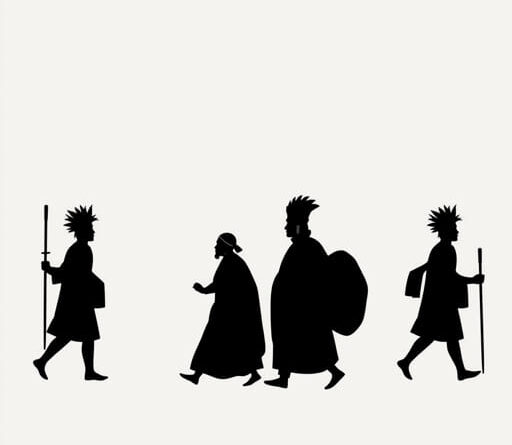
El Rescate de Atahualpa
In the early 16th century, the Inca Empire was the most powerful civilization in South America, stretching across modern-day Peru, Ecuador, Bolivia, Chile, and beyond. At the height of its strength, a dramatic event unfolded that would mark the beginning of its downfall: the capture and ransom of Emperor Atahualpa by Spanish conquistadors. Known in Spanish as El Rescate de Atahualpa, this episode is one of the most astonishing moments in colonial history, blending deception, cultural misunderstanding, and the lust for gold. The consequences of this encounter between Atahualpa and Francisco Pizarro would echo across the centuries, ending Inca sovereignty and reshaping an entire continent.
Background: The Inca Empire in Turmoil
Atahualpa and the Inca Civil War
Atahualpa, son of the Inca ruler Huayna Cápac, had recently emerged victorious in a brutal civil war against his half-brother Huáscar. This internal conflict left the empire divided and weakened, providing a perfect opportunity for foreign invaders. Atahualpa was in Cajamarca, a city in northern Peru, when he encountered the Spanish forces led by Francisco Pizarro in 1532.
The Incas were unaware of the broader colonial ambitions of the Spanish Empire. For them, the arrival of the foreigners was curious and intriguing, but not necessarily a threat. Atahualpa was confident in his power and the strength of his army, which numbered in the tens of thousands. He agreed to meet with the Spanish, not expecting the betrayal that would follow.
The Capture at Cajamarca
Pizarro’s Bold Ambush
When Atahualpa arrived at Cajamarca with his entourage, he was met by a much smaller Spanish force only about 180 men. Despite their small numbers, the Spanish were armed with steel weapons, horses, and gunpowder, giving them a technological edge. Pizarro laid a trap, hiding his men in buildings around the main square while inviting Atahualpa to a peaceful meeting.
As Atahualpa entered the plaza unarmed, accompanied by thousands of attendants, a Dominican friar named Vicente de Valverde approached and demanded that he accept Christianity and submit to the authority of the Spanish king. Atahualpa refused, reportedly throwing down a Bible. This act was used as a justification for a violent ambush.
The Spanish opened fire with guns and cannons, and cavalry charged into the unarmed crowd. Chaos erupted. Thousands of Incas were slaughtered in minutes. Atahualpa was seized by Pizarro himself and taken prisoner. The emperor of the mighty Inca Empire was now in chains.
The Ransom Offer: El Rescate de Atahualpa
A Room Filled with Gold and Silver
In an attempt to secure his freedom, Atahualpa proposed a ransom that would astonish the Spanish. He promised to fill a large room approximately 22 feet long and 17 feet wide with gold up to a height of about eight feet. Additionally, he would provide two more rooms filled with silver. This offer, known as ‘El Rescate de Atahualpa,’ became one of the most legendary ransom deals in history.
The Spanish agreed, and the collection began. Gold and silver treasures were brought from all corners of the empire religious icons, ceremonial objects, and artwork were melted down into ingots. The value of the ransom was enormous, possibly equivalent to billions of dollars in today’s terms.
- Gold objects were stripped from temples and palaces.
- Silver was transported over long distances by llama caravans and porters.
- Incan nobles cooperated, believing it would save their emperor.
Despite the massive wealth delivered to the Spanish, Atahualpa remained a prisoner for several months while Pizarro considered his fate.
The Spanish Response
While the ransom was being fulfilled, the Spanish debated what to do with Atahualpa. Some viewed him as a useful political puppet, while others feared he might rally resistance once freed. Rumors of Inca uprisings and the possibility of rescue missions made the Spanish uneasy.
Ultimately, they decided to eliminate him. Atahualpa was accused of various crimes, including plotting rebellion, polygamy, and idolatry charges that held little merit but served the Spanish agenda. A mock trial was held, and he was sentenced to death.
The Execution of Atahualpa
The Tragic End of an Emperor
On July 26, 1533, despite the ransom being paid in full, Atahualpa was executed. He was originally sentenced to be burned at the stake, a terrifying fate in Inca belief since cremation was thought to prevent the soul from reaching the afterlife. In a final effort to save his soul, Atahualpa agreed to be baptized as a Christian. In exchange, the Spanish granted him the mercy of a garrote strangulation by a tightening collar.
His death sent shockwaves through the empire. The Incas, who viewed their emperor as a divine figure, were left disoriented and demoralized. The loss of their leader paved the way for the Spanish conquest of Cuzco and the complete collapse of the Inca political system.
Consequences of the Ransom and Execution
Collapse of the Inca Empire
With Atahualpa gone and the Spanish enriched by his ransom, the balance of power shifted dramatically. The Spaniards used the wealth to finance further campaigns, bribing local leaders and recruiting indigenous allies to fight against the remaining Inca resistance. They captured the capital city of Cuzco and installed puppet rulers to legitimize their control.
The psychological impact of Atahualpa’s betrayal was enormous. Many Inca nobles surrendered, others fled, and some attempted to continue the fight, but the unity of the empire had been shattered. The Spanish used superior weaponry and tactics, along with internal divisions, to complete their conquest.
A Turning Point in Colonial History
The story of El Rescate de Atahualpa symbolizes the tragic encounter between two worlds. It reflects the ruthless ambitions of the conquistadors and the vulnerability of a sophisticated civilization caught off guard. The ransom and execution marked the beginning of European domination in South America, leading to centuries of colonization, cultural loss, and transformation.
Gold from Atahualpa’s ransom helped finance Spain’s imperial ambitions, but it also set a precedent for exploitation and violence in the New World. The events in Cajamarca became a model for other conquests, influencing how future colonial powers approached indigenous civilizations.
Legacy and Historical Reflections
Lessons from Atahualpa’s Fate
Today, the story of Atahualpa and his ransom is studied not only as a dramatic episode of conquest but also as a symbol of resilience and cultural endurance. Despite the fall of the Inca Empire, many aspects of Andean civilization survive in language, customs, and traditions among the descendants of the Incas.
Historians continue to debate whether Atahualpa could have acted differently or whether his fate was sealed by circumstances beyond his control. His decision to negotiate, rather than fight immediately, was shaped by cultural values and a belief in diplomacy that ultimately clashed with European intentions.
El Rescate de Atahualpa remains one of the most compelling chapters in world history a moment where two powerful forces collided, with profound consequences for both.