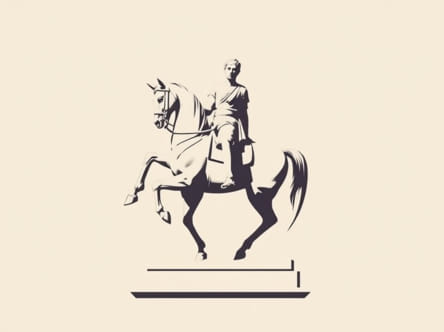
Equestrian Statue Of Marcus Aurelius
The Equestrian Statue of Marcus Aurelius stands as one of the most iconic surviving sculptures from Ancient Rome. This bronze monument, depicting the Roman emperor on horseback, combines imperial authority, philosophical demeanor, and artistic excellence. While many ancient statues have been lost over time, this particular work was preserved, partly due to a case of mistaken identity. Its survival provides historians, artists, and philosophers with deep insight into Roman values, leadership, and sculpture techniques during the second century CE.
Historical Background of Marcus Aurelius
Who Was Marcus Aurelius?
Marcus Aurelius ruled the Roman Empire from 161 to 180 CE and is widely remembered as one of the Five Good Emperors. A Stoic philosopher and accomplished military leader, his reign was marked by both philosophical writings and ongoing wars, especially against Germanic tribes. His book Meditations, written during military campaigns, remains a cornerstone of Stoic philosophy.
Context of the Statue’s Creation
The statue is believed to have been created around 175 CE to celebrate Marcus Aurelius’s military victories or possibly to mark his return to Rome from campaigns in the East. The precise date is still debated among scholars, but its style and posture reflect late classical Roman art and imperial grandeur. It was likely commissioned as public propaganda to reinforce the emperor’s role as a benevolent yet powerful ruler.
Description and Symbolism
Pose and Composition
The statue depicts Marcus Aurelius seated calmly on a powerful horse. The emperor raises his right arm, possibly in a gesture of clemency or command. Unlike earlier equestrian statues that emphasize military dominance, Marcus Aurelius is portrayed without weapons or armor, which suggests a ruler who leads with wisdom and reason rather than brute force.
Facial Expression and Attire
His face is solemn and contemplative, in line with his Stoic beliefs. The beard and philosophical appearance were typical of Antonine emperors, symbolizing wisdom and introspection. He wears a short tunic and a cloak, rather than full military dress, which emphasizes civic and moral leadership over martial prowess.
The Horse’s Significance
The horse is shown mid-stride with one foreleg raised. The animal appears powerful but calm, under the complete control of its rider. This image reinforces the idea of dominion not through force but through harmony and mastery. The composition as a whole projects a balanced image of imperial control and philosophical depth.
Survival Through History
Why It Wasn’t Melted Down
Unlike many ancient bronze statues, the Equestrian Statue of Marcus Aurelius was not melted down during the medieval period. The primary reason for its preservation is that people in the Middle Ages mistakenly believed the statue represented Constantine the Great, the first Roman emperor to convert to Christianity. This association with a Christian ruler likely saved the statue from destruction during waves of anti-pagan sentiment.
Medieval and Renaissance Rediscovery
The statue remained visible throughout the medieval period, most notably displayed in the Lateran Palace in Rome. During the Renaissance, it was revered by artists and scholars as a masterpiece of classical art. In 1538, Pope Paul III had it moved to the Capitoline Hill, where it became a central piece in Michelangelo’s redesign of the Piazza del Campidoglio. The statue was positioned in the center of the square, reinforcing its importance and grandeur.
Artistic Techniques and Materials
Lost-Wax Casting
The statue was created using the lost-wax casting technique, a method commonly employed in classical sculpture. This involved making a wax model, covering it with clay, melting the wax, and then pouring molten bronze into the mold. The technique allowed for intricate detail and durability, which helped the statue endure over the centuries.
Scale and Realism
The statue is larger than life standing over 4 meters (13 feet) tall including the horse and rider. This monumental scale was intended to impress viewers and communicate imperial majesty. The realistic anatomy of the horse and the naturalistic posture of the emperor reflect the high level of craftsmanship achieved by Roman artisans.
Traces of Gilding
Although the surface appears dark today, the statue was originally gilded covered with a thin layer of gold. This would have made it shine brilliantly in the sunlight, further emphasizing the emperor’s divine and regal status. Small remnants of gold leaf can still be detected on the surface under scientific analysis.
Location and Modern Preservation
Current Display
Due to concerns about weather damage and pollution, the original statue was moved indoors to the Capitoline Museums in Rome in 1981. A replica now stands in the Piazza del Campidoglio, occupying the same central position Michelangelo envisioned. This move has helped preserve the original while still allowing the public to experience its presence in a historical setting.
Conservation Efforts
Modern conservation has focused on stabilizing the bronze, preventing corrosion, and studying the construction methods. Advanced imaging and scanning techniques have provided deeper insights into how the statue was made and how it has changed over time. These efforts ensure that future generations can continue to appreciate its historical and artistic value.
Legacy and Cultural Significance
Symbol of Leadership
The Equestrian Statue of Marcus Aurelius has become a lasting symbol of virtuous leadership. Its serene yet commanding presence reflects ideals of wisdom, justice, and moral responsibility. These themes resonate not only in Roman history but in broader discussions of what leadership should embody.
Influence on Later Art
Throughout the Renaissance and into modern times, the statue inspired countless artists. It became a model for equestrian monuments across Europe, including works commemorating monarchs, military leaders, and political figures. From Donatello to Jacques-Louis David, the influence of this Roman masterpiece is deeply embedded in Western art traditions.
- Inspired Renaissance equestrian statues in Italy and beyond
- Emphasized balance between power and philosophy in portraiture
- Frequently cited in art history and sculpture studies
Philosophical Interpretation
Because Marcus Aurelius was also a Stoic philosopher, the statue invites interpretations beyond politics and aesthetics. It stands as a monument to self-discipline, rationality, and the pursuit of virtue. For many, the statue is not just a celebration of imperial power but also of intellectual and moral integrity.
The Equestrian Statue of Marcus Aurelius is one of the most extraordinary artifacts of ancient Roman art and political symbolism. Its survival against the odds, refined craftsmanship, and philosophical depth make it far more than a historical monument it is a lasting symbol of enlightened leadership. From its gilded origins to its modern-day preservation, the statue continues to inspire admiration and scholarly interest. It represents a powerful union of art, authority, and wisdom, securing its place as a timeless masterpiece in the history of Western civilization.