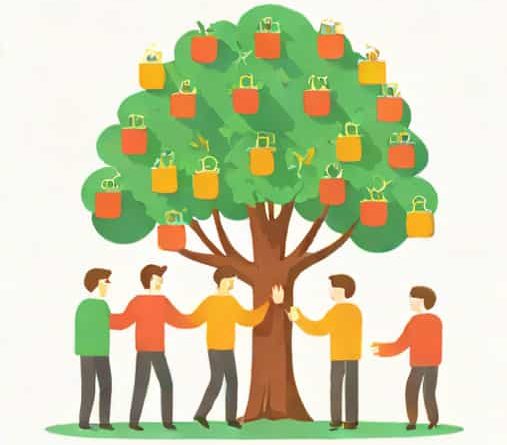
How Many People Scuffle Under The Tree
The phrase how many people scuffle under the tree sounds simple at first, yet it carries a sense of mystery that invites interpretation. It can be read as a literal question, a symbolic image, or even a line drawn from folklore, riddles, or storytelling traditions. Rather than offering a single fixed answer, this phrase opens space for imagination, cultural meaning, and contextual analysis. Understanding it requires looking at language, narrative setting, and the human tendency to turn ordinary scenes into meaningful stories.
Exploring the Literal Meaning
At its most direct level, how many people scuffle under the tree describes a physical situation. A scuffle implies a brief, often chaotic physical struggle or confrontation. The setting, under a tree, gives the scene a grounded and visual quality.
Literally, the number of people involved in a scuffle under a tree could vary widely. It might be two individuals arguing, a small group involved in a heated moment, or even a crowd caught in a sudden conflict. Without more context, the phrase does not specify an exact number.
Why the Tree Matters
The presence of a tree adds more than just a location. Trees often represent meeting places, shelter, or boundaries. A scuffle under a tree suggests something informal, spontaneous, and rooted in everyday life rather than an organized or official conflict.
Symbolic Interpretations of the Phrase
Beyond the literal image, many readers interpret how many people scuffle under the tree symbolically. Trees are powerful symbols across cultures, often representing life, wisdom, community, or conflict.
In this sense, the scuffle may symbolize disagreement, competition, or tension within a group. The number of people involved becomes less important than what the scuffle represents.
Use in Riddles and Puzzles
This phrase can also appear in riddles or logic puzzles, where the question how many people is meant to challenge assumptions. In such cases, the answer may not be obvious and may depend on how the situation is framed.
Some riddles use everyday scenes to test observation skills or logical reasoning. The scuffle under the tree could involve hidden participants, reflections, or symbolic figures.
Common Riddle Approaches
- Counting only visible participants
- Including observers mistaken as participants
- Interpreting people metaphorically
- Considering animals or shadows as distractions
Literary and Storytelling Contexts
In literature, scenes involving a tree often carry emotional weight. From ancient myths to modern novels, trees serve as witnesses to human action. A scuffle under a tree can be a turning point in a story.
Authors may deliberately leave the number of people unclear to focus attention on the event rather than the participants. This ambiguity encourages readers to imagine the scene in their own way.
Folklore and Traditional Narratives
In folklore, trees are common gathering points. Villagers meet beneath them, disputes are settled there, and important events unfold in their shade.
A scuffle under a tree in folklore may involve rivals, siblings, strangers, or even supernatural beings. Asking how many people are involved may be less about counting and more about understanding the nature of the conflict.
Psychological Perspective
From a psychological point of view, the phrase can reflect how humans perceive conflict. When witnessing a scuffle, people often focus on the intensity rather than the number of participants.
The question how many people scuffle under the tree may highlight how memory and perception work, especially in chaotic moments.
Perception During Conflict
During a scuffle, observers may miscount participants due to movement, noise, and emotional tension. What one person recalls as a group fight, another may remember as a disagreement between two individuals.
Social and Cultural Dimensions
In a social context, the phrase may point to group behavior. A scuffle under a tree could represent community conflict, peer pressure, or shared responsibility.
The number of people involved may influence how the situation is judged. A conflict between two people is often seen differently from one involving many.
Historical Interpretations
Historically, public spaces such as trees, markets, or village squares were common sites of disputes. Records and stories from the past often mention fights breaking out in such locations.
Asking how many people scuffle under the tree may echo these historical realities, where small disagreements could quickly draw in bystanders.
Metaphorical Use in Modern Language
In modern language, the phrase can be used metaphorically. It may describe a situation where many people are involved in a conflict over a shared resource or idea.
The tree becomes a symbol of opportunity, power, or attention, while the scuffle represents competition.
Educational Interpretations
Teachers and educators may use such phrases to encourage critical thinking. Students are asked to analyze context, question assumptions, and explore multiple interpretations.
The open-ended nature of how many people scuffle under the tree makes it suitable for discussion and creative writing.
Why the Question Has No Single Answer
One of the most interesting aspects of this phrase is that it resists a single answer. The lack of context is intentional or at least meaningful.
Rather than providing a number, the phrase encourages exploration of perspective, storytelling, and interpretation.
Creative Writing Opportunities
Writers may use this phrase as a prompt. It invites the creation of scenes, characters, and conflicts.
Depending on the story, the scuffle might involve two childhood friends, a group of strangers, or an entire community.
Reflection on Human Curiosity
Asking how many people scuffle under the tree reflects a natural human desire to understand events fully. We seek details, numbers, and explanations even when they are not provided.
This curiosity drives storytelling, problem-solving, and learning.
So, how many people scuffle under the tree? The most accurate answer is that it depends on context, interpretation, and perspective. The phrase works as a literal question, a symbolic image, and a creative prompt.
Its strength lies in its openness. By leaving the number undefined, it invites readers to think deeper about conflict, setting, and meaning. In doing so, it turns a simple image into a rich and flexible idea that can be explored in many ways.