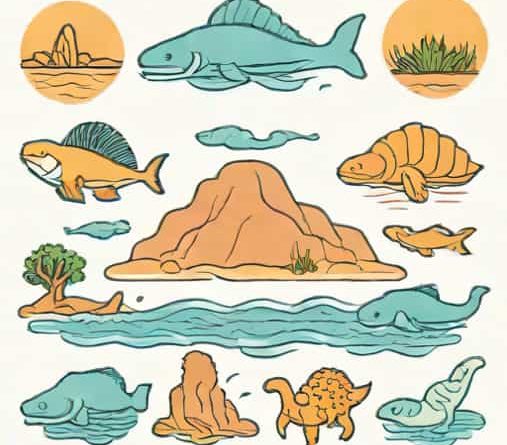
How Many Years Was The Devonian Period
The Devonian Period is a significant chapter in Earth’s geological history, often referred to as the Age of Fishes due to the remarkable diversification of fish species during this time. Understanding how many years the Devonian period lasted provides insight into the pace of evolutionary change, the development of early terrestrial ecosystems, and the geological transformations that shaped our planet. Spanning millions of years, this period witnessed the rise of complex life forms, the colonization of land by plants, and the establishment of early forests. Exploring its duration, key events, and environmental changes allows us to appreciate the dynamic nature of Earth’s history.
Timeline of the Devonian Period
The Devonian Period lasted for approximately 60 million years. It began around 419 million years ago and ended about 359 million years ago. Positioned between the Silurian and Carboniferous periods, the Devonian represents a time of significant evolutionary and geological transitions. During this lengthy span, both marine and terrestrial ecosystems underwent profound changes, laying the foundation for the biodiversity that would continue to evolve in subsequent periods.
Divisions of the Devonian
The Devonian Period is traditionally divided into three main epochs or subperiods the Early Devonian, Middle Devonian, and Late Devonian. Each subperiod is marked by distinct geological formations, climatic conditions, and evolutionary milestones.
- Early Devonian (419-393 million years ago)Characterized by the expansion of marine life, particularly jawless and early jawed fishes.
- Middle Devonian (393-383 million years ago)Marked by the emergence of more advanced fish, including lobe-finned and placoderm species, and the appearance of the first forests.
- Late Devonian (383-359 million years ago)Known for the diversification of terrestrial plants and significant extinction events that affected marine ecosystems.
Major Evolutionary Developments
During the roughly 60 million years of the Devonian Period, life on Earth experienced extraordinary developments. The oceans teemed with a variety of fish species, including the first sharks and bony fish, earning the period its nickname as the Age of Fishes. On land, plants began to adapt to terrestrial life, forming early forests that would transform Earth’s landscapes and atmosphere. The diversification of insects also occurred, providing a crucial connection between plant life and the emerging terrestrial ecosystems.
Marine Life Expansion
The Devonian Period saw unprecedented diversification in marine life. Jawed fishes, such as placoderms, acanthodians, and early bony fishes, dominated the seas. Coral reefs expanded, providing habitats for a wide array of organisms. Trilobites, brachiopods, and ammonites were also prevalent, contributing to complex marine ecosystems. The changes in marine biodiversity during this period illustrate how evolutionary pressures and environmental shifts drive the emergence of new species over millions of years.
Terrestrial Colonization
The colonization of land by plants was one of the most transformative aspects of the Devonian Period. Early vascular plants, such as the ancestors of ferns and horsetails, developed structures that allowed them to survive in dry environments. By the Late Devonian, the first true forests had formed, creating new habitats for terrestrial organisms and altering the planet’s atmosphere through increased oxygen production. This long-term adaptation highlights the impact of geological time on life’s complexity.
Geological and Environmental Changes
Over its 60 million years, the Devonian Period was marked by significant geological activity. Continental movements, mountain-building events, and fluctuating sea levels shaped the Earth’s surface. These environmental changes influenced both marine and terrestrial ecosystems, creating opportunities for new species while challenging existing ones. The Devonian climate ranged from warm and tropical to cooler periods, affecting ocean currents and atmospheric composition.
Extinction Events
Despite its evolutionary advancements, the Devonian Period was not without crises. The Late Devonian extinction events, occurring over several million years, led to the loss of a significant portion of marine species, particularly affecting reef-building organisms and jawless fishes. These extinction events highlight the vulnerability of life even during periods of high biodiversity and demonstrate the complex interplay between environmental change and biological survival.
Significance in Earth’s History
The Devonian Period’s 60-million-year duration allowed for extensive evolutionary experimentation and ecological innovation. It set the stage for future periods by establishing key ecosystems, both in the oceans and on land. The development of forests contributed to changes in soil formation, atmospheric oxygen levels, and climate regulation. Similarly, the diversification of fish provided the evolutionary foundation for terrestrial vertebrates, including the first amphibians that would appear in the subsequent Carboniferous Period.
Impact on Modern Science
Studying the Devonian Period provides scientists with valuable insights into evolutionary biology, paleontology, and geology. Fossil records from this period reveal the gradual development of complex life forms and the environmental pressures that shaped them. Understanding the 60-million-year duration of the Devonian helps researchers contextualize the slow, cumulative nature of evolutionary and geological processes, emphasizing the vast timescales over which life and the Earth evolve.
The Devonian Period, lasting approximately 60 million years from 419 to 359 million years ago, represents a crucial era in Earth’s history. Its long duration allowed for the diversification of fish, the emergence of early forests, and the establishment of complex terrestrial and marine ecosystems. Geological changes, climatic fluctuations, and extinction events all played a role in shaping life during this time. By studying the Devonian, we gain a deeper understanding of evolution, environmental adaptation, and the dynamic nature of our planet over vast timescales. Its legacy continues to influence scientific research and our appreciation for the intricate history of life on Earth.
- Duration Approximately 60 million years (419-359 million years ago)
- Major developments Diversification of fish, colonization of land by plants
- Key events Formation of the first forests, expansion of coral reefs, emergence of insects
- Extinction events Late Devonian extinctions affecting marine life
- Significance Foundation for terrestrial vertebrates and complex ecosystems