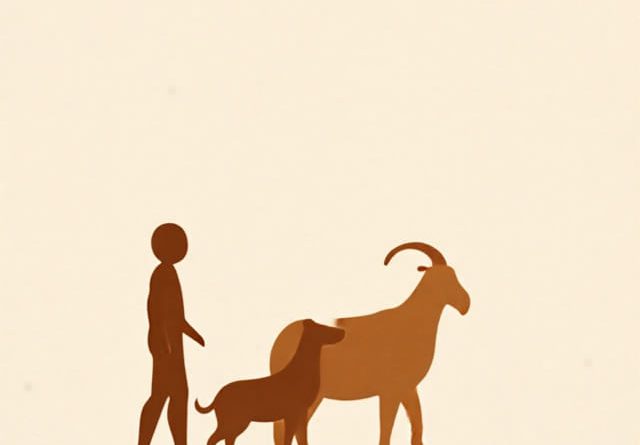
In Which Age Domestication Of Animals Started
Domestication of animals marked a major turning point in human history, transforming societies from nomadic hunter-gatherers to settled agricultural communities. This significant development did not happen overnight but began during a specific period known as the Neolithic Age. As humans started cultivating land and forming permanent settlements, they also began to tame and raise animals for food, labor, clothing, and companionship. The domestication of animals played a critical role in the development of civilization and the advancement of agricultural economies.
The Neolithic Age and Its Importance
The Neolithic Age, also called the New Stone Age, began around 10,000 BCE and is most commonly associated with the Agricultural Revolution. During this time, humans discovered how to grow crops and domesticate animals, leading to the establishment of permanent settlements. The transition from foraging to farming was a slow but transformative process that changed human interaction with the natural world.
Defining the Neolithic Age
This era is characterized by several major changes in human society:
- Use of polished stone tools
- Development of agriculture and permanent villages
- Invention of pottery and weaving
- Domestication of plants and animals
Among these advancements, the domestication of animals was a key factor in ensuring a stable food supply and enabling economic and social growth.
Early Domesticated Animals
The domestication of animals started with species that were already somewhat accustomed to human presence or whose characteristics made them easy to tame. Over time, humans selectively bred animals that were more docile, productive, or useful in daily life.
Dogs The First Domesticated Animal
Long before the Neolithic period, dogs were likely the first animals to be domesticated. Archaeological evidence suggests that dogs may have been domesticated as early as 15,000 to 30,000 years ago, possibly during the Upper Paleolithic era. Early humans may have tamed wild wolves, which later evolved into domestic dogs. These animals were valued for their companionship, hunting assistance, and guarding abilities.
Domestication in the Neolithic Era
Most other animals were domesticated during the Neolithic Age, when humans began to settle and farm.
- Sheep and goats: Among the first farm animals to be domesticated, sheep and goats provided meat, milk, hides, and wool. Domestication likely began in the Fertile Crescent around 9,000 BCE.
- Cattle: Domesticated from wild aurochs around 8,000 BCE, cattle were used for meat, milk, and labor, especially for plowing fields.
- Pigs: Tamed in both the Middle East and East Asia, pigs offered a reliable meat source and adapted well to human settlements.
- Chickens: Domesticated in Southeast Asia, chickens provided eggs and meat and became widespread during the later Neolithic.
These animals supported the growth of agricultural societies and played a major role in the development of trade, nutrition, and labor efficiency.
Reasons for Domestication
Humans began domesticating animals for several reasons, all of which contributed to increased survival, security, and efficiency in daily life. Unlike hunting, which was unpredictable and labor-intensive, domestication provided a more consistent source of food and materials.
Food and Dairy Production
Domesticated animals such as cows, goats, and sheep provided milk and meat, making them vital resources. Milk could be consumed directly or processed into cheese and yogurt, while meat was a key protein source that could be dried or preserved for storage.
Labor and Transportation
Some animals, especially oxen and later horses, were used for plowing fields and carrying loads. This greatly improved agricultural productivity and enabled long-distance travel and trade.
Clothing and Shelter Materials
Wool from sheep, leather from cattle, and feathers from birds were used to make clothing, blankets, tents, and footwear. These resources allowed early humans to better adapt to their environments and create more permanent homes.
Companionship and Protection
In addition to their economic value, animals like dogs served as loyal companions and protectors. They alerted humans to danger and defended livestock against predators.
Centers of Animal Domestication
Animal domestication did not occur in one place alone but arose independently in different regions around the world. These early centers of domestication are key to understanding how different societies evolved.
The Fertile Crescent
Located in the Middle East, the Fertile Crescent is widely regarded as one of the first areas where animal domestication began. Its rich soil and favorable climate supported early agriculture, and species such as sheep, goats, and cattle were first domesticated here.
East and Southeast Asia
In regions like China and Thailand, pigs and chickens were among the first animals to be domesticated. Rice cultivation and animal domestication often went hand-in-hand in these areas, leading to sophisticated farming cultures.
Africa
In northern and sub-Saharan Africa, humans domesticated donkeys and cattle. These animals were especially important for transport across deserts and savannahs, shaping trade routes and cultural exchanges.
The Americas
Although animal domestication in the Americas was less widespread, species such as llamas, alpacas, guinea pigs, and turkeys were tamed and played a crucial role in Andean and Mesoamerican civilizations.
Impact on Human Societies
The domestication of animals revolutionized human societies by providing stable food sources, promoting trade, and enabling population growth. With domesticated animals, people could stay in one place, build surplus supplies, and form more complex communities.
Development of Agriculture
Animals like oxen and donkeys allowed farmers to till larger fields and transport crops more easily. This increased productivity led to food surpluses, which in turn supported population growth and urban development.
Social and Economic Changes
Ownership of domesticated animals became a symbol of wealth and status. Societies developed new systems of trade, taxation, and inheritance based on livestock. Animal husbandry also influenced religious practices, festivals, and rituals in many ancient cultures.
Challenges of Domestication
Despite its many benefits, domesticating animals was not without difficulties. Managing herds required constant attention and resources. Diseases could spread rapidly in close animal-human contact, and overgrazing often led to environmental degradation.
Additionally, domesticated animals lost some of their wild instincts and became dependent on human care. This created a new kind of relationship, where humans took responsibility for breeding, feeding, and protecting their animals.
The domestication of animals began during the Neolithic Age and was a monumental advancement in human history. It transformed nomadic lifestyles into settled communities, gave rise to agriculture, and shaped social, economic, and cultural structures across the globe. Starting with early efforts to tame dogs, humans gradually expanded their knowledge to include livestock that provided food, labor, clothing, and companionship. Understanding when and why domestication started helps us appreciate the foundational role it played in building the civilizations we live in today. The Neolithic Age was not just a time of innovation it was the age when humanity truly began to master its environment.