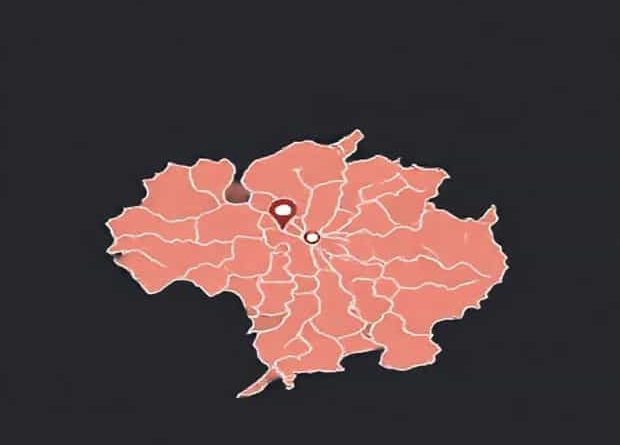
Inner London Boroughs Map
Inner London is often regarded as the beating heart of the capital, known for its cultural diversity, historic landmarks, and dense urban environment. Understanding the layout of Inner London through a detailed boroughs map provides insight into how the city is organized, highlighting the boundaries, major districts, and unique characteristics of each borough. The map of Inner London boroughs is an essential tool for residents, tourists, urban planners, and researchers interested in the spatial relationships that define this vibrant metropolitan area.
Defining Inner London
Inner London refers to a specific set of boroughs that are historically central and densely populated compared to Outer London. These boroughs have evolved over centuries, with many forming part of the original city or being closely tied to its expansion. The Inner London boroughs are distinct not only geographically but also in terms of governance, economy, and social dynamics. They include areas with a mix of residential neighborhoods, commercial hubs, government offices, and cultural institutions.
The Boroughs Included in Inner London
The map of Inner London boroughs typically includes twelve boroughs that form the core of the capital. These are
- Camden
- Greenwich
- Hackney
- Hammersmith and Fulham
- Islington
- Kensington and Chelsea
- Lambeth
- Lewisham
- Southwark
- Tower Hamlets
- Wandsworth
- Westminster
These boroughs collectively cover a relatively compact area but contain some of London’s most iconic landmarks, such as the Houses of Parliament, the Tower of London, and the British Museum. They also host a mix of residential, commercial, and cultural spaces, making them the hub of activity within the city.
Significance of the Inner London Boroughs Map
Using a map to visualize Inner London boroughs helps in understanding the spatial layout and connectivity of the city. The map reveals the proximity of key districts, transportation networks, green spaces, and river pathways such as the River Thames. Urban planners and policymakers rely on these maps to manage infrastructure, public services, and housing developments. For tourists, the map is invaluable for navigating the city and planning visits to museums, theaters, and historic sites.
Transport and Accessibility
The Inner London boroughs map highlights the extensive public transport network that connects these areas. Underground lines, bus routes, and mainline train services intersect across multiple boroughs, facilitating movement for residents and visitors alike. Understanding the geographical positioning of each borough on the map allows commuters to plan efficient routes and discover alternative travel options, which is especially important in a busy metropolitan area like Inner London.
Demographics and Cultural Diversity
The population of Inner London is highly diverse, and the boroughs map can provide context to these demographic patterns. Different boroughs have unique community profiles, with various ethnic, linguistic, and cultural groups contributing to the city’s rich social tapestry. For example, Tower Hamlets has a significant Bangladeshi community, while Camden and Islington are known for their vibrant arts and LGBTQ+ communities. Mapping these boroughs helps illustrate how diverse populations are distributed across Inner London.
Economic and Commercial Hubs
The Inner London boroughs are not only residential and cultural centers but also significant economic hubs. Areas like Westminster, the City of London (often considered part of Inner London for practical purposes), and Southwark host major financial institutions, corporate offices, and commercial centers. The map demonstrates the clustering of economic activity, showing how businesses and retail centers are strategically located to maximize accessibility and foot traffic.
Historic Landmarks and Tourism
Many of London’s most famous attractions are located within Inner London boroughs. A well-labeled map can guide visitors to landmarks such as the British Museum in Camden, the Cutty Sark in Greenwich, and the Tate Modern in Southwark. These boroughs are also home to historic streets, markets, and theaters, reflecting centuries of urban development and cultural evolution. The map helps tourists plan routes, understand distances between attractions, and explore lesser-known areas that contribute to London’s rich history.
Urban Planning and Development
Urban planners and developers use the Inner London boroughs map to address challenges related to population density, housing availability, and transportation. By visualizing the boundaries and spatial relationships of each borough, they can design policies to improve public services, create sustainable infrastructure, and enhance the quality of life for residents. The map also aids in identifying areas for potential redevelopment or preservation, balancing growth with conservation of historic districts and green spaces.
Green Spaces and Environment
Although Inner London is densely built, the boroughs map highlights the presence of important parks and green spaces. Areas such as Greenwich Park, Hampstead Heath in Camden, and Battersea Park in Wandsworth provide recreational opportunities and ecological benefits. Understanding the location of these green areas within the boroughs map is crucial for environmental planning, promoting sustainable urban living, and ensuring that residents have access to outdoor spaces.
Education and Institutions
Inner London boroughs are home to some of the city’s top educational institutions, including universities, research centers, and specialized schools. Mapping the boroughs helps students and academics understand the distribution of institutions and facilitates commuting planning. Boroughs like Camden and Islington host renowned universities and colleges, attracting students from across the UK and internationally, which adds to the cultural vibrancy of these areas.
The Inner London boroughs map is more than a navigational tool; it provides a window into the structure, diversity, and complexity of one of the world’s most famous cities. By examining the map, it becomes clear how historic growth, cultural richness, economic activity, and urban planning intersect within these central boroughs. From the towering financial districts to tranquil parks and historic landmarks, the map illustrates the dynamic nature of Inner London. Understanding this layout enhances both practical navigation and appreciation for the city’s multifaceted character, making it an indispensable resource for residents, visitors, and planners alike.