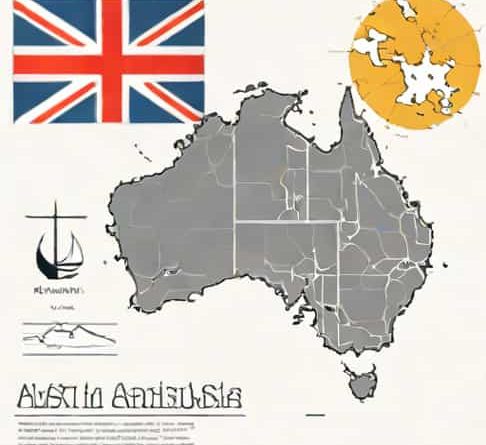
Is Australia In The Southern Hemisphere
Australia is a country that is often associated with unique wildlife, vast deserts, and beautiful beaches, but one of the fundamental questions people ask about it is its geographical location is Australia in the Southern Hemisphere? Understanding Australia’s position on the globe is important not only for geography enthusiasts but also for travelers, students, and anyone interested in world maps and climate patterns. Australia is indeed situated entirely in the Southern Hemisphere, which has profound effects on its seasons, climate, and astronomical observations. This topic explores Australia’s location, its implications for climate and seasons, cultural perspectives, and how being in the Southern Hemisphere influences life on this diverse continent.
Geographical Location of Australia
Australia is the sixth-largest country in the world by land area and is located between the Indian and Pacific Oceans. It is positioned entirely south of the Equator, which defines the boundary between the Northern and Southern Hemispheres. The Southern Hemisphere includes all areas south of 0° latitude, and Australia spans from approximately 10°S at its northernmost point to around 39°S at its southern tip. This southern position is crucial in understanding many of the continent’s natural and cultural characteristics.
Major Cities and Latitude
- Sydney Approximately 33.9°S
- Melbourne Approximately 37.8°S
- Brisbane Approximately 27.5°S
- Perth Approximately 31.9°S
- Adelaide Approximately 34.9°S
All of these cities are clearly in the Southern Hemisphere, confirming that Australia lies entirely south of the Equator. Its geographical position affects the country’s climate, seasons, and even cultural references, such as the perception of Christmas in summer rather than winter, as experienced in the Northern Hemisphere.
Implications for Seasons
Being in the Southern Hemisphere means that Australia experiences seasons opposite to those in the Northern Hemisphere. When it is summer in Europe or North America, it is winter in Australia, and vice versa. The country experiences four primary seasons summer (December to February), autumn (March to May), winter (June to August), and spring (September to November). This reversal often surprises travelers who are used to Northern Hemisphere seasonal patterns.
Regional Differences in Seasons
- Tropical north (e.g., Cairns, Darwin) Wet and dry seasons rather than four traditional seasons
- Southern regions (e.g., Melbourne, Adelaide) Experience four distinct seasons
- Interior deserts Hot summers and cooler winters, with significant temperature fluctuations
The Southern Hemisphere location of Australia directly influences these climatic patterns, making it important for agriculture, tourism, and daily life. Understanding the hemisphere’s impact can also help travelers plan visits according to their preferred weather.
Impact on Astronomy
Australia’s position in the Southern Hemisphere offers unique astronomical advantages. The night sky in the Southern Hemisphere features constellations and celestial objects that are not visible from the Northern Hemisphere. For example, Australians can observe the Southern Cross (Crux), Alpha Centauri, and the Magellanic Clouds, which are significant for navigation and cultural symbolism. The Southern Hemisphere location also affects the visibility of planets, meteor showers, and eclipses, providing opportunities for unique stargazing experiences.
Astronomical Highlights in Australia
- The Southern Cross is prominently visible and used historically for navigation
- Magellanic Clouds Two irregular dwarf galaxies visible to the naked eye
- Star clusters like Omega Centauri can be observed more clearly than in the Northern Hemisphere
These celestial observations are a direct result of Australia being in the Southern Hemisphere, offering a perspective on the sky that is different from Northern Hemisphere countries.
Influence on Culture and Lifestyle
Australia’s Southern Hemisphere location affects cultural practices and lifestyle patterns. Seasonal celebrations, holidays, and outdoor activities align with the reversed seasons. For instance, Christmas falls during the Australian summer, encouraging beach gatherings, barbecues, and outdoor festivities, which contrasts with the winter celebrations of the Northern Hemisphere. Sports schedules, agricultural cycles, and tourism are also influenced by this geographical position.
Examples of Lifestyle Impacts
- Christmas in summer encourages outdoor events and summer festivals
- Surfing, swimming, and beach activities peak during December to February
- Agricultural planting and harvesting schedules differ from Northern Hemisphere countries
- Tourist seasons align with summer in December, January, and February
Comparison with Other Southern Hemisphere Countries
Australia shares its Southern Hemisphere location with countries such as New Zealand, South Africa, Argentina, Chile, and parts of Brazil. These countries also experience reversed seasons compared to Europe and North America. Studying Australia alongside these nations highlights similarities in climate patterns, biodiversity, and cultural adaptations to Southern Hemisphere life. For instance, New Zealand and southern parts of Chile experience similar seasonal cycles and astronomical views, while tropical northern Australia has a unique wet-dry season pattern.
Southern Hemisphere Advantages
- Access to unique biodiversity and ecosystems not found in the Northern Hemisphere
- Opportunity to view celestial phenomena exclusive to the Southern Hemisphere sky
- Distinct agricultural and environmental cycles
Educational and Scientific Importance
Understanding that Australia is in the Southern Hemisphere is essential for education in geography, astronomy, meteorology, and environmental science. School curriculums around the world teach students about hemispheres, and Australia serves as a clear example of how location affects climate, seasons, and celestial observation. Scientific research conducted in Australia, particularly in astronomy and environmental studies, leverages the unique position of the continent to provide insights not available in the Northern Hemisphere.
Examples of Scientific Benefits
- Observatories like the Parkes Radio Telescope study southern celestial objects
- Environmental research focuses on ecosystems adapted to Southern Hemisphere climates
- Comparative studies with Northern Hemisphere countries improve understanding of global climate patterns
Australia is unquestionably located in the Southern Hemisphere, entirely south of the Equator. This geographic position influences its climate, seasons, astronomy, culture, and lifestyle. Understanding Australia’s Southern Hemisphere location provides insight into why seasons are reversed compared to Europe and North America, why celestial objects like the Southern Cross are visible, and how lifestyle practices adapt to these conditions. From unique astronomical observations to cultural celebrations in summer, Australia’s position in the Southern Hemisphere shapes the country in diverse and fascinating ways, making it a remarkable example of life and nature in this part of the world.