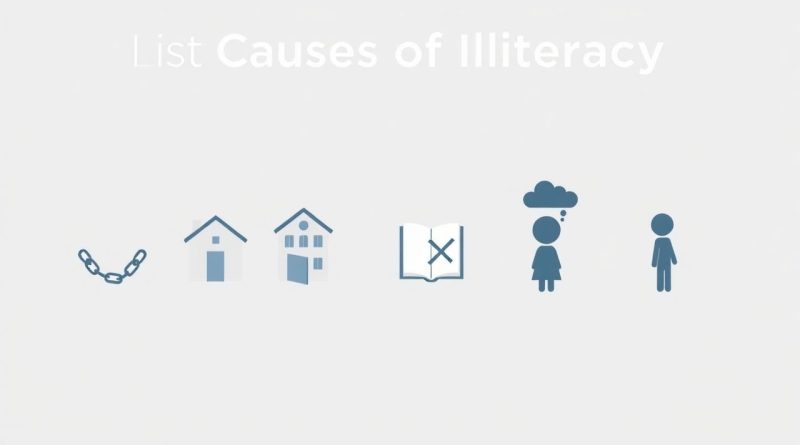
List Five Causes Of Illiteracy
Illiteracy remains a significant global issue that affects individuals, families, and societies in numerous ways. The inability to read and write prevents people from accessing essential information, participating fully in society, and improving their economic conditions. Although various governments and organizations have made efforts to promote literacy, illiteracy continues to persist due to several complex and interconnected reasons. Understanding the root causes is essential for developing effective strategies to reduce illiteracy rates around the world.
Poverty and Economic Barriers
One of the most common causes of illiteracy is poverty. In many countries, families living in poverty are unable to afford the costs associated with education. While public schooling may be available, hidden expenses such as uniforms, books, transportation, and exam fees can be overwhelming for low-income households. As a result, children may be forced to leave school early or never attend at all.
Impact on Children
In poor communities, children are often required to contribute to the household income. Instead of going to school, they may work in agriculture, factories, or informal sectors. This early involvement in labor deprives them of the opportunity to develop basic reading and writing skills, trapping them in a cycle of illiteracy and poverty.
Limited Access to Resources
In economically disadvantaged areas, schools may lack qualified teachers, sufficient classrooms, or even basic materials like books and writing tools. This lack of infrastructure diminishes the quality of education and reduces student motivation, leading to high dropout rates and low literacy levels.
Lack of Access to Quality Education
Another major cause of illiteracy is the lack of access to quality education. Even when schools are physically available, the education provided may be inadequate. Issues such as overcrowded classrooms, poorly trained teachers, outdated curriculums, and insufficient learning support can significantly affect a student’s ability to achieve literacy.
Rural and Remote Areas
In many developing regions, particularly rural and remote areas, schools are few and far between. Children often have to walk long distances just to attend classes, which can be a major deterrent. In some cases, schools might only offer education up to a certain grade level, leaving students with no opportunity to complete their basic education.
Educational Inequality
Marginalized groups, such as indigenous populations, refugees, and ethnic minorities, often face discrimination or neglect within the educational system. Their unique languages or cultural backgrounds may not be reflected in the curriculum, making learning more difficult and reducing engagement. Without inclusive and culturally sensitive education, literacy cannot be fully achieved across all segments of society.
Gender Discrimination
Gender inequality is a significant barrier to literacy in many parts of the world. Girls and women are especially vulnerable to being denied educational opportunities due to cultural, religious, or social norms. In some communities, it is still believed that educating girls is unnecessary or even harmful, leading to a large gender gap in literacy rates.
Early Marriage and Domestic Roles
In some cultures, girls are married off at a young age and expected to focus on domestic responsibilities instead of education. These early marriages usually mark the end of a girl’s schooling, and without the chance to continue learning, illiteracy becomes a lifelong issue.
Safety and Infrastructure
In areas where girls’ education is not prioritized, school environments may also be unsafe or unsupportive for female students. Lack of sanitation facilities, harassment, and long travel distances can discourage girls from attending school, further increasing the risk of illiteracy among women.
Conflict and Political Instability
Conflict zones and politically unstable regions often experience high levels of illiteracy. When a country is affected by war or civil unrest, educational institutions are among the first to be disrupted. Schools may be destroyed, teachers displaced, and entire systems of education put on hold.
Displacement of Families
Armed conflicts often force families to flee their homes, turning them into refugees or internally displaced persons. In such situations, education becomes a secondary concern to survival. Children who grow up in refugee camps or conflict zones frequently miss out on years of schooling, which severely hampers their literacy development.
Breakdown of Educational Systems
Political instability can lead to neglect or mismanagement of the education sector. Budgets may be diverted to military or emergency spending, and policy decisions may lack consistency or clarity. This environment makes it difficult for long-term educational planning and results in widespread illiteracy.
Lack of Parental Education and Support
The literacy level of parents plays a major role in a child’s ability to become literate. When parents are illiterate themselves, they may not value education or know how to support their children’s learning. They may also be unable to help with homework, attend school meetings, or navigate the education system.
Generational Illiteracy
In many cases, illiteracy is passed down from one generation to the next. If education is not prioritized or supported at home, children are less likely to succeed academically. Over time, this leads to entire communities where reading and writing are not part of daily life.
Lack of Role Models
When children grow up in environments where few people read or write, they may not see the value in literacy. The absence of literate role models can reduce motivation and make learning seem irrelevant or out of reach.
Understanding the causes of illiteracy is the first step toward finding solutions. Poverty, lack of access to quality education, gender discrimination, conflict, and low parental literacy all contribute to the ongoing problem. Each factor reinforces the others, creating complex barriers that are difficult to overcome without coordinated and sustained efforts. By addressing these root causes and implementing inclusive, accessible, and supportive educational systems, societies can make significant progress in reducing illiteracy and unlocking human potential for generations to come.