List Three Reforms Of Diocletian
When Emperor Diocletian came to power in 284 CE, the Roman Empire was facing deep political instability, military decline, and economic collapse. For nearly fifty years, Rome had been torn apart by civil wars, invasions, and weak leadership. Diocletian understood that the empire could not survive without sweeping reforms that addressed its most urgent problems. His reign marked a turning point in Roman history, as he introduced major political, military, and economic changes that reshaped the structure of imperial rule and laid the foundation for the later Byzantine Empire. Among his many initiatives, three of the most significant reforms of Diocletian were his political reorganization known as the Tetrarchy, his economic reforms including the Edict on Maximum Prices, and his military restructuring aimed at protecting the empire’s vast borders.
The Political Reform Establishment of the Tetrarchy
One of Diocletian’s most important reforms was the creation of the Tetrarchy, a system designed to stabilize imperial rule and end the chaos caused by constant power struggles. Before Diocletian, the empire had suffered through decades of rapid changes in leadership, with generals seizing power through force. Diocletian realized that no single person could effectively govern the enormous Roman Empire and defend it from internal revolts and external invasions simultaneously.
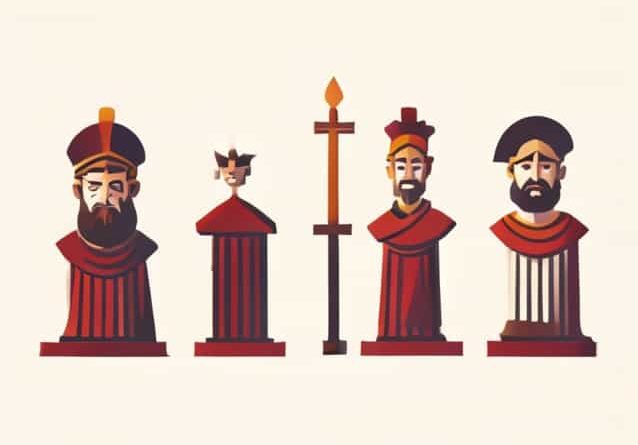
In 293 CE, Diocletian introduced the Tetrarchy, meaning rule of four. This new political structure divided authority among four rulers two senior emperors called Augusti and two junior emperors known as Caesares. Diocletian took the role of Augustus in the East, while his trusted colleague Maximian ruled as Augustus in the West. They each appointed a junior emperor to assist them-Galerius in the East and Constantius Chlorus in the West. This system allowed for greater administrative efficiency and ensured smoother succession, as the junior emperors were expected to replace the senior ones upon retirement or death.
Impact of the Tetrarchy
The Tetrarchy brought temporary stability to the empire after decades of political turmoil. By decentralizing power, Diocletian reduced the likelihood of rebellions and usurpations. It also allowed each ruler to focus on specific regions, improving governance and defense. However, the system ultimately depended on the loyalty and cooperation of the emperors involved. After Diocletian’s retirement in 305 CE, conflicts quickly reemerged as successors competed for power, eventually leading to the rise of Constantine the Great. Despite its short lifespan, the Tetrarchy represented a groundbreaking experiment in imperial administration that influenced future systems of government in both Rome and Byzantium.
The Economic Reform The Edict on Maximum Prices
Another major reform implemented by Diocletian addressed the empire’s severe economic problems. During the third century, Rome experienced widespread inflation, partly due to overproduction of low-value coinage and uncontrolled price increases. Soldiers demanded higher pay, goods became scarce, and the government struggled to maintain a stable currency. To combat these issues, Diocletian introduced the Edict on Maximum Prices in 301 CE, one of the most ambitious economic policies in ancient history.
The Edict established fixed maximum prices for thousands of goods and services across the empire, including food, clothing, transportation, and labor wages. Its goal was to curb inflation, prevent merchants from overcharging, and make essential goods affordable to ordinary citizens. It also reaffirmed Diocletian’s control over the economy by demonstrating imperial authority in every aspect of life.
Economic Context and Enforcement
While the Edict on Maximum Prices reflected Diocletian’s desire to restore economic stability, it faced practical challenges. The Roman economy was too vast and diverse for centralized price control to function effectively. Many merchants ignored the law or sold goods on the black market at higher prices. Enforcement was difficult, and violators often faced harsh punishments, including death. Despite these issues, the reform showed Diocletian’s determination to strengthen the empire through order and regulation. His broader economic measures-such as introducing new coinage and improving tax collection-helped stabilize the empire’s finances in the long run, even if the price edict itself eventually failed.
Legacy of Diocletian’s Economic Policies
Although the Edict on Maximum Prices was short-lived, it symbolized the beginning of greater state intervention in economic affairs. Diocletian’s attempt to regulate prices and wages set a precedent for future emperors who sought to control inflation through government oversight. His fiscal reforms also restructured the empire’s taxation system, making it more consistent and reliable. These economic policies, combined with his administrative reforms, provided a foundation for the Eastern Roman Empire’s longevity and prosperity centuries later.
The Military Reform Strengthening the Roman Defense
In addition to political and economic changes, Diocletian introduced significant military reforms to secure the empire’s borders and restore discipline among the troops. During the crisis of the third century, Rome faced constant attacks from Germanic tribes, Persians, and other invaders. Many Roman legions had grown undisciplined, and some soldiers even turned against their own commanders in pursuit of political power. Diocletian understood that a strong and loyal army was essential to maintaining order and protecting the empire from collapse.
He reorganized the military by expanding the number of legions and dividing them into smaller, more mobile units. This restructuring improved flexibility and allowed the army to respond quickly to local threats. Diocletian also reinforced the empire’s frontier defenses by constructing new fortifications, especially along the Danube and Euphrates rivers. These measures were designed to prevent invasions and secure trade routes that were vital for the empire’s economy.
Military Discipline and Administration
Diocletian reestablished strict discipline within the army, ensuring that soldiers remained loyal to the emperor rather than ambitious generals. He also separated civilian and military authority, a move intended to reduce corruption and prevent military leaders from interfering with provincial administration. The emperor personally oversaw recruitment, logistics, and training, demonstrating his deep involvement in military affairs.
Moreover, Diocletian implemented new policies regarding military taxation and supply chains. Local communities were sometimes required to provide food and materials for nearby garrisons, which helped reduce the logistical strain on the central government. These changes contributed to a stronger, more stable military structure that endured into the Byzantine era.
Long-Term Impact of Diocletian’s Reforms
The three main reforms of Diocletian-the Tetrarchy, the Edict on Maximum Prices, and the military reorganization-transformed the Roman Empire into a more controlled and efficient system. While not all of his policies succeeded in the short term, their influence extended far beyond his reign. The political decentralization of the Tetrarchy paved the way for the later division between the Eastern and Western Roman Empires. His economic regulations introduced the concept of state responsibility for economic stability. His military restructuring created a defensive strategy that protected the empire for another century.
Diocletian’s rule marked the transition from the classical Roman Empire to the more bureaucratic and autocratic system that defined late antiquity. He was one of the first emperors to adopt the title Dominus, meaning Lord, which reflected a new vision of imperial authority based on absolute power and divine right. Although he eventually retired voluntarily-the first Roman emperor to do so-his legacy endured through the systems he built. The empire he left behind was more organized, resilient, and prepared to face the challenges of a changing world.
Diocletian’s reforms were not merely temporary solutions to immediate problems but comprehensive strategies that reshaped Roman governance. By establishing the Tetrarchy, introducing economic control through the Edict on Maximum Prices, and reforming the military, Diocletian laid the groundwork for the empire’s survival in the centuries that followed. His vision of strong, centralized authority, efficient administration, and disciplined defense helped transform the Roman Empire from a crumbling giant into a renewed power. Even after his retirement, the principles of his reforms continued to influence the structure of imperial rule throughout late antiquity and the Byzantine period, securing his place as one of Rome’s most transformative emperors.