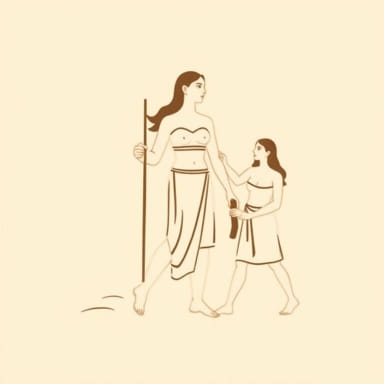
Role Of Women In Paleolithic Age
During the Paleolithic Age, also known as the Old Stone Age, society was primarily organized around small, nomadic groups of hunter-gatherers. While much attention has traditionally been focused on the roles of men as hunters, emerging archaeological evidence and anthropological analysis suggest that women played equally essential roles in ensuring the survival and cohesion of these early communities. Their contributions extended far beyond the domestic sphere and were central to the economic, social, and cultural life of the Paleolithic people.
Understanding the Paleolithic Context
The Paleolithic Age, which spans from approximately 2.5 million years ago to around 10,000 BCE, was marked by the use of primitive stone tools, hunting and gathering as the main modes of subsistence, and a largely nomadic lifestyle. Human groups during this period relied on cooperation and division of labor to meet their survival needs.
In such a setting, the role of women was not secondary. Instead, it was multifaceted and vital. The idea that women merely stayed at camp while men hunted is an oversimplified and outdated view. Modern studies have challenged this notion, shedding light on the dynamic and integral role women played in Paleolithic societies.
Gathering and Food Contribution
One of the most significant contributions of women in the Paleolithic Age was in food gathering. While men typically hunted larger game, women were primarily responsible for collecting edible plants, nuts, fruits, roots, and insects. These food sources were crucial, often making up the majority of the group’s daily caloric intake.
- Women had extensive knowledge of local flora and fauna.
- They understood seasonal patterns and migration routes.
- Their gathering efforts required deep ecological knowledge passed down through generations.
Far from being a passive activity, gathering demanded observation, mobility, and careful planning. Women played a strategic role in determining where groups would migrate based on the availability of plant resources. Their expertise contributed not just to sustenance but also to early medical knowledge through the use of medicinal plants.
Childbearing and Childrearing Responsibilities
Women’s reproductive roles were undeniably important in Paleolithic communities. Pregnancy, childbirth, and childcare were managed without modern medical interventions, relying on communal knowledge and support. Women likely developed sophisticated birth rituals and childcare practices to ensure the survival of the next generation.
Children were raised within the group, and the care of infants was likely a shared responsibility. Older children and other women may have assisted mothers, creating a strong sense of community and cooperation. Through storytelling and example, women passed on cultural knowledge, including language, social norms, and survival techniques.
Tool Making and Craftsmanship
Although men are often credited with the production and use of tools, archaeological discoveries have uncovered evidence that women also engaged in tool-making activities. In some cases, tools associated with domestic tasks such as grinding stones, scraping tools, and needles suggest a specialization that complemented hunting tools.
Women may have contributed to innovations in:
- Clothing and textiles (using animal hides and fibers).
- Pottery and container making for food and water storage (in later stages).
- Basket weaving and other essential crafts.
These tools were essential for everyday survival and demonstrate the creativity and ingenuity of women during the Paleolithic period.
Spiritual and Social Roles
In many Paleolithic communities, evidence suggests the presence of female figurines and symbols, leading some anthropologists to theorize the existence of goddess worship or matrifocal belief systems. The famous Venus figurines, found across Europe and dated to this era, may reflect a reverence for fertility and the female form.
Women could have held significant spiritual roles, possibly serving as early shamans or ritual leaders. Their knowledge of plants, healing, and the mysteries of life and death may have endowed them with special status in their groups.
Participation in Hunting
Recent archaeological studies have challenged the long-standing belief that only men hunted. Burials of women with hunting tools and wear patterns on bones suggest that some women participated in hunting activities, particularly small-game hunting or cooperative hunts that required group coordination rather than brute strength.
This evidence points to a more fluid division of labor than previously assumed. Roles in the Paleolithic were likely assigned based on individual skills, age, and physical ability rather than strict gender lines. In smaller groups, flexibility would have been key to survival.
Women as Keepers of Knowledge
Oral traditions were crucial during the Paleolithic Age, and women were often the keepers and transmitters of knowledge. Through storytelling, song, and shared experience, they preserved and passed down essential survival information, including medicinal practices, myths, and social customs.
In this way, women played a critical role in maintaining the cultural continuity of their communities. Their roles as educators, storytellers, and cultural bearers were essential to the development of human society.
Reevaluating Gender Roles in Prehistory
For many years, the study of prehistoric societies was shaped by modern biases and assumptions, often projecting contemporary gender norms onto ancient people. However, a growing body of research encourages a reevaluation of these views. The role of women in the Paleolithic Age was diverse, dynamic, and deeply woven into the fabric of everyday life.
Anthropologists and historians now recognize that survival in the harsh and unpredictable environment of the Paleolithic Age required contributions from all members of society. Women’s work in gathering, caregiving, craftsmanship, and knowledge transmission was just as critical as hunting. The success of early human communities depended on mutual reliance and respect across all roles, regardless of gender.
The role of women in the Paleolithic Age was far from marginal. They were central figures in their societies providers of food, caretakers of children, innovators in tools and crafts, and keepers of culture and knowledge. Their work ensured the survival and advancement of early human communities, and their legacy deserves recognition in our understanding of human history. By uncovering and celebrating the contributions of women during this era, we gain a more complete and balanced picture of our collective past.