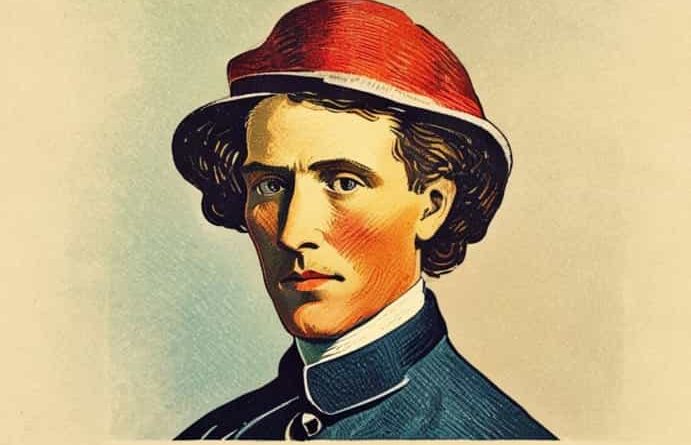
The Pointillist Georges Seurat
Georges Seurat is widely regarded as one of the most influential painters of the late 19th century, known for his innovative approach to color, composition, and technique. Often associated with the Pointillist movement, Seurat revolutionized the way artists thought about painting and the perception of color. His meticulous style, characterized by tiny, distinct dots of color, challenged traditional methods and inspired generations of artists. The pointillist Georges Seurat not only left an indelible mark on the art world but also transformed how viewers interact with and interpret visual art. Exploring Seurat’s life, his artistic philosophy, and the technique of pointillism offers valuable insight into a creative genius who combined scientific precision with artistic vision.
Early Life and Artistic Training
Georges-Pierre Seurat was born in Paris in 1859, a city that would become the center of his artistic development. From a young age, he displayed a remarkable talent for drawing and painting, leading him to enroll at the École des Beaux-Arts in Paris. Here, Seurat was trained in traditional academic techniques, including classical drawing, anatomy, and perspective. However, he quickly sought to break away from conventional methods, experimenting with color theory and optical effects that would eventually form the foundation of his pointillist style. His education provided the technical skills necessary for his later innovations, while his curiosity drove him to explore new artistic frontiers.
The Birth of Pointillism
Pointillism, also referred to as divisionism, is a painting technique in which small, distinct dots of pure color are applied to the canvas. Instead of blending pigments on a palette, Seurat allowed the viewer’s eye to optically mix the colors from a distance. This method created a luminous effect that traditional brushstrokes could not achieve. Seurat’s development of pointillism was heavily influenced by contemporary scientific theories on color and perception, particularly the work of chemist Michel Eugène Chevreul and physicist Ogden Rood. By combining scientific principles with artistic sensibility, Seurat transformed the act of painting into a methodical and precise process.
Major Works and Innovations
Seurat’s most celebrated masterpiece, A Sunday Afternoon on the Island of La Grande Jatte, exemplifies his pointillist technique and innovative approach to composition. Completed in 1886, this large-scale painting depicts Parisians relaxing in a park along the Seine River. The careful arrangement of figures, the attention to light and shadow, and the use of vibrant dots of color demonstrate Seurat’s commitment to precision and harmony. Beyond its aesthetic appeal, the painting represents a sophisticated understanding of spatial relationships, human behavior, and the dynamics of urban leisure in 19th-century Paris.
Other Notable Works
In addition to La Grande Jatte, Seurat produced several other significant works that showcase his meticulous pointillist technique
- Bathers at AsnièresA prelude to La Grande Jatte, this painting illustrates working-class men relaxing by the river, combining realism with formal experimentation.
- Le ChahutDepicting a lively dance scene, this work demonstrates Seurat’s ability to capture movement and rhythm through precise color placement.
- ModelsA series of smaller studies exploring light, shadow, and the effects of color on human figures.
These works reflect Seurat’s dedication to both scientific methodology and artistic expression, blending meticulous technique with creative vision.
Scientific Influence on Seurat’s Technique
Seurat was deeply influenced by contemporary theories of optics and color. The principles of additive color mixing and complementary colors guided his use of pointillism, ensuring that his paintings achieved maximum vibrancy and visual harmony. By separating colors into individual dots rather than mixing pigments directly, Seurat could create a more luminous and dynamic surface. This method also allowed him to experiment with contrast, tone, and spatial relationships in ways that traditional painting techniques could not achieve.
Impact on the Art World
The pointillist Georges Seurat profoundly influenced the trajectory of modern art. His methodical approach inspired other artists, including Paul Signac and Camille Pissarro, who adopted and adapted divisionist techniques in their own work. Seurat’s commitment to structure, form, and color theory contributed to the emergence of Neo-Impressionism, a movement that sought to combine scientific principles with the emotional impact of Impressionist art. Beyond Neo-Impressionism, Seurat’s ideas about systematic color application and optical mixing continue to inform contemporary artistic practice and theory.
Challenges and Criticisms
Despite his eventual acclaim, Seurat faced challenges and criticisms during his career. His meticulous, labor-intensive technique was sometimes seen as cold or mechanical, lacking the spontaneity and expressiveness of traditional Impressionist works. Critics initially questioned whether the strict application of pointillism could convey emotion and atmosphere effectively. Nevertheless, Seurat’s innovative approach eventually earned recognition for its originality, precision, and capacity to transform visual perception.
Legacy and Influence
Seurat’s legacy extends beyond his own paintings. The principles of pointillism influenced numerous artists in the late 19th and early 20th centuries, including members of the Fauvist and Cubist movements. Art educators continue to study his techniques, using his works to teach color theory, composition, and the intersection of science and art. Museums worldwide exhibit Seurat’s paintings, preserving his innovative contributions for future generations and ensuring that the meticulous brilliance of his pointillist approach remains accessible to art enthusiasts and scholars alike.
The pointillist Georges Seurat stands as a towering figure in art history, renowned for his scientific approach to color, composition, and technique. His innovative use of tiny dots of color created a new way of seeing and interpreting the world, blending precision with aesthetic beauty. Through masterpieces like A Sunday Afternoon on the Island of La Grande Jatte and Bathers at Asnières, Seurat demonstrated that art could be both methodical and expressive, analytical and emotional. His influence on Neo-Impressionism, modern painting, and contemporary visual art underscores the enduring significance of his work. By examining Seurat’s life, his artistic philosophy, and his innovative techniques, we gain a deeper appreciation for a genius who transformed painting into a harmonious blend of science, vision, and creativity.