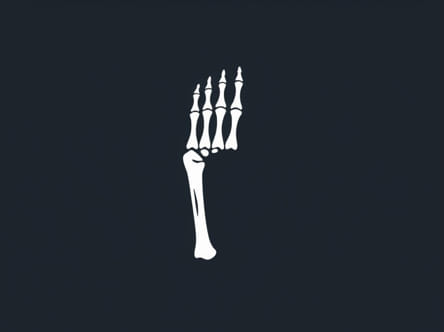
Ulna Is Medial Or Lateral
When studying human anatomy, it is essential to understand spatial terminology such as ‘medial’ and ‘lateral.’ These terms describe relative positions in the body and are especially useful when identifying the location of bones and organs. One question that commonly arises among students and professionals alike is whether the ulna is medial or lateral in the forearm. This distinction is important not only for anatomical accuracy but also for interpreting radiographs, performing physical assessments, and understanding musculoskeletal function.
Understanding Anatomical Position
Standard Anatomical Position Explained
In order to determine whether a structure like the ulna is medial or lateral, it is crucial to first understand the anatomical position. The anatomical position is a standardized way of viewing the body: the person stands upright, facing forward, with arms at the sides and palms facing forward. This position ensures consistency when describing anatomical structures and their relationships.
Medial vs. Lateral
The terms medial and lateral are relative directions. Medial refers to a position closer to the midline of the body, while lateral refers to a position farther away from the midline. For example, the nose is medial to the eyes, and the ears are lateral to the mouth.
Location of the Ulna in the Forearm
Basic Anatomy of the Forearm
The forearm consists of two long bones: the radius and the ulna. These bones run parallel to each other between the elbow and the wrist. The ulna and radius work together to provide movement and support for the hand and wrist.
The Ulna is Medial
In the anatomical position, the ulna is considered the medial bone of the forearm. This means that the ulna is located on the same side of the forearm as the little finger, which is closer to the midline of the body when the palms are facing forward. The radius, on the other hand, lies on the lateral side, aligning with the thumb.
Visualizing the Medial Position
To visualize this more clearly:
- Stand upright with arms by your sides and palms facing forward.
- The ulna will be on the inner side of your forearm, aligned with your pinky.
- The radius will be on the outer side of your forearm, aligned with your thumb.
Anatomical Features of the Ulna
Proximal and Distal Ends
The ulna has a distinct structure, with a larger proximal end near the elbow and a thinner distal end near the wrist. Key features of the proximal ulna include the olecranon process (the bony tip of the elbow) and the trochlear notch, which articulates with the humerus to form the elbow joint.
Relationship to the Radius
Although the ulna is medial in position, the radius and ulna are connected by a fibrous sheet called the interosseous membrane. This allows for the transmission of force and provides stability. During pronation and supination (rotational movements of the forearm), the radius rotates around the ulna, which remains relatively stationary.
Clinical Significance of Ulna’s Medial Position
Fractures and Injuries
Understanding the medial location of the ulna is important in diagnosing and treating injuries. For example:
- Ulnar fractures typically occur from direct trauma to the inner forearm or from falls.
- Monteggia fractures involve a break in the proximal third of the ulna and dislocation of the radial head.
Physical Examination
Medical professionals palpate the ulna during physical exams to assess for pain, swelling, or deformities. Since the ulna is subcutaneous along most of its length, it is easily accessible and provides valuable diagnostic clues.
Ulnar Nerve Relation
The ulnar nerve, which supplies motor and sensory function to parts of the hand, travels near the ulna. It passes behind the medial epicondyle of the humerus (the ‘funny bone’) and continues along the medial forearm. Understanding the ulna’s position helps clinicians locate and assess the ulnar nerve during exams and surgical procedures.
Differences Between Ulna and Radius
Position and Function
While the ulna is medial and relatively stationary during forearm rotation, the radius is lateral and capable of significant movement. The radius is the primary bone involved in the motion of the wrist, especially during pronation and supination.
Articulations
The ulna articulates with the humerus at the elbow and with the radius at both proximal and distal radioulnar joints. However, it does not directly articulate with the wrist bones (carpals); instead, the radius forms the primary connection to the wrist. A fibrocartilage disc connects the ulna to the carpal bones.
Surface Anatomy
The ulna is easily felt through the skin, especially near the elbow and wrist. Its prominence makes it a useful landmark in both clinical and academic settings.
Educational and Practical Importance
Medical Education
In anatomical study, understanding which bones are medial or lateral is foundational. The medial position of the ulna should be memorized early on, as it is frequently referenced in musculoskeletal anatomy, physiology, and pathology.
Radiology and Imaging
Correctly identifying the ulna on X-rays, CT scans, and MRIs depends on knowing its medial position. For instance, when reviewing a forearm X-ray, the bone on the side of the pinky is the ulna, and the bone on the thumb side is the radius.
Rehabilitation and Therapy
Physical therapists and occupational therapists must understand the roles of both the ulna and radius to create effective rehabilitation plans. The ulna’s fixed, medial position helps provide stability to the forearm, a factor that influences therapy after fractures, surgeries, or nerve injuries.
Summary of Key Points
- The ulna is the medial bone of the forearm in anatomical position.
- It aligns with the little finger and lies closer to the body’s midline compared to the radius.
- The ulna is structurally important for elbow articulation and overall forearm stability.
- Its relationship with the radius allows for pronation and supination of the forearm.
- Understanding its position aids in diagnosis, treatment, and anatomical education.
To accurately describe the position of bones in the forearm, it is essential to use anatomical terms such as medial and lateral. The ulna, as the medial bone of the forearm, plays a critical role in structure, function, and movement. Its alignment with the little finger and proximity to the midline in anatomical position clearly define it as medial. Whether for academic learning, clinical practice, or diagnostic imaging, recognizing the medial placement of the ulna enhances one’s understanding of human anatomy and improves the quality of communication in medical contexts.