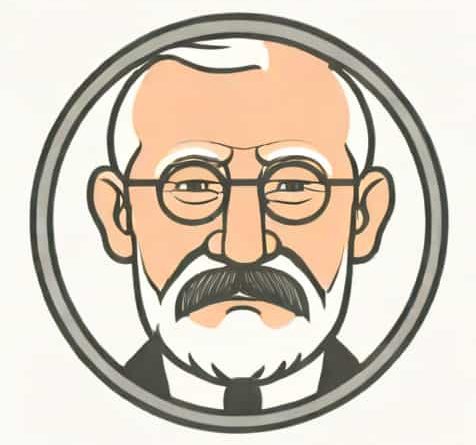
Unlike Nietzsche Sigmund Freud
Unlike Nietzsche, Sigmund Freud approached human behavior and thought from a scientific and psychoanalytic perspective, emphasizing the unconscious mind, instincts, and psychological development. While Friedrich Nietzsche explored philosophy through concepts like the will to power, the eternal recurrence, and the critique of morality, Freud focused on uncovering the hidden drives and internal conflicts that shape individual behavior. Their approaches to understanding humanity differed fundamentally, yet both have profoundly influenced modern thought, psychology, philosophy, and cultural studies. Comparing Nietzsche and Freud provides insight into how philosophical speculation and scientific inquiry can diverge yet converge in understanding the complexities of human existence.
Friedrich Nietzsche’s Philosophical Perspective
Friedrich Nietzsche, a 19th-century German philosopher, is best known for his exploration of morality, culture, and the human condition. Nietzsche emphasized the concept of the will to power, arguing that human beings are driven by a fundamental force to assert and enhance themselves. He critiqued traditional morality, particularly Judeo-Christian ethics, claiming that it suppresses human creativity, vitality, and individuality. Nietzsche also proposed the idea of the Übermensch, or overman, as an ideal figure who creates personal values beyond conventional moral systems. His work is often existential and literary, focusing on ideas rather than empirical evidence, and encourages individuals to confront meaninglessness and create their own life purpose.
Key Concepts in Nietzschean Thought
- Will to PowerNietzsche believed that humans are motivated by a fundamental drive to assert themselves and achieve growth, dominance, or self-overcoming.
- Critique of MoralityNietzsche questioned traditional moral systems, particularly religiously based ethics, as restrictive forces that limit human potential.
- ÜbermenschThe ideal human who creates values and meaning independently, transcending societal norms.
- Eternal RecurrenceA thought experiment suggesting that one should live life as if every action were to be repeated infinitely.
Sigmund Freud’s Psychoanalytic Approach
Sigmund Freud, an Austrian neurologist and the founder of psychoanalysis, studied human behavior through the lens of unconscious motivations and internal psychological conflicts. Freud proposed that much of human thought and behavior is influenced by unconscious desires, particularly sexual and aggressive instincts. He developed concepts such as the id, ego, and superego to describe the internal structure of the mind and the dynamic tensions that shape personality. Unlike Nietzsche, Freud relied on empirical observation, case studies, and clinical practice to develop his theories, aiming to understand mental disorders, dreams, and the underlying causes of human behavior.
Key Concepts in Freudian Psychoanalysis
- Unconscious MindA reservoir of thoughts, memories, and desires outside conscious awareness, influencing behavior.
- Id, Ego, and SuperegoThe id represents instinctual drives, the ego mediates reality, and the superego embodies internalized moral standards.
- Oedipus ComplexA developmental stage where a child experiences unconscious desires for the opposite-sex parent and rivalry with the same-sex parent.
- Dream AnalysisFreud interpreted dreams as expressions of unconscious wishes and conflicts.
Philosophy versus Psychoanalysis
The fundamental difference between Nietzsche and Freud lies in methodology and focus. Nietzsche’s work is philosophical, literary, and speculative, aiming to provoke reflection on existence, morality, and human potential. Freud’s approach is scientific, clinical, and psychological, seeking to understand mental processes and behavior through observation, theory, and therapeutic practice. While Nietzsche examines existential questions and cultural critique, Freud investigates the inner workings of the mind, often analyzing neuroses, repression, and the impact of early childhood experiences on adult behavior. In this sense, Nietzsche is concerned with why humans create values, whereas Freud focuses on why humans think and act the way they do.
Human Nature and Motivation
Nietzsche and Freud offer contrasting views of human nature. Nietzsche sees humans as driven by the will to power, striving for self-expression, creativity, and self-overcoming. He views conflict and suffering as opportunities for growth and transformation. Freud, on the other hand, emphasizes unconscious drives, particularly sexuality and aggression, as fundamental motivators. He argues that much of human behavior is determined by unresolved conflicts and repressed desires rather than conscious striving for greatness or self-creation. Where Nietzsche celebrates individual autonomy and creativity, Freud highlights internal constraints and psychological dynamics that shape behavior often without awareness.
Morality and Culture
Nietzsche critiques traditional morality and cultural norms, suggesting that society imposes limiting values that suppress individuality and vitality. He encourages the reevaluation of moral systems and the creation of personal ethics. Freud’s perspective on morality and culture is more analytical. He views cultural norms, laws, and morality as mechanisms to regulate instinctual drives, particularly aggression and sexual impulses. For Freud, religion, ethics, and social conventions are expressions of the collective human psyche designed to manage unconscious conflicts and maintain social cohesion. In essence, Nietzsche calls for transcendence of societal norms, while Freud explains their psychological necessity.
Impact on Modern Thought
Both Nietzsche and Freud have profoundly influenced modern thought, albeit in different domains. Nietzsche’s ideas shaped existentialism, postmodernism, literature, and philosophical discussions about morality, freedom, and creativity. Freud’s theories revolutionized psychology, psychiatry, literature, and cultural studies, offering tools to analyze behavior, literature, and human motivation. Scholars often draw connections between Nietzschean philosophy and Freudian psychoanalysis, noting how both explore the hidden forces that drive human life-Nietzsche through existential and moral lenses, and Freud through the unconscious and psychological lens.
Critiques and Limitations
Nietzsche’s work has been critiqued for its lack of empirical foundation and its abstract, sometimes aphoristic style, making it open to multiple interpretations. Freud has faced criticism for overemphasis on sexuality, determinism, and reliance on anecdotal clinical evidence. Despite these criticisms, both thinkers continue to be central in intellectual discourse. Their differing approaches highlight the tension between philosophical speculation and scientific methodology in understanding human nature, providing complementary insights into the complexity of human thought, behavior, and culture.
Unlike Nietzsche, Sigmund Freud offers a scientific and psychoanalytic perspective on human behavior, focusing on unconscious drives, psychological conflict, and mental structures. Nietzsche, by contrast, explores existential and philosophical questions about morality, power, and human potential. Both have made lasting contributions to understanding humanity, though their methods, assumptions, and focus differ significantly. Comparing Nietzsche and Freud enriches the study of human nature, revealing how philosophical inquiry and psychological analysis can provide distinct yet complementary insights into the motivations, values, and inner workings of individuals and societies.