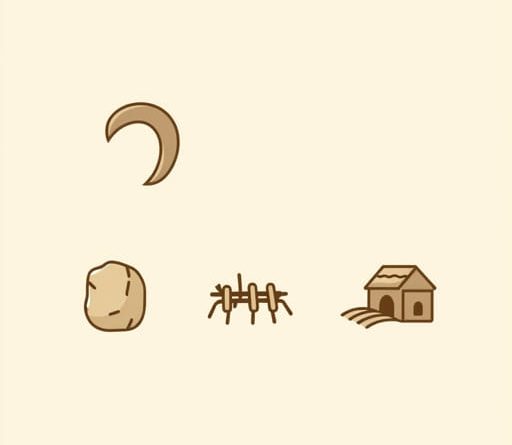
What Is Paleolithic, Mesolithic, And Neolithic
The study of human history is filled with fascinating transitions and revolutions. One of the most fundamental ways scholars divide prehistory is through the use of three major periods: the Paleolithic, Mesolithic, and Neolithic ages. These terms represent specific stages in the development of human societies based on tools, technology, and lifestyle changes. Understanding what the Paleolithic, Mesolithic, and Neolithic periods are is key to tracing the evolution of humanity from primitive hunters to settled agriculturalists and beyond.
Understanding the Paleolithic Period
Definition and Timeframe
The Paleolithic period, also known as the Old Stone Age, is the earliest and longest era of human history. It began around 2.5 million years ago and lasted until approximately 10,000 BCE. This period encompasses the time when early humans relied primarily on hunting and gathering for survival and used basic stone tools.
Key Characteristics
- Hunter-gatherer lifestyle: People in the Paleolithic period lived nomadically, moving frequently in search of food.
- Simple tools: Tools were mostly made of chipped stone, bones, and wood.
- Fire control: Early humans learned how to use and control fire, which was a crucial advancement.
- Cave art: Evidence of symbolic thinking and communication, such as cave paintings, can be found from this time.
Social Structure
During the Paleolithic age, human communities were small, typically made up of extended family groups. Social organization was egalitarian, meaning there were few status differences. People shared resources and responsibilities, and leadership was usually informal and based on skill or age.
The Mesolithic Period: A Time of Transition
Definition and Timeframe
The Mesolithic period, or Middle Stone Age, bridges the gap between the Paleolithic and Neolithic ages. It occurred between approximately 10,000 BCE and 8,000 BCE, although the exact dates vary by region. This period marks a shift in human adaptation and behavior due to climate changes following the last Ice Age.
Key Characteristics
- Microlithic tools: Tools became more refined, often smaller and made with greater precision.
- Fishing and semi-sedentary life: Humans began fishing and living in semi-permanent settlements near rivers and lakes.
- Domestication: Early signs of animal domestication, particularly dogs, appeared.
- Environmental adaptation: People started adapting to various environments, such as forests and coasts.
Technological and Cultural Shifts
The Mesolithic period saw a blending of old and new practices. While hunting and gathering continued, some communities started experimenting with plant cultivation. This experimentation laid the foundation for the major changes that would characterize the Neolithic period. Art and symbolic behavior also became more sophisticated during this time.
The Neolithic Revolution
Definition and Timeframe
The Neolithic period, also known as the New Stone Age, began around 8,000 BCE and lasted until about 3,000 BCE, though it varied widely depending on geography. It is best known for the Neolithic Revolution a transformation in human society marked by the shift from nomadic lifestyles to permanent agricultural communities.
Key Characteristics
- Agriculture: People began farming crops such as wheat and barley, allowing them to settle in one place.
- Domestication of animals: Sheep, goats, cattle, and pigs were among the first animals to be domesticated.
- Permanent settlements: Villages and towns emerged, such as the famous Çatalhöyük in modern-day Turkey.
- Advanced tools: Polished stone tools replaced earlier crude implements, and pottery became widespread.
Social and Cultural Developments
With the rise of agriculture and settled life, social structures became more complex. Specialization of labor began, with individuals taking on specific roles such as farming, weaving, or tool-making. Trade between communities increased, and the concept of property ownership emerged. Religious practices also evolved, with evidence of temples and organized worship.
Comparing the Three Stone Ages
From Foragers to Farmers
The major difference between the Paleolithic, Mesolithic, and Neolithic periods lies in how humans interacted with their environment and obtained food. The Paleolithic period was dominated by hunting and gathering, the Mesolithic period introduced early semi-settled lifestyles and fishing, and the Neolithic period marked the full adoption of agriculture.
Technological Evolution
Tool development evolved significantly across these three periods:
- Paleolithic: Rough stone tools, basic cutting instruments, and fire usage.
- Mesolithic: Smaller, more precise microliths, improved fishing tools.
- Neolithic: Polished tools, farming implements, and pottery innovations.
Impact on Human Society
The shift from Paleolithic to Neolithic brought massive societal changes. Human populations increased due to stable food sources. Political organization emerged as communities grew in size. Cultural advancements such as writing, trade, and metal tools would eventually follow in later ages, building upon the foundations laid during the Neolithic.
Why This Division Matters
The Value of Periodization
Dividing prehistory into Paleolithic, Mesolithic, and Neolithic helps historians and archaeologists make sense of humanity’s long and complex development. These categories are not rigid timelines but flexible frameworks that reflect major trends in tool use, social organization, and environmental adaptation.
Regional Variations
It is important to note that not all parts of the world experienced these transitions at the same time. While Neolithic life had emerged in the Fertile Crescent by 8,000 BCE, many parts of Europe and Africa continued in the Mesolithic or even Paleolithic phase for thousands of years longer. Similarly, some societies moved directly from Paleolithic to Neolithic patterns without a distinct Mesolithic phase.
The terms Paleolithic, Mesolithic, and Neolithic capture the remarkable journey of human evolution, from basic survival to the foundations of civilization. Each period brought new developments in technology, social structure, and the relationship between humans and their environment. Understanding these periods provides not only a glimpse into our distant past but also insights into how humanity gradually shaped the world we live in today.