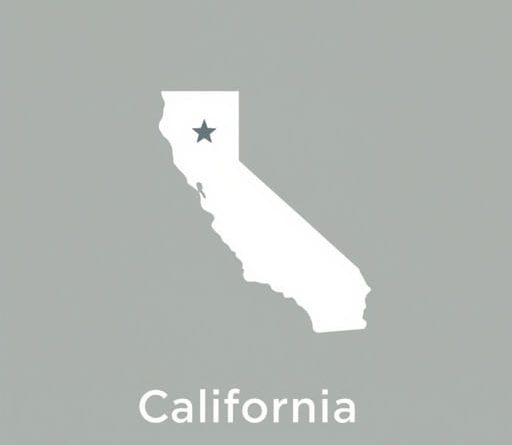
What Is The Statehood Of California
California’s journey to statehood is a story deeply connected to the broader narrative of U.S. expansion, the Gold Rush, and political compromise over slavery. Located on the Pacific Coast, California transitioned rapidly from a sparsely populated Mexican territory to one of the most influential states in the United States. Understanding what the statehood of California means involves exploring its political origins, the complex context of 19th-century American politics, and the unique circumstances under which it entered the Union.
Background: California Before Statehood
Before it became part of the United States, California was controlled by Spain and then Mexico. After Mexico gained independence from Spain in 1821, California was part of Mexican territory. However, by the 1840s, American settlers were increasing in number, and there were growing tensions between Mexican authorities and the immigrant population. These tensions eventually contributed to the U.S.-Mexican War, which lasted from 1846 to 1848.
The war ended with the signing of the Treaty of Guadalupe Hidalgo, through which Mexico ceded a large portion of its northern territory, including California, to the United States. This acquisition laid the foundation for California’s path to statehood.
The Impact of the Gold Rush
One of the most critical events that accelerated California’s movement toward statehood was the discovery of gold at Sutter’s Mill in 1848. The California Gold Rush attracted hundreds of thousands of people from across the United States and around the world. This sudden influx of population created economic opportunities but also chaos, lawlessness, and the need for structured governance.
The rapid population growth meant that California met the requirements for statehood faster than most territories. It also made it difficult to manage under a military government or as part of another U.S. territory. Californians desired self-governance and stability, leading them to take steps toward becoming a state sooner than expected.
The California Constitutional Convention of 1849
In September 1849, a group of delegates gathered in Monterey, California, for a constitutional convention. Their goal was to create a state constitution in anticipation of applying for statehood. The resulting document prohibited slavery, a highly significant choice given the political climate of the time. The delegates also drew clear state boundaries and set up a framework for civil government.
This proactive step meant California bypassed the usual territorial phase that many other states underwent. It also raised serious issues in the national debate over the expansion of slavery.
The Compromise of 1850
California’s application for statehood came at a particularly tense time in American politics. The balance between free states and slave states in the Senate was a contentious issue. Admitting California as a free state would tip that balance, leading to opposition from pro-slavery states.
To resolve this and other territorial disputes, Congress passed the Compromise of 1850, a series of laws meant to ease tensions between the North and South. A key component of this compromise was the admission of California into the Union as a free state. This made California the 31st state on September 9, 1850. The compromise also included the Fugitive Slave Act and allowed for popular sovereignty in other new territories.
California as a Free State
California’s status as a free state shaped its social and political development. The prohibition of slavery in its original constitution aligned it with other Northern states and established early foundations for its progressive policies. However, California was not free of racial discrimination, and laws were passed that restricted the rights of non-white populations, including Native Americans, African Americans, and Chinese immigrants.
Key Features of Early California Statehood
- Economic growth: The Gold Rush continued to fuel the economy for years, encouraging investment, migration, and infrastructure development.
- Diversity: The population included people from Latin America, China, Europe, and the Eastern U.S., creating a multicultural environment from the beginning.
- Infrastructure: Statehood brought funding and focus on building roads, schools, and legal institutions, laying the groundwork for future development.
California’s Unique Path to Statehood
Unlike most other states, California was never an official U.S. territory before becoming a state. It skipped the territorial stage entirely due to its rapidly growing population and economic importance. This set a unique precedent in U.S. history and showcased California’s exceptional status from the beginning.
Additionally, California’s state boundaries were fixed during the constitutional convention and have remained largely unchanged since 1850. This was also unusual, as many other states experienced multiple changes in borders during their development.
Legacy and Significance of California Statehood
The statehood of California had a lasting impact on U.S. politics, economics, and culture. Its admission changed the balance of power in Congress, influenced the national conversation on slavery, and demonstrated the United States’ ability to incorporate distant and culturally diverse regions into its structure.
Today, California is the most populous U.S. state and one of the largest economies in the world. Its early experiences with statehood helped shape its independent political culture and progressive leadership in many policy areas.
Reasons California’s Statehood Matters Today
- Political influence: California sends the largest number of representatives to the U.S. House, giving it significant legislative power.
- Economic powerhouse: Its economy rivals that of entire nations, with thriving sectors like technology, agriculture, entertainment, and energy.
- Cultural diversity: As a gateway to the Pacific and Latin America, California remains a hub of immigration and cultural exchange.
Understanding what the statehood of California means involves more than just knowing a date or event. It reflects a turning point in American history, one that influenced the balance between North and South, expanded the nation’s reach to the Pacific, and laid the foundation for one of the most dynamic states in the Union. From the Gold Rush to the halls of Congress, California’s entry as a state continues to have far-reaching effects on the political and cultural life of the United States.