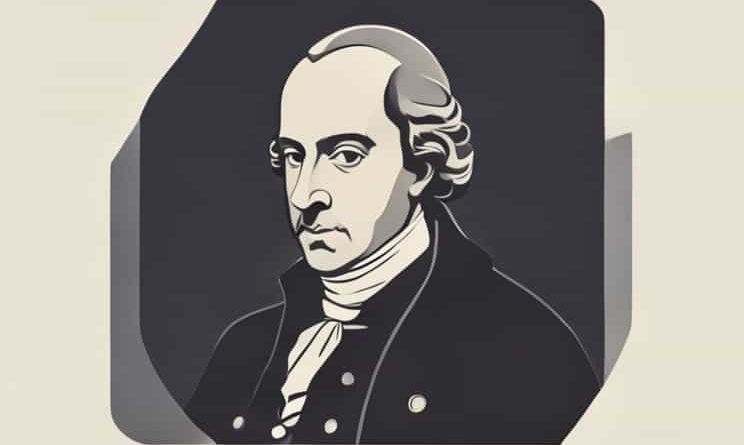
Who Was Baron De Montesquieu
Baron de Montesquieu, born Charles-Louis de Secondat in 1689, was a French philosopher, political thinker, and social commentator whose ideas profoundly influenced the development of modern political theory. Living during the Enlightenment, a period characterized by intellectual exploration, reason, and the questioning of traditional authority, Montesquieu dedicated his life to examining government structures, human behavior, and the principles of justice. He is best known for his groundbreaking work, The Spirit of the Laws, which introduced the concept of the separation of powers-a cornerstone of modern democratic governance. Montesquieu’s observations on law, society, and politics were shaped by his aristocratic upbringing, education, and travels across Europe, making him a central figure in both French intellectual history and the broader Enlightenment movement. Understanding who Baron de Montesquieu was involves exploring his life, ideas, and enduring influence on law, government, and political philosophy.
Early Life and Education
Charles-Louis de Secondat was born on January 18, 1689, in La Brède, near Bordeaux, France. He came from an aristocratic family with a long history of public service and wealth, which provided him access to a privileged education and exposure to influential circles of society. Montesquieu’s early education included the study of law, history, and philosophy, fostering a deep interest in understanding governance and human nature. Upon completing his studies, he inherited the title of Baron de Montesquieu and a substantial estate, which allowed him to pursue his intellectual interests without the financial pressures that constrained many of his contemporaries.
Influences and Early Career
Montesquieu’s ideas were shaped by both classical learning and contemporary intellectual currents. He was influenced by ancient Greek and Roman thinkers, as well as Renaissance philosophers who examined the nature of power and governance. His travels through Italy, Germany, and England exposed him to different political systems, legal traditions, and cultures, deepening his understanding of how law and society interact. Early in his career, Montesquieu became a member of the Bordeaux Parliament, where he gained practical experience in legal and political affairs. These experiences informed his later writings, combining theoretical insight with practical knowledge of law and government.
The Spirit of the Laws
Montesquieu’s most influential work, The Spirit of the Laws, published in 1748, remains a foundational text in political science and legal theory. In this book, Montesquieu analyzed various forms of government, including republics, monarchies, and despotisms, exploring the principles that make each system function effectively. One of his central contributions was the concept of the separation of powers, advocating that political authority should be divided among legislative, executive, and judicial branches to prevent tyranny and protect individual freedoms. Montesquieu argued that a well-balanced government requires checks and balances, ensuring that no single branch becomes too powerful.
Key Principles and Ideas
- Separation of PowersMontesquieu emphasized dividing government functions to safeguard liberty and prevent abuse of authority.
- Political ModerationHe believed that moderation in governance, including the balance of power between rulers and the people, is essential for stability.
- Rule of LawLaws should be based on reason and applied consistently, protecting citizens from arbitrary decisions.
- Influence of Climate and GeographyMontesquieu suggested that environmental factors, such as climate and geography, shape societal behavior and government forms.
Montesquieu’s Impact on Political Thought
The ideas presented by Montesquieu influenced not only European intellectuals but also the framers of modern democratic constitutions. His work inspired political reformers and thinkers advocating for representative government, civil liberties, and legal protections. In particular, Montesquieu’s notion of the separation of powers played a critical role in shaping the United States Constitution, as the founding fathers sought to create a government that would avoid tyranny through checks and balances. His insights also resonated across Europe, influencing debates about monarchy, parliamentary authority, and individual rights.
Montesquieu and the Enlightenment
As a leading figure of the Enlightenment, Montesquieu contributed to the era’s emphasis on reason, empirical observation, and the critique of tradition. He questioned arbitrary authority, advocated for the protection of civil liberties, and promoted the idea that societies should organize their governments according to rational principles rather than inherited custom alone. His comparative approach, examining different societies and legal systems, exemplified the Enlightenment method of learning from experience and observation. Montesquieu’s work inspired generations of philosophers, political scientists, and lawmakers to consider the foundations of good governance and justice.
Other Writings and Contributions
Beyond The Spirit of the Laws, Montesquieu wrote essays, letters, and satirical works that examined society, politics, and culture. His earlier work, Persian Letters, used fictional correspondence between Persian travelers to critique French society and government, highlighting issues such as corruption, inequality, and the abuse of power. This literary technique allowed Montesquieu to combine humor, social commentary, and philosophical reflection, reaching a broad audience while subtly challenging established norms. Throughout his life, Montesquieu continued to explore the relationship between law, government, and society, leaving a rich intellectual legacy that extends beyond his most famous book.
Legacy and Enduring Influence
Baron de Montesquieu passed away on February 10, 1755, in Paris, but his influence continues to shape political thought and legal systems worldwide. His ideas about the separation of powers, checks and balances, and the importance of the rule of law remain central to modern democratic governance. Montesquieu’s comparative approach also laid the groundwork for social science methodologies, encouraging scholars to study societies in context and understand how institutions affect human behavior. By advocating for reason, moderation, and liberty, Montesquieu left a lasting impact on the Enlightenment and on subsequent generations seeking to build fair and just societies.
Baron de Montesquieu was a visionary thinker whose ideas transformed political philosophy and governance. Born into aristocracy in 1689, his education, travels, and legal experience enabled him to observe and analyze different forms of government critically. Through works like The Spirit of the Laws and Persian Letters, Montesquieu championed the separation of powers, the rule of law, and civil liberties, influencing not only his contemporaries but also the framers of modern constitutions. His emphasis on reason, moderation, and the empirical study of society positioned him as a central figure of the Enlightenment and a lasting source of inspiration for advocates of democracy, justice, and good governance. Understanding who Baron de Montesquieu was provides insight into the intellectual foundations of modern political systems and highlights the enduring relevance of his ideas in shaping societies that value liberty, fairness, and the rule of law.
Montesquieu’s contributions demonstrate that careful observation, reasoned analysis, and a commitment to principles of justice can have a profound and lasting impact on human societies. By examining history, law, and politics, he offered a framework for understanding governance that continues to guide leaders, scholars, and citizens in the pursuit of fair and balanced societies. His life and work exemplify the enduring power of Enlightenment thought and its role in shaping the modern world.