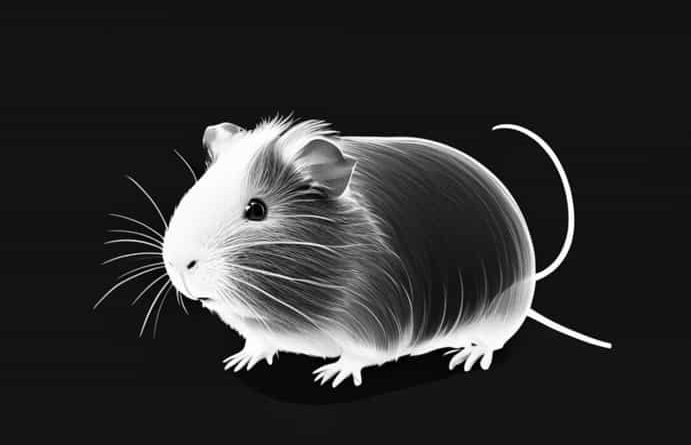
X Ray Guinea Pig
The X Ray Guinea Pig is an important subject in veterinary science, biomedical research, and educational studies due to its suitability for imaging studies and health monitoring. Guinea pigs, also known as Cavia porcellus, are small mammals commonly used in laboratories and pet care settings. X-ray imaging provides a non-invasive way to observe their internal structures, including bones, organs, and teeth, which is critical for diagnosing health issues, conducting research experiments, and understanding physiological development. The use of X-ray technology in guinea pigs allows veterinarians and researchers to gain detailed insights into skeletal abnormalities, respiratory conditions, dental problems, and other internal complications without harming the animal. Its application enhances both clinical care and scientific understanding of these small mammals.
Understanding X-ray Imaging in Guinea Pigs
X-ray imaging, or radiography, works by passing a controlled amount of X-ray radiation through the guinea pig’s body. Different tissues absorb radiation to varying degrees, producing an image that highlights structures such as bones, organs, and foreign objects. Bones appear white due to high absorption, while softer tissues appear in shades of gray, and air-filled regions appear darker. This imaging technique is particularly useful for guinea pigs, whose small size and delicate physiology make invasive procedures risky. X-rays provide a clear view of skeletal and internal structures, aiding in the diagnosis of conditions like fractures, arthritis, lung infections, and gastrointestinal issues.
Common Uses of X-ray in Guinea Pigs
X-ray technology has multiple applications in the health care and research of guinea pigs
- Orthopedic DiagnosisIdentifying fractures, bone deformities, or joint issues.
- Dental EvaluationDetecting overgrown teeth or malocclusion, which are common in guinea pigs due to continuous tooth growth.
- Respiratory AssessmentObserving lung infections, fluid buildup, or abnormal growths.
- Digestive MonitoringDetecting blockages, gas accumulation, or organ abnormalities.
- Research ApplicationsStudying physiological responses, developmental biology, and disease progression in experimental models.
Preparing a Guinea Pig for X-ray Imaging
Proper preparation is essential to ensure the safety and accuracy of X-ray imaging in guinea pigs. Since these animals are sensitive to stress, minimizing movement is critical to obtain clear images. Often, mild sedation or gentle restraint is used under the supervision of a veterinarian. Protective shielding may be applied to limit radiation exposure to non-target areas. The positioning of the guinea pig on the X-ray table is carefully managed to capture specific angles of interest, whether for skeletal assessment, chest imaging, or abdominal analysis. Proper preparation ensures both animal welfare and high-quality diagnostic results.
Safety Considerations
Although X-ray imaging is generally safe when used responsibly, it involves exposure to ionizing radiation, which must be minimized. Veterinary clinics follow strict protocols, including using the lowest effective radiation dose and limiting repeated exposures. Technicians and veterinarians wear protective gear and may use lead shields to protect sensitive regions of the animal’s body. Continuous monitoring and adherence to safety guidelines ensure that the procedure is safe for both the guinea pig and the staff conducting the imaging.
Advantages of X-ray Imaging for Guinea Pigs
X-ray imaging provides numerous benefits in the care and study of guinea pigs. Firstly, it is non-invasive, reducing the risk of infection or injury compared to surgical exploration. Secondly, it offers rapid results, enabling veterinarians to make timely decisions regarding treatment or intervention. Thirdly, X-ray imaging allows repeated observations over time to monitor disease progression, recovery from injury, or the effects of treatments. For research purposes, it provides precise anatomical and structural data without compromising the health of the subject. Overall, X-ray imaging enhances both clinical care and scientific understanding.
Limitations and Challenges
While highly useful, X-ray imaging in guinea pigs presents certain limitations. Their small size can make capturing detailed images challenging, requiring specialized equipment and positioning techniques. Soft tissue contrast may be limited compared to other imaging modalities, such as ultrasound or MRI. Additionally, repeated exposure to radiation, although minimal, must be carefully managed to prevent cumulative effects. Interpretation of images requires experience and knowledge of guinea pig anatomy, as misinterpretation can lead to incorrect diagnoses. Despite these challenges, the benefits of X-ray imaging outweigh the limitations when conducted properly.
Applications in Veterinary Medicine
In veterinary practice, X-ray imaging is essential for diagnosing and treating guinea pigs. Skeletal injuries, respiratory infections, and dental overgrowths are among the most common conditions identified using X-rays. This imaging technique allows veterinarians to formulate precise treatment plans, such as correcting bone fractures, administering antibiotics for infections, or performing dental procedures. Additionally, X-ray imaging helps monitor chronic conditions, ensuring that interventions are effective and that the guinea pig maintains a high quality of life. The ability to diagnose problems early is particularly important for these small and delicate animals, whose health can deteriorate rapidly if issues go unnoticed.
Role in Research
In research, guinea pigs serve as valuable models for studying human and animal physiology, immunology, and disease mechanisms. X-ray imaging contributes to research by allowing non-invasive monitoring of skeletal development, organ function, and pathological changes over time. Researchers can investigate how diseases progress, how treatments affect internal structures, and how developmental processes unfold without sacrificing the animal. This not only improves scientific outcomes but also aligns with ethical practices in animal research by reducing the need for invasive procedures.
The use of X-ray imaging in guinea pigs represents a significant advancement in both veterinary care and scientific research. It provides a safe, non-invasive, and highly informative method to observe internal structures, diagnose health issues, and monitor treatment outcomes. From orthopedic and dental evaluations to respiratory and digestive assessments, X-ray technology enables veterinarians and researchers to make informed decisions while prioritizing animal welfare. As imaging technology continues to advance, X-ray procedures will become even more precise, further enhancing the ability to study and care for guinea pigs. Overall, X-ray imaging plays a vital role in ensuring the health, well-being, and scientific understanding of these small mammals.