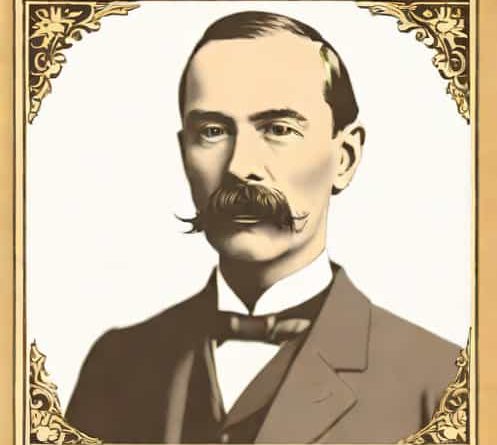
Herman Hollerith Quando Nasceu
Herman Hollerith was a pioneering figure in the history of data processing and computing, known for developing the punched card tabulating machine that revolutionized the way information was recorded and analyzed. Understanding when Herman Hollerith was born provides insight into the historical context in which he lived and worked, a period marked by rapid industrialization, scientific advancement, and the emergence of large-scale data management needs. Hollerith’s innovations laid the groundwork for modern computing and influenced the development of early information technology systems. His contributions continue to be recognized for their lasting impact on how data is collected, processed, and utilized across industries.
Early Life and Birth
Herman Hollerith was born on February 29, 1860, in Buffalo, New York, a unique leap day that added a distinct note to his biography. Growing up in the mid-19th century, Hollerith was exposed to a rapidly changing world in which technological innovation was beginning to reshape society. His early environment and education played a crucial role in fostering his interest in mathematics, engineering, and problem-solving. The context of his birth and upbringing provided him with opportunities to engage with emerging technologies and develop the skills that would later enable him to invent systems that addressed large-scale data challenges.
Educational Background
Hollerith demonstrated a strong aptitude for mathematics and science from a young age, which led him to pursue formal education in engineering and related fields. He attended the City College of New York before transferring to Columbia University, where he further honed his technical knowledge and analytical skills. During his academic career, Hollerith became aware of the challenges faced by government and businesses in processing large amounts of data efficiently. This awareness would later inspire his groundbreaking work in data tabulation, marking the beginning of his journey toward creating the first practical electromechanical data processing machines.
Invention of the Punched Card System
Hollerith’s most significant contribution to technology was the development of the punched card tabulating machine, which used cards with holes to represent data and allowed for rapid, automated processing. This invention was initially designed to improve the efficiency of the United States Census, which had become increasingly difficult to manage due to population growth and complex data collection requirements. By encoding information on punched cards and using electromechanical machines to read and tally the data, Hollerith drastically reduced the time needed to process census results, demonstrating the potential of mechanized data handling for large-scale applications.
Impact on the U.S. Census
The implementation of Hollerith’s tabulating system during the 1890 United States Census represented a milestone in data processing. The census had previously taken years to compile manually, but Hollerith’s innovation reduced the processing time significantly, providing faster and more accurate results. His system was capable of sorting and counting data mechanically, which allowed census officials to handle vast amounts of information with unprecedented speed. The success of the system not only improved government operations but also highlighted the broader applications of mechanized data processing in business, industry, and research.
Founding of the Tabulating Machine Company
Following the success of his punched card system, Herman Hollerith founded the Tabulating Machine Company in 1896 to manufacture and market his machines. This company would eventually evolve into International Business Machines (IBM), a global leader in computing and technology. Hollerith’s entrepreneurial efforts demonstrated his foresight in recognizing the commercial potential of data processing systems. By establishing a company dedicated to producing and improving his machines, he ensured that his innovations could reach a wide range of clients and industries, influencing the growth of modern computing infrastructure.
Legacy in Data Processing
Hollerith’s inventions and business initiatives laid the foundation for modern data processing and computing. The principles behind his punched card system influenced subsequent developments in computer technology, including early mainframes and data storage solutions. His work demonstrated the importance of automating repetitive tasks to improve efficiency and accuracy, a concept that remains central to computing today. Hollerith’s legacy is evident in the continued use of data-driven systems across government, finance, research, and industry, showing how his innovations shaped the evolution of technology in the 20th century and beyond.
Recognition and Historical Significance
Herman Hollerith is recognized as one of the most influential figures in the history of information technology. His work has been celebrated in historical accounts, technological retrospectives, and by institutions that study the evolution of computing. The date of his birth, February 29, 1860, marks the beginning of the life of a man whose contributions transformed how information could be managed and utilized. Scholars and technology enthusiasts often study his career to understand the origins of data processing and the ways in which innovative thinking can address practical problems on a massive scale.
Influence on Modern Computing
The techniques and principles developed by Hollerith continue to influence modern computing systems. Concepts such as data encoding, automated counting, and mechanical tabulation were early precursors to electronic data processing and computer programming. Many of the challenges Hollerith addressed in the 19th century remain relevant today, and his solutions serve as a historical example of how creativity and technical skill can solve complex problems. Understanding his contributions allows students, engineers, and historians to trace the development of computational technology from mechanical machines to contemporary digital systems.
Herman Hollerith, born on February 29, 1860, was a visionary inventor whose work fundamentally changed the field of data processing. From his early life and education to the creation of the punched card system and the founding of the Tabulating Machine Company, Hollerith’s contributions laid the groundwork for modern computing and information management. His innovations accelerated the processing of large-scale data, influenced the development of IBM, and set the stage for technological advancements that continue to shape the modern world. Recognizing the historical context of his birth and the significance of his achievements helps us appreciate the impact of his work and the enduring relevance of his ideas in computing and data technology today.