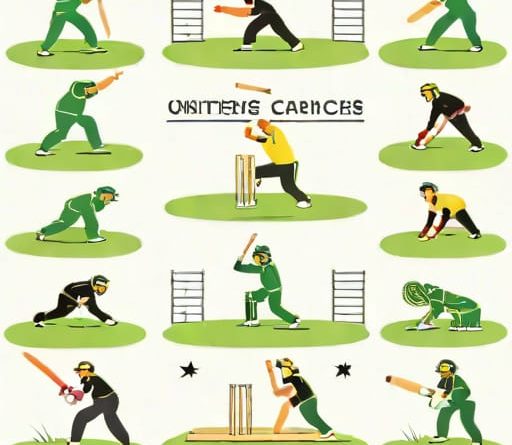
All Fielding Positions In Cricket
Cricket is a sport rich in strategy, skill, and precision, with every player on the field playing a vital role in the outcome of the game. One of the most important aspects of cricket is fielding, which not only prevents runs but also creates opportunities for dismissals. Understanding all fielding positions in cricket is essential for players, coaches, and enthusiasts who want to grasp the strategic depth of the sport. Each fielding position has a specific purpose, with its placement depending on the bowler, the batsman, and the match situation. From close-in fielders to those patrolling the boundary, every position contributes to the team’s defensive and offensive strategies, ensuring that runs are limited and wickets are taken.
Close-In Fielding Positions
Close-in fielding positions are located near the batsman and are primarily designed to take catches from defensive or mis-timed shots. These positions require quick reflexes, sharp anticipation, and fearless players, as the ball can travel at high speed after being struck. Close-in fielders are often deployed in attacking field settings to create pressure and encourage mistakes from the batsman.
- SlipPositioned to the side of the wicketkeeper, slips are ready to catch edges from the bat. Multiple slips can be used depending on the bowler and pitch conditions.
- GullySituated behind point and slightly wider than the slips, the gully fielder targets edges that fly in that region.
- Silly PointVery close to the batsman on the off side, silly point is for catching balls that pop up from defensive shots.
- Short LegClose to the batsman on the leg side, short leg is a position for reacting to flicks and glances off the pads or bat.
- Silly Mid-OnA closer-in fielder on the leg side, often used against defensive or spin bowling.
- Silly Mid-OffSimilar to silly mid-on, but positioned on the off side.
Inner Circle Fielding Positions
Inner circle positions are slightly farther from the batsman than close-in fielders. They aim to intercept drives, cut off singles, and provide opportunities for catches on lofted shots. These positions balance defense and attack, contributing to both run containment and wicket-taking strategies.
- PointPositioned square on the off side, point intercepts cuts, pulls, and drives.
- CoverOn the off side between point and mid-off, cover is for cutting off drives and creating run-out chances.
- Mid-OffClose to the bowler but on the off side, mid-off fields drives and supports in stopping quick singles.
- Mid-OnSimilar to mid-off but on the leg side, mid-on is crucial for stopping straight drives.
- Mid-WicketPositioned square on the leg side, mid-wicket is key for stopping pulls, sweeps, and flicks.
- Square LegOn the leg side square of the batsman, square leg fields pulls, sweeps, and leg glances.
Deep Fielding Positions
Deep fielding positions are located closer to the boundary and are primarily defensive. Their main purpose is to prevent boundaries, cut off powerful shots, and support the team in saving runs. These fielders must have strong throwing arms and excellent judgment of the ball’s trajectory to prevent four and six runs.
- Deep PointPositioned near the boundary on the off side, deep point fields cut shots and squares.
- Deep CoverLocated near the boundary between cover and extra cover, deep cover stops drives and lofted shots.
- Long-OffDeep position on the off side straight of the batsman, ready for straight drives and lofted shots.
- Long-OnPositioned deep on the leg side, long-on prevents straight sixes and boundaries.
- Deep Mid-WicketNear the boundary on the leg side, covering pull shots and sweeps.
- Deep Square LegPositioned on the leg side square to stop powerful cross-bat shots.
- Fine LegOn the leg side behind the batsman, fine leg is for catching glances, deflections, and leg-side sweeps.
- Third ManBehind the slips on the off side boundary, third man stops edges and deflected balls from fast bowlers.
Specialized Fielding Positions
In addition to traditional positions, modern cricket employs specialized fielding placements that adapt to match situations, bowler strategies, and batsman tendencies. These positions allow captains to implement tactical variations and increase pressure on the batting side.
- Backward PointSlightly behind point on the off side, often used in limited-overs cricket to prevent quick singles.
- Extra CoverBetween cover and mid-off, extra cover intercepts drives through the off side mid-region.
- Deep Extra CoverPositioned near the boundary to stop lofted drives on the off side.
- Sweeper CoverUsed in longer formats to patrol the deep cover region, particularly against big hitters.
- Long LegDeployed deeper behind square leg, often used to save boundaries against leg-side slog shots.
Fielding Strategy and Captaincy
The captain’s role in setting fielding positions is crucial. Field placements are dynamic, changing with the bowler’s style, the batsman’s tendencies, match format, and game situation. Captains use fielding positions to create pressure, cut off runs, and maximize wicket-taking opportunities. For example, placing multiple slips early in a Test match can exploit a batsman’s weakness against seam bowling, while deep positions in limited-overs cricket aim to restrict boundaries and force singles. A thorough understanding of all fielding positions enables teams to implement both defensive and attacking strategies effectively.
All fielding positions in cricket play a significant role in shaping the game’s outcome. From close-in positions like slips and silly point to deep boundary positions like long-on, fine leg, and deep mid-wicket, each placement serves a tactical purpose. Inner circle positions balance defense and attack, while specialized positions add strategic flexibility. Mastering fielding positions is essential for players, captains, and coaches, as effective placement can save runs, create wicket-taking opportunities, and influence the momentum of the game. Understanding and utilizing all fielding positions in cricket not only enhances team performance but also reflects the strategic depth and excitement that make cricket a unique and challenging sport.